
You finish your last session, close your notes, and turn to the part of private practice nobody romanticizes. You need to check a payment, confirm tomorrow's appointments, or fix a client intake issue before the next business day starts. That's usually the moment a simple login starts to feel much bigger than a username and password.
For Headway providers, access to the portal isn't just administrative housekeeping. It's the front door to the workflows that keep the practice moving. When login goes smoothly, the evening stays manageable. When it doesn't, everything backs up at once.
Table of Contents
- Why Your Headway Login Matters More Than Ever
- Meet Sigmund Your All-in-One Practice Hub
- The Direct Path to a Successful Login
- Accessing Your Portal on Mobile and with SSO
- Troubleshooting Common Headway Login Problems
- Headway Support and Frequently Asked Questions
Why Your Headway Login Matters More Than Ever
A new provider often treats login as a minor setup task. In practice, it's closer to opening the office each day. If you can't get in, you can't work the business side of care with any confidence.

Headway isn't a tiny niche tool. Its provider network had expanded to at least 15 state markets by October 2022, including California, and the company said its providers were 60% non-white and 30% fluent in a language other than English in reporting covered by Behavioral Health Business on Headway's California expansion. That matters because the login experience sits inside a platform used by a broad, operationally serious network, not a simple therapist directory.
The login is really a workflow checkpoint
When providers ask why the Headway provider login feels so important, the answer is straightforward. You're not logging in to glance at a profile page. You're logging in to do work that affects scheduling, billing, client management, and the next day's readiness.
That's why I tell new clinicians to think about portal access the same way they think about note completion or claims follow-up. It belongs inside a repeatable system, not inside memory and guesswork. The same logic shows up in any healthy back office, which is why a piece on business operations and why every business needs a solid system applies just as much to a therapy practice as it does to retail or professional services.
A failed login at 8:30 p.m. doesn't stay a login problem. It turns into a billing problem, a scheduling problem, and sometimes a client communication problem by the next morning.
What changes once you treat access seriously
Providers who struggle most usually make one of two mistakes. They either assume they'll “figure it out when needed,” or they treat every access problem as a password issue. Neither approach works well under pressure.
A better approach is operational:
- Keep the right email documented: Store the exact portal login email in your secure practice records.
- Separate access from contact info: Don't assume the email clients use is the same one the portal expects.
- Build a fallback routine: If access fails, you should already know whether to reset credentials, test another browser, or check for platform issues.
Meet Sigmund Your All-in-One Practice Hub
You finish sessions, open Headway to check a claim or confirm a client detail, and the portal will not let you in. At that point, you are not dealing with a simple sign-in annoyance. You are cut off from the workspace that holds several parts of your day in one place.
That workspace is Sigmund. For providers, it functions as the operational center for intake tasks, billing activity, and client management. Headway also ties related training access into the same account structure, so a login issue can spill into onboarding and admin work, not just portal access.
What Sigmund changes in real practice
New providers often expect a basic account page with a few settings. Sigmund is more than that. It pulls together work that many practices would otherwise spread across separate systems, which is convenient until access breaks under time pressure.
That setup has a clear upside. Fewer tools usually means fewer handoffs, fewer tabs, and less duplicate data entry. In a busy practice, that matters.
It also creates a single point of failure.
If Sigmund is unavailable because of a credential problem or a platform outage, the right response is not just “try again later.” You need a fallback plan. Keep key phone numbers, appointment details, and any same-day task list outside the portal in your approved practice workflow so you can still operate if Headway is down. Most login guides stop at password resets. In practice, that is not enough.
The trade-off of an all-in-one portal
An all-in-one portal saves time when it works well. Many providers prefer that model because it reduces tool sprawl and keeps routine admin work in one place. The same logic shows up in other small business essential tech tools. One system can simplify daily operations.
The trade-off is concentration. One login issue can block scheduling checks, billing review, and client-related admin at the same time. That is why experienced practice managers treat portal access as an operations issue, not an IT afterthought.
My rule is simple. Store Sigmund access details the same way you would protect front-desk procedures, billing records, and your daily schedule. If the portal is working, great. If it is not, you should already know which tasks can wait, which tasks need a manual backup, and when the problem is likely your credentials versus Headway itself.
The Direct Path to a Successful Login
Monday morning is when weak login habits show up fast. A provider is trying to confirm the day's schedule, review a claim issue, and answer a client message, and the portal will not let them in. In that moment, speed matters, but accuracy matters more. The fastest fix is usually to stop guessing and follow the same login path every time.
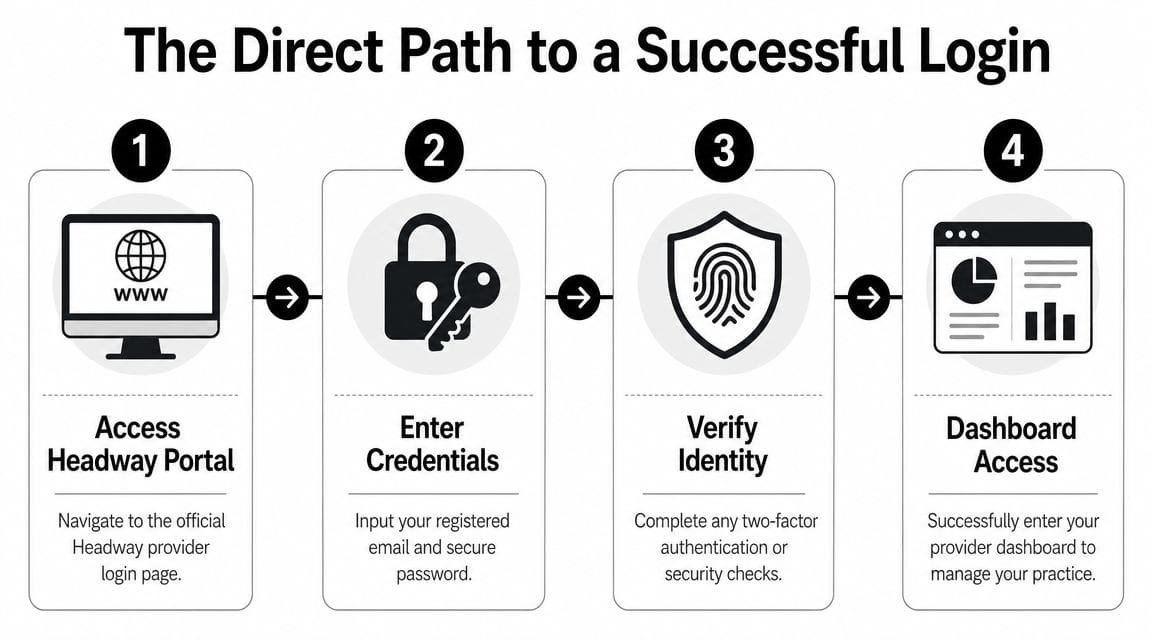
Use the provider portal entry point you already know is correct. Skip old bookmarks if they send you somewhere unexpected, and avoid starting from a general Headway page if you are in a hurry. A lot of failed sign-ins come from entering valid credentials in the wrong place or using an email tied to another part of the account.
Use the provider portal email, not your general contact email
This is one of the easiest mistakes to make, especially in practices where one person has a billing email, a clinical email, and a general business inbox. Headway login access depends on the email attached to the provider portal account. If you use a different address for a password reset, the reset process can send you in circles even though your password was never the actual issue.
A cleaner process looks like this:
- Open the correct provider login page.
- Enter the email tied to your provider portal account.
- Type the password slowly and check for autofill errors before retrying.
- Use password reset only after you have confirmed the email is correct.
- Check spam, promotions, and filtered folders for the reset email.
- Sign in with the new password right away so you know the reset worked.
One small habit saves a lot of time here. Store the exact portal login email in your approved credential process, not just “Headway login” written in a password manager note. That distinction matters later when someone is resetting access under pressure.
Here's a visual walkthrough if you prefer to see the flow before doing it yourself.
What a successful sign-in should do
A successful login should take you straight into the working view you expect, with access to the schedules, billing items, or admin tasks you came in to handle. If you get in but land in an account state that looks incomplete, treat that as a signal to pause and verify you used the right email and sign-in method.
If the login still fails after one careful retry and one verified reset attempt, stop repeating the same step. At that point, the issue is usually one of three things: the wrong email, a stale saved password, or a platform-side problem. That last category gets ignored in a lot of login guides, but it matters in real practice operations.
Have a short fallback plan ready before you need it. Keep your same-day schedule, priority callback list, and any time-sensitive administrative tasks available through your approved backup workflow. If Headway is down, the goal shifts from logging in immediately to keeping the day on track until access returns. That is the practical difference between a login problem and an operational disruption.
Accessing Your Portal on Mobile and with SSO
A lot of providers don't handle admin work from one fixed desk anymore. They check schedules from a phone, confirm details from a tablet, and clean up loose ends between locations. Headway portal access can work in that environment, but mobile access isn't identical to desktop access.
Desktop versus mobile browser
Desktop is usually the better choice for heavier admin work. If you're reviewing billing items, managing intake details, or trying to troubleshoot a login problem, a full browser window makes the process easier. You can see more, compare fields more comfortably, and reduce input errors.
Mobile browser access is useful for lighter tasks, especially when you need quick visibility rather than extended work. It's convenient, but it can also increase small mistakes. Autofill may enter the wrong email. Password managers may surface outdated credentials. Browser tabs may preserve stale sessions longer than expected.
A practical way to decide:
- Use desktop for resets and account changes: It's easier to inspect each field carefully.
- Use mobile for quick checks: Schedule review and light confirmation tasks fit better here.
- Avoid first-time troubleshooting on a phone: Small screens hide context you often need.
Using Google sign-in and similar shortcuts carefully
If your account setup includes a sign-in shortcut such as Google, it can reduce friction. One fewer password often means one fewer forgotten credential. For busy clinicians, that matters.
But SSO only helps when it's tied to the correct account identity. If your browser is signed into multiple Google accounts, the shortcut can push you toward the wrong one without making the mismatch obvious. That's why I recommend testing SSO during a calm moment, not when you're already late and trying to fix access fast.
The simplest rule is this: if SSO works reliably for your actual provider account, keep using it. If it creates ambiguity, use direct email-and-password login instead. Convenience only counts when it's predictable.
Troubleshooting Common Headway Login Problems
Most Headway provider login issues aren't mysterious. They usually fall into two buckets. Either the account details entered don't match the portal's expectations, or the platform itself is having trouble.
Common Headway Login Errors and Fixes
The first group is easier to solve because it's under your control.
| Symptom | Likely Cause | Solution |
|---|---|---|
| Password reset email doesn't arrive | You entered a contact email instead of the provider portal email | Use the email tied to the provider portal account, then try the reset again |
| Login keeps failing after several attempts | Saved browser credentials are outdated | Manually type the email and password instead of relying on autofill |
| You can access one Headway resource but not the portal area you need | You're signed into the wrong account identity | Sign out fully, close the browser, reopen, and sign in with the correct provider account |
| Reset appears successful but login still fails | Browser session is holding old data | Retry in a private window or a different browser |
| You're unsure which email belongs to login | Login email and contact email were treated as the same thing | Review account records and update each field intentionally instead of assuming they match |
Headway's Sigmund introduction notes a structural issue behind many of these problems. Authentication is tightly linked to portal role and downstream workflow access, and separate updates for login email versus contact email reduce ambiguity while also increasing the chance of user error if those fields are confused, as described in Headway's introduction to Sigmund.
If you're stuck in reset loops, stop and verify identity data before trying again. Repetition won't fix an email mismatch. For broader credential hygiene, this guide to password reset best practices is a useful reminder that the cleanest recovery process is usually the least improvisational one.
When the issue is the portal, not you
This is the part many login guides skip. Sometimes your credentials are fine and the portal still won't load or respond properly.
Independent uptime monitoring reported sigmund.headway.co down on May 26, 2026, which is why it's smart to consider platform reliability in addition to user error, as shown by Down for Everyone or Just Me status reporting for Sigmund. You don't need to assume every login failure is your fault.
When you suspect an outage, use a simple contingency plan:
- Pause repeated reset attempts: Don't create a second problem by changing credentials during a likely outage.
- Check independent status reporting: Confirm whether the portal is unreachable more broadly.
- Keep a local task list: Write down what you needed to do once access returns.
- Protect the client day: If billing or scheduling actions must wait, note affected clients and handle communication outside the portal as appropriate within your normal compliance standards.
- Retry later from a clean browser session: Once the portal stabilizes, resume work in order of urgency.
If the portal is down, your goal shifts from “fix login now” to “preserve practice continuity until access returns.”
Headway Support and Frequently Asked Questions
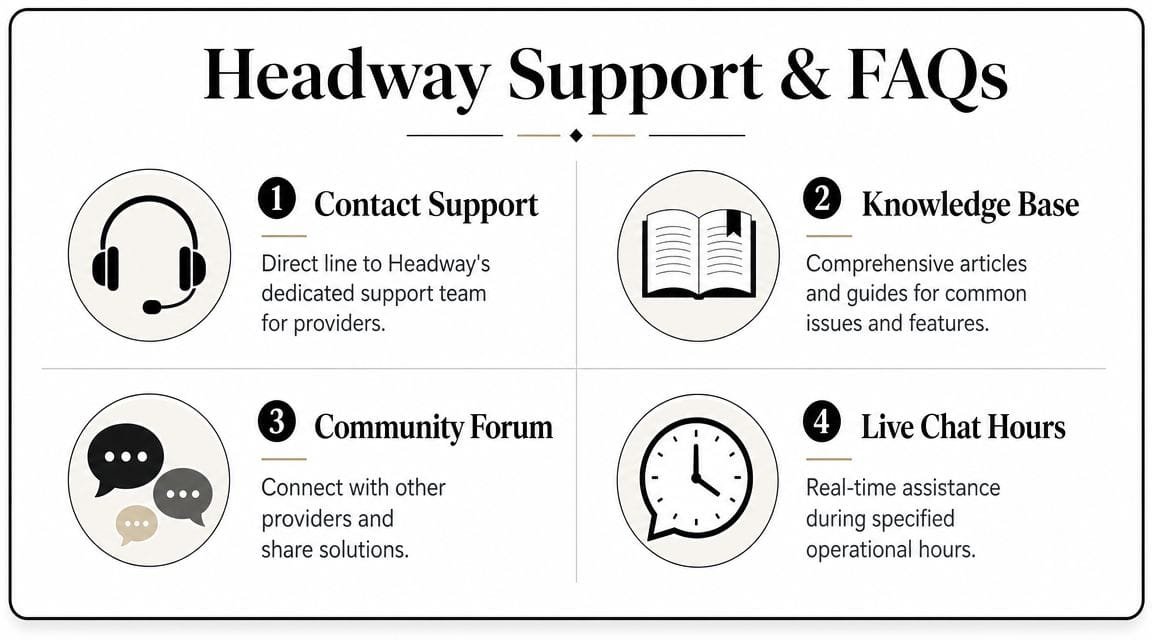
Some problems are worth solving yourself. Others aren't. If you've confirmed the right login email, tried a clean browser session, and ruled out the obvious issues, it's time to use Headway support resources instead of improvising further.
When to stop troubleshooting on your own
Stop when you notice one of these patterns:
- You're repeating the same reset: That usually means the underlying account identifier still isn't correct.
- The portal behavior is inconsistent across attempts: That can point to a platform-side issue rather than a password issue.
- You need account-level changes: Email updates and profile maintenance are better handled with official guidance than with guesswork.
Headway's help center is the right starting point for provider-specific account questions. Use the official provider support and knowledge base rather than relying on forum guesses or old screenshots from other users.
Frequently asked questions
How do I change the email tied to my login?
Treat login email and contact email as separate fields. Don't assume changing one updates the other. Make those updates intentionally inside the official account-management path or through support if you can't access the account.
What if my account is locked or suspended?
At that point, self-service troubleshooting usually has limited value. Document what happened, avoid repeated failed attempts, and contact Headway support directly through the official help center.
Can one login cover multiple provider profiles?
Use the account structure Headway assigns to your role and don't assume a single login should manage unrelated profiles. If your setup is unusual, confirm the intended account design with support before making changes.
Why does Headway Academy matter in a login guide?
Because the same credential path can affect more than the core portal. If a reset changes access there too, you want to know that before assuming a separate training login exists.
If you run a practice like a real business, cash flow matters as much as access. Business Loan Warrior helps companies explore funding options through a no-fee application and secure dashboard, which can be useful when you're managing growth, equipment, expansion, or short-term working capital needs.