
You just reconciled yesterday’s sales, and the numbers feel off. A customer tapped a debit card for a small lunch, the deposit hit your account later, and the total was a little less than the receipt. That missing slice is what most owners casually call a debit card fee, even though the money can be going to different places for very different reasons.
For a small business, that confusion gets expensive fast. One charge is illegal on debit in the U.S., one is the processor’s cut, and one comes from the issuing bank through the card network. If you don’t separate those three, you can’t tell what’s fixed, what’s negotiable, and what’s being padded.
Table of Contents
- The Real Cost Behind Every Debit Swipe
- How the Three-Part Processing Stack Works
- The Durbin Amendment and Legal Fee Rules
- What Businesses Actually Pay Across Different Scenarios
- Proven Strategies to Reduce Debit Processing Costs
- Connecting Payment Costs to Broader Business Financing
- Frequently Asked Questions About Debit Card Fees
The Real Cost Behind Every Debit Swipe
A lunch customer hands over a debit card for a $12 tab, and the ticket closes cleanly. Then the settlement lands, and the owner sees less money than expected. That gap feels small on one sale, but on a busy day it repeats over and over, which is why payment costs are worth your attention, even when each swipe only costs cents.
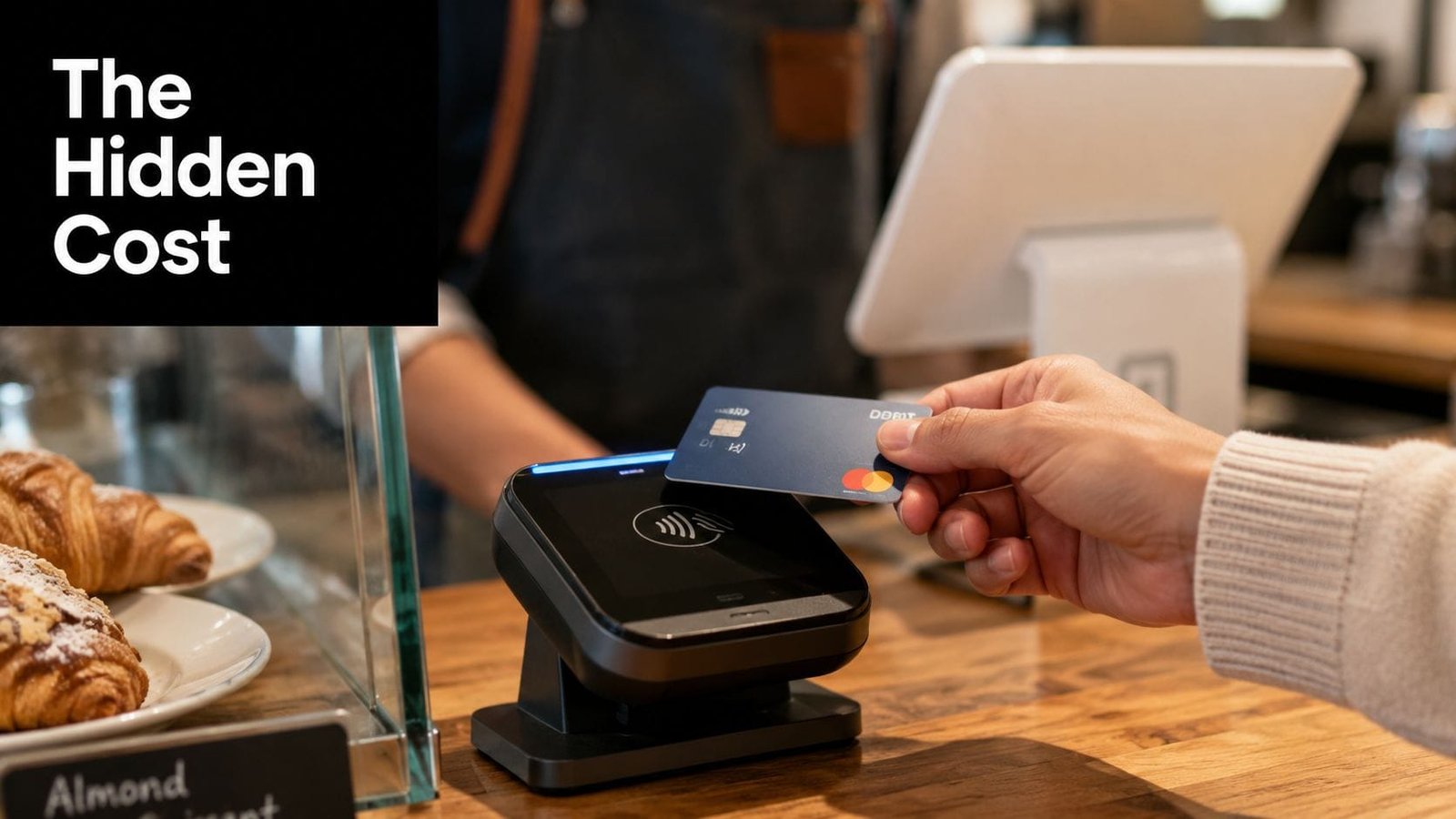
The first mistake is treating every debit-related charge as one thing. It isn’t. In the U.S., the merchant cannot legally add a debit surcharge at checkout, because debit surcharges are prohibited by federal law and card-network rules, while the actual processing bill usually comes from the processor and the bank side of the transaction a plain-English explanation of the fee buckets.
What the money is doing
Think of the transaction like a split payment. The issuing bank gets the interchange piece. The network and processor get their own separate amounts, and the merchant may also absorb account-level bank fees outside the sale itself.
Practical rule: If a customer’s debit card feels “free” at the counter, it’s because the merchant is usually the one paying the bill behind the scenes.
A helpful way to read the issue is to stop asking, “Can I charge a debit card fee?” and start asking, “Which charge is this?” A merchant surcharge is a pricing decision at checkout. A processor markup is a contract term. A bank account fee is a separate relationship with the merchant’s own bank.
That’s why the same phrase causes so much confusion. Owners hear “debit fee” and assume there’s one line item to fight. In reality, there are three different entities taking money, and only one of them is negotiable in a clean, direct way.
Once you can label the charge correctly, the next decision is easy. You either challenge the processor, change the pricing model, or stop looking in the wrong place.
How the Three-Part Processing Stack Works
Every debit transaction is built from three layers. The issuing bank gets interchange, the network takes assessment fees, and the processor adds a markup. That stack matters because only one layer is set by the bank side of the system, one is set by the network, and one is the part a business can often negotiate.
Where each cent goes
U.S. debit interchange alone averaged about 34 cents per transaction in recent Federal Reserve materials cited by the business guidance in the brief. That’s why merchants with lots of low-ticket sales feel the cost so sharply. A $5 coffee does not have much room to absorb a fixed fee, while a $500 equipment sale can spread the same kind of cost over a much larger basket.
| Debit Card Processing Cost Breakdown | Paid To | Typical Amount | Negotiable |
|---|---|---|---|
| Interchange | Issuing bank | About 34 cents per transaction | No, not directly for merchants |
| Network assessment fee | Card network | Varies by network and contract | Limited |
| Processor markup | Payment processor | Contract-based | Yes |
The fixed-fee nature of debit is the primary story. The Federal Reserve’s legal framework for larger issuers uses a regulated cap of 21 cents plus 0.05% of the transaction value, with a possible extra penny for fraud-prevention compliance the statutory rule and cap structure. The proposed update would lower the average regulated cap to 17.7 cents from 24.5 cents, a 28% reduction, but that still leaves merchants dealing with a cent-heavy cost structure.
That is why the effective rate changes with ticket size. If a processor charges a flat monthly formula on top of network and interchange costs, a cheap basket gets hit harder than an expensive one. Debit is usually cheaper than credit on a percentage basis, but “usually cheaper” is not the same as “cheap.”
Processors often package this into merchant pricing that looks simple on the surface, but the math underneath is still layered. Industry guides describe flat-rate pricing in ranges like 0.75% + 7¢ to 2.8% + 30¢, while debit interchange itself can sit around 34 cents on average merchant-facing pricing ranges and debit cost context. That’s why a good contract review starts with the statement, not the sales pitch.
The Durbin Amendment and Legal Fee Rules
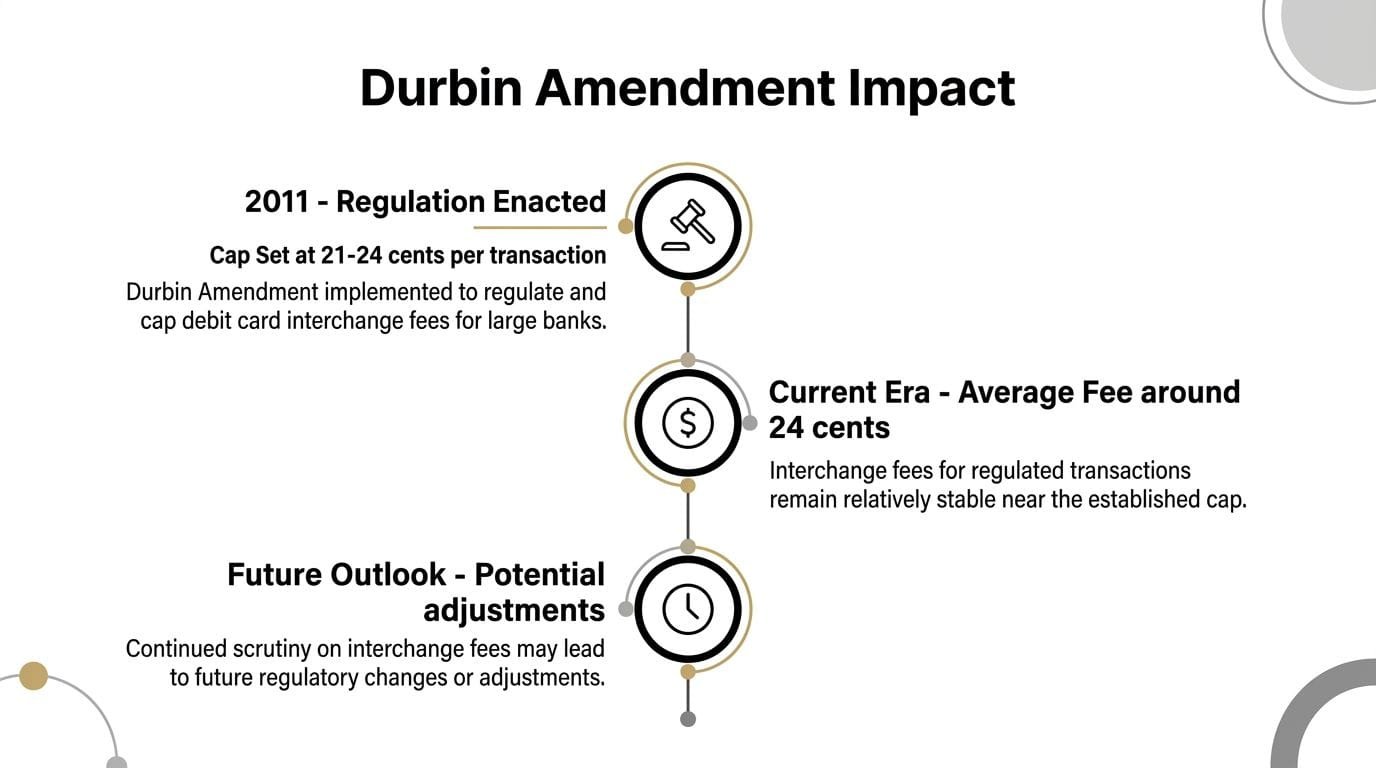
A merchant sees the effect of the Durbin Amendment at settlement, not at the register. The rule changed debit economics for large U.S. issuers by requiring debit interchange to stay reasonable and proportional to the issuer’s cost of handling an electronic debit transaction. That gave merchants a legal ceiling to work against instead of open-ended pricing.
What the Law Blocks
For regulated large issuers, the cap is 21 cents plus 0.05% of the transaction value, with an additional 1-cent fraud-prevention adjustment allowed in some cases the legal text and cap formula. The Federal Reserve’s proposed update would reduce the average regulated cap to 17.7 cents, down from 24.5 cents, which is a 28% reduction. If you are reviewing processor pricing for debit-heavy volume tied to larger issuers, that is the number that belongs at the top of the page.
The cap does not flatten every debit transaction into the same price. It applies only to larger issuers. Smaller banks and credit unions are outside that specific cap structure, so your card mix still changes the cost of acceptance even when the checkout flow looks identical.
Surcharge, convenience fee, processing cost
Merchants confuse these charges all the time, and that confusion costs money. A merchant surcharge is an extra charge added because the customer used a card, and on debit that is not allowed in the U.S. A convenience fee is different, usually tied to a special payment channel rather than the card type itself. A processing cost is the money your processor and network charge your business behind the scenes.
A compliant business does not push a debit fee to the customer at the register. It works the processor contract, the ticket mix, and the payment method mix instead.
Federal Reserve and merchant guidance still show debit interchange close to 34 cents per transaction in recent data Federal Reserve-linked business guidance on debit interchange. That is why the law matters even after years of regulation. The bank side still takes real money, only now it runs through a formula instead of an open-ended charge.
If a statement looks inflated, do not start with the customer-facing checkout policy. Start with the processor contract, the issuer mix, and whether your debit transactions are being routed in the cheapest lawful way.
What Businesses Actually Pay Across Different Scenarios
A debit card cost never looks the same in every setting. A café selling small-ticket items sees a very different burden than a retailer selling fewer, larger baskets. Online debit also tends to cost more than card-present debit, because the risk and routing setup are different.
Ticket size changes the pain
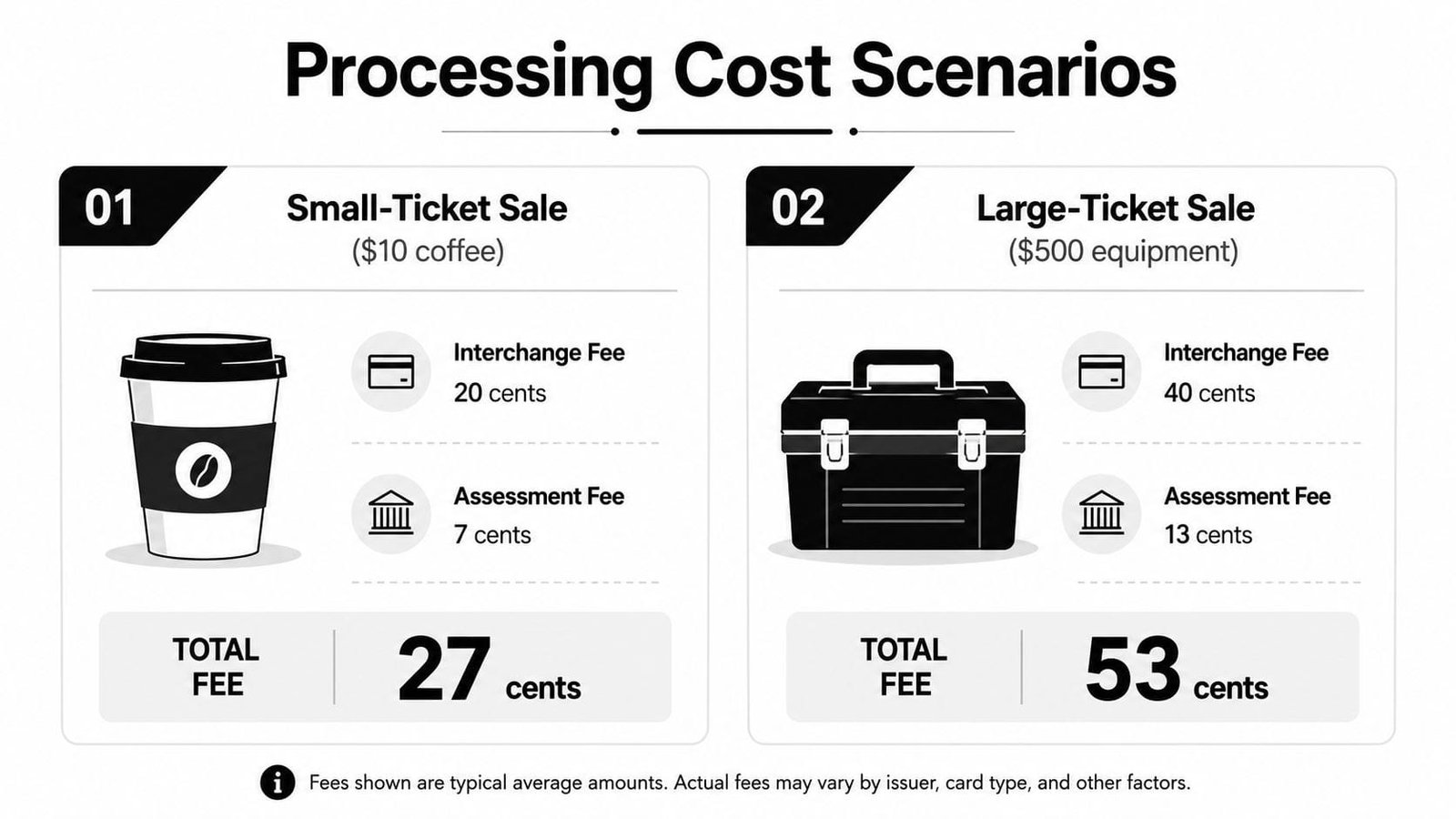
The reason low-ticket merchants feel beat up is simple. When the fee has a large fixed component, it consumes more of a tiny sale. A $10 coffee sale can carry a meaningful effective burden even when the nominal fee is only cents, while a larger sale dilutes that same structure.
Card-present and online are not equal
Online debit is typically priced higher than in-person debit, and that difference matters if you run subscriptions, order-ahead sales, or e-commerce. Card-present transactions are generally cleaner for processors and networks, so they often land on better pricing. Keyed-in or online transactions usually cost more because the processor has less certainty that the cardholder is present.
Flat-rate pricing can hide the overcharge
Flat-rate pricing looks tidy because it gives you one number to remember. It can also be expensive if most of your sales are debit. Interchange-plus pricing usually gives you more visibility into the actual cost stack, which makes it easier to see whether the processor is taking too much on the markup side.
A useful way to compare your options is to look at the merchant mix, not the headline rate. A restaurant with a lot of small debit tickets will care more about cents than percentages. A contractor or equipment seller may care more about percentage drag than a tiny per-swipe fee because the basket is larger.
The hard truth is that “cheap debit” is not a universal statement. The best pricing model depends on ticket size, transaction channel, and how much volume goes through each rail. If your statement doesn’t break those pieces out clearly, you’re probably paying more than you should.
Proven Strategies to Reduce Debit Processing Costs
The fastest way to cut debit costs is to stop accepting whatever rate was bundled into the first contract you signed. That first agreement is usually the worst one you’ll ever have, because it’s built for simplicity, not efficiency. If your processor won’t explain the markup cleanly, treat that as a warning sign.
The tactics that actually move the needle
- Switch to interchange-plus pricing. You want the processor to show the interchange, the network cost, and the markup separately instead of burying everything in one blended rate.
- Negotiate processing rates. If your volume is solid and your chargeback profile is clean, push back on markup and monthly add-ons.
- Encourage PIN usage where it makes sense. PIN debit often routes more efficiently than other debit flows, especially in card-present settings.
- Review monthly statements. Watch for creeping line items, renamed fees, and extra categories that never got explained at signup.
- Use a cost-saving processor. Some providers are just cheaper on your exact mix, especially if you’re heavy on debit.
Best negotiation move: Ask for a side-by-side quote that shows your current all-in cost versus a true interchange-plus alternative, then compare the exact statement lines, not the sales rep’s summary.
For online merchants, cost control also overlaps with dispute management. A useful guide for ecommerce merchants helps you understand why payment structure and dispute risk often travel together. If you run digital sales, the processor that looks cheapest on paper can turn expensive once chargebacks, auth failures, and miscoded fees show up.
Use the internal checklist on cash management here, improve cash flow, if your processing costs are squeezing working capital. That’s the key decision point. Saving a little per swipe matters most when it protects payroll, inventory buys, and tax payments.
If your volume is large enough, switching processors can beat renegotiation. If the provider is otherwise competent and the markup is the only problem, renegotiate first. If the statement is opaque, the pricing model is bloated, and support is slow, leave.
Connecting Payment Costs to Broader Business Financing
Debit fees don’t live in a vacuum. They sit inside your working capital cycle, which means every extra cent paid to a processor is one less cent available for inventory, payroll, repairs, or growth. That’s why payment cost review should happen alongside financing review, not after it.
A restaurant owner comparing payment stack options can also use restaurant payment processing systems to think more carefully about how orders, routing, and settlement connect. The same logic applies to any business with recurring sales pressure. Payment friction and cash flow friction usually show up together.
If you’re trying to fund a new register system, a terminal upgrade, or a cashless transition, don’t assume a merchant cash advance is the default answer. Read the internal comparison on funding digital payments tech before you lock in a funding tool that also pulls against daily receipts. High payment costs and high financing costs can stack on top of each other fast.
The better move is to compare the cost of acceptance against the cost of capital. Sometimes the right answer is a lower-fee processor. Sometimes it’s cheaper financing that lets you buy better hardware or consolidate payment handling. Either way, the decision should be based on total cash drag, not on one isolated monthly bill.
Frequently Asked Questions About Debit Card Fees
Can I legally charge extra for debit cards? No, not in the U.S. Debit surcharges are prohibited. If you want to recover costs, focus on processor pricing, payment-method policy, and operational efficiency instead.
How do I read a statement to find debit costs? Look for interchange, network assessment, and processor markup as separate lines or embedded components. If the processor won’t break them out clearly, ask for a full interchange-plus disclosure and compare it with your current effective rate.
Is PIN debit always cheaper than signature debit? Not always, but PIN debit is often the cleaner, lower-cost path in card-present settings. The only way to know for sure is to compare your actual statement lines across transaction types.
What if my processor seems to charge more than the Durbin cap suggests? Check whether the issuer is even covered by the cap, then review whether you’re looking at interchange or a processor markup problem. For a broader financing lens, the internal overview on merchant cash advance fit is useful if you’re trying to decide whether a costlier funding option is hiding inside your cash flow.
Business owners don’t need another vague payment article, they need a cleaner way to spot what’s real, what’s negotiable, and what should never show up on a statement in the first place. If you want to compare funding options, cash-flow tools, and smarter ways to handle payment costs, visit Business Loan Warrior and use it to make your next processor or financing decision with a sharper eye.