

You search for Headway login, click a result, and then hit the first annoying question. Which Headway is this?
That confusion is normal. “Headway” can point to different products, different portals, and different account types. Some people need the mental health patient portal. Others are trying to reach a provider account, a careers portal, or a lending-related login tied to a different Headway-branded company. If you start on the wrong page, even correct credentials won't help.
This guide clears that up first, then walks through the practical steps that get you into the right account without wasting time.
Table of Contents
- First Things First Which Headway Are You Using
- Your Step-by-Step Headway Login Guide
- How to Reset Your Password and Recover Your Account
- Troubleshooting Common Headway Login Errors
- A Closer Look at Different Headway Portals
- Quick Security Tips for Your Headway Account
First Things First Which Headway Are You Using
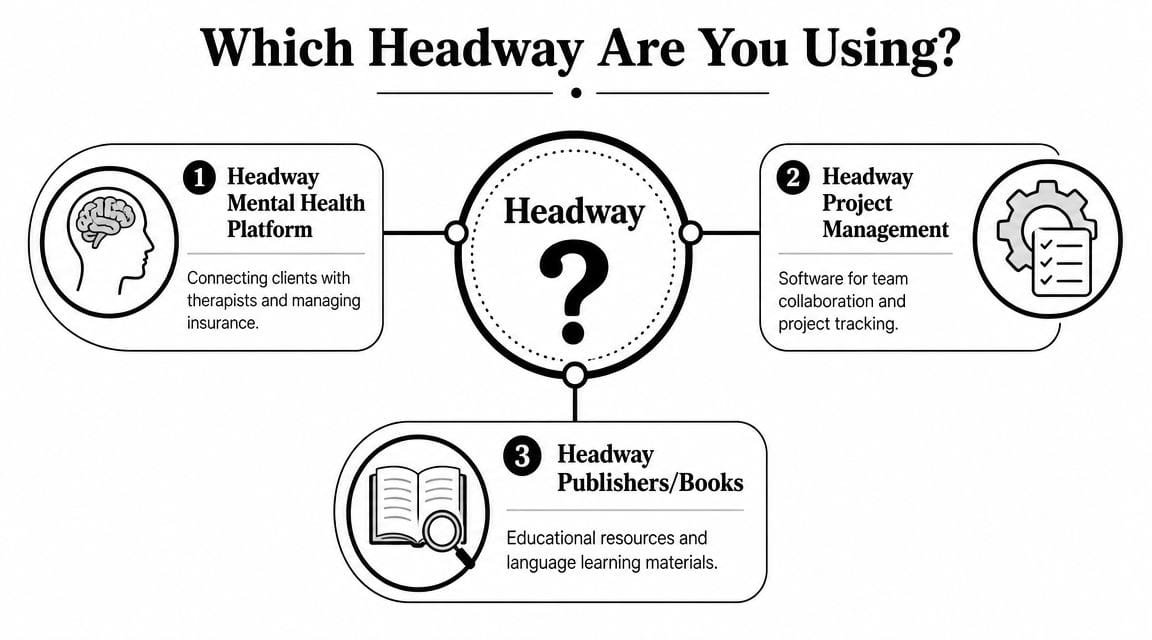
The biggest mistake people make with Headway login is assuming there's one universal Headway account. There isn't. The Headway name appears across separate services, and those services use different login pages for different audiences.
Why the name causes problems
For the mental health platform, public materials show distinct experiences for patients, providers, and business users, and the service is available only in select U.S. states, which means login expectations can vary by role and geography rather than behaving like one universal account, as shown on Headway's business sign-in page.
That matters more than most users expect. If you're a patient trying to book therapy, your portal path won't look like a provider's account area. If you're job hunting, you may be looking for Headway Inc.’s careers system instead. If you're thinking about a lending account, that's a different Headway-branded service again.
Practical rule: Before resetting a password, confirm the exact service name from the last email you received. The wrong portal is often the real problem.
How to identify your correct Headway account
Use the context around your account, not just the brand name.
- Therapy or appointments: You're most likely looking for the mental health platform.
- Provider administration: You probably need the provider portal tied to your clinical or practice workflow.
- Job application activity: You may need the Headway Inc. careers login.
- Business financing activity: You may be looking for Headway Capital or a similarly branded financial portal.
A fast way to sort this out is to check the emails you've received. Look at the sender name, the purpose of the message, and the action it asks you to take. Appointment reminders, application updates, and payment-management messages usually point to different systems.
Another clue is the language around the login. Mental health platforms often talk about a patient portal or provider portal. Careers systems usually mention a candidate profile or job application. Financial portals tend to focus on payments, draws, or account servicing.
If you're frustrated, that's justified. The issue usually isn't that you forgot how to log in. It's that the search term itself is ambiguous.
Your Step-by-Step Headway Login Guide
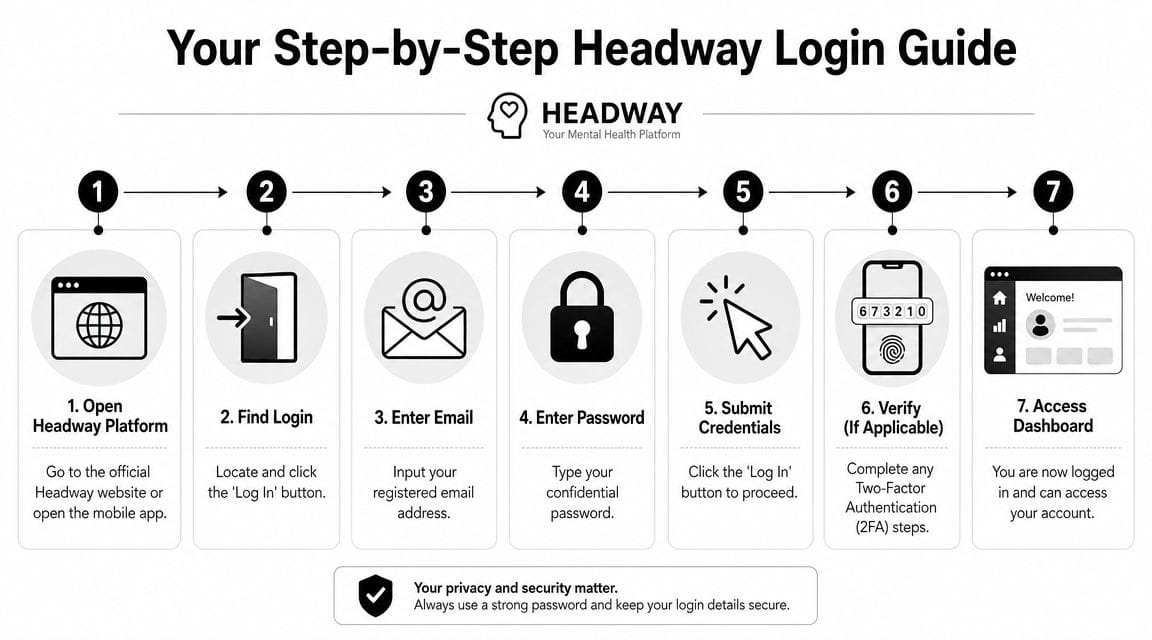
If your account is with the Headway mental health platform, the login process is more portal-based than many consumer apps. That's the key detail to understand first.
If you are a patient
Headway's account help documentation says client instructions direct users to visit headway.co, click My portal, then Patient portal, and use Forgot your password? if needed. The same documentation also shows that email is the primary login identifier, while providers manage login changes inside account settings. You can review that flow in Headway's account management article.
For most patients, the smoothest path looks like this:
- Go to the main Headway website.
- Select My portal.
- Choose Patient portal.
- Enter the email address tied to your account.
- Enter your password, or use the account recovery option if you don't remember it.
That sequence sounds simple, but it solves a common issue. Many users land on a generic page and expect a single, obvious sign-in box. Headway's setup is more structured than that.
A quick visual walkthrough can help if you prefer to see the process:
If you are a provider
Providers should expect a different route. The same Headway help material notes that providers update their login email inside the provider portal under Settings and then Login.
That's an important distinction. If you're a provider and trying to recover access by behaving like a patient, you can end up on the wrong path. The account itself may be fine. You may just be using the wrong front door.
Use this checklist:
- Open the provider portal: Start from the provider-facing login area, not the patient portal.
- Use your account email: Headway's documentation indicates email is the main account identifier.
- Check account settings after login: If your organization changed emails or domains, update the login email under the settings path shown above.
What the sign-in options tell you
Headway Psychology's sign-in page also offers a password-free link option and Google sign-in. That tells you something useful about modern access patterns. Not every successful Headway login depends on remembering a password.
If a platform offers a password-free link, use it when you're on your own device and you're sure the email account is accessible. It often removes the friction that creates repeated login failures.
What usually works:
- entering the same email address used for booking or account setup
- using the portal path that matches your role
- trying the password-free option if it's available on your sign-in page
What usually doesn't:
- assuming every Headway-branded page shares one account
- trying multiple old email addresses at random
- resetting credentials before confirming whether you're in the patient or provider flow
How to Reset Your Password and Recover Your Account
Password recovery is usually straightforward once you're on the correct portal. The hard part is resisting the urge to skip steps.

The cleanest recovery path
If you're a patient on the mental health platform, start from the patient portal and click Forgot your password? Use the email address you originally used for the account.
Then do three things in order:
- Submit only one reset request first. Multiple requests can clutter your inbox and make it harder to spot the newest email.
- Open the most recent recovery email you receive. Older reset links may no longer be the right one to use.
- Create a password you haven't used elsewhere. Reused passwords create unnecessary risk, especially for accounts tied to health or financial information.
If you tend to lose track of resets across different services, this practical guide to password reset best practices is useful for organizing the process and avoiding repeat lockouts.
If the reset email does not arrive
It is common for people to assume the platform is broken. Sometimes it is just an inbox-routing issue.
Check these in sequence:
- Spam or junk folders: Recovery emails often end up there.
- Promotions or filtered folders: Some inbox setups route automated messages away from primary inboxes.
- The exact email used for signup: The wrong email address will fail because the account may not exist under that address.
- Work versus personal email: If your therapist, clinic, or employer originally invited you through one address, use that one first.
A missing reset email usually points to one of two issues. You're using the wrong email address, or you're on the wrong Headway portal.
If none of that works, stop retrying blindly. Re-check the service identity from your most recent account email before making another attempt.
Troubleshooting Common Headway Login Errors
When the password isn't the issue, the fix usually falls into one of three buckets. Wrong portal, browser problem, or session-access issue.
Portal mismatch versus credential problem
A lot of failed Headway login attempts are really navigation failures. You may be entering valid credentials into the wrong portal.
Look for clues in the page itself. If the screen talks about patients, providers, careers, or business servicing, that language matters. Don't ignore it. Match your account purpose to the portal before you troubleshoot anything technical.
For broader login and account-access patterns across business services, these financing and account FAQs are a useful reminder that role-specific portals are common, and one brand name doesn't always mean one account.
Browser and device issues
Technical friction often shows up as a login problem even when the credentials are fine. Cookies, stale sessions, or unsupported browser behavior can block the next step after sign-in.
Try this short sequence:
- Refresh the browser choice: Use a current version of Chrome, Firefox, Safari, or Edge.
- Open a private browsing window: This helps rule out cached session problems.
- Switch devices once: If the page behaves oddly on one phone or browser, a laptop or tablet can tell you whether the issue is account-related or device-related.
- Disable competing tabs or apps: Browser extensions and background apps sometimes interfere with session handoff.
Telehealth session access problems
Headway's telehealth guidance says users can join from the reminder email sent 1 hour before the visit or from the Appointments page, where the Join session button becomes available 15 minutes before the appointment. It also recommends using the latest Chrome, Firefox, Safari, or Edge, a stable internet connection, and checking camera and microphone permissions. On mobile, Headway specifically recommends Safari on iOS and Chrome on Android for fewer device-specific issues, according to Headway Telehealth support.
That leads to a practical conclusion. If you can log in but can't start the visit, you may not have a login problem at all. You may have a session-launch or browser-permission problem.
Don't diagnose every failure as a password issue. If the account opens but video won't start, check browser permissions before doing anything else.
A Closer Look at Different Headway Portals
The fastest way to avoid wasted time is to separate the portals by purpose. The same brand term can point to very different systems.
Headway Inc.’s careers portal uses a dedicated Connect login area with email sign-in and LinkedIn-based authentication, while Headway Capital's login is geared toward managing draws, payments, and payment history. That distinction is documented through Headway Inc.’s careers login page.
If you're comparing options tied to provider access and portal confusion, this related overview of Headway provider login can also help clarify which workflow you're dealing with.
Headway Login Portal Comparison
| Headway Service | Primary Purpose | Target Audience | Login Focus |
|---|---|---|---|
| Headway mental health platform | Therapy access and account management | Patients and providers | Portal-based access tied to patient or provider role |
| Headway Inc. careers portal | Job application and candidate management | Job applicants | Email sign-in and LinkedIn-based authentication |
| Headway Capital | Business account servicing | Business borrowers | Managing draws, payments, and payment history |
A simple rule helps here. Match the login page to the thing you're trying to do after login.
If the goal is attending a therapy session, use the mental health portal. If the goal is tracking a job application, use the careers system. If the goal is managing borrowing activity, use the capital-related portal. Same search term, different destinations.
Quick Security Tips for Your Headway Account
Good access habits matter more when the account touches health, payments, or personal records.
Use a unique password for your Headway account. Don't recycle one from another platform. Reused credentials turn one breach somewhere else into a problem here. If your sign-in page offers a password-free link or Google sign-in, use the option that fits your security setup and device habits best.

A few habits are worth keeping:
- Keep your login email current: If the platform sends recovery links by email, an outdated address becomes an access risk.
- Avoid shared devices for sensitive accounts: Especially for therapy or financial servicing.
- Log out when the session ends: This matters on borrowed or office computers.
- Treat portal emails carefully: Open recovery or session links only when you know why they were sent.
Security doesn't need to be complicated. It just needs to be deliberate.
If you're sorting through account access, funding portals, or lender dashboards and want clearer guidance without the usual confusion, Business Loan Warrior is a practical place to start. It helps business owners compare financing options, understand account workflows, and move through secure borrowing processes with less friction.