
You're looking at the same frustrating number every month. The dining room is busy, the kitchen is slammed, the team is moving, and the deposit still doesn't feel like it should. That's usually the moment owners start chasing ideas, more ads, more promos, more social posts, more third-party orders, when the issue is simpler. Restaurant sales only move when you pull the right lever, and if you pull the wrong one, you just create more work for the same margin.
Table of Contents
- The Three Levers That Actually Move Restaurant Revenue
- Menu Engineering That Lifts Average Check
- Local SEO and Online Ordering That Capture Demand
- Upsells, Bundles, and Staff Scripting That Add to Every Ticket
- Catering, Events, and B2B Partnerships Beyond the Dining Room
- Operations and Tech That Protect Margin While You Grow
- The KPIs That Tell You Whether Growth Is Real
The Three Levers That Actually Move Restaurant Revenue
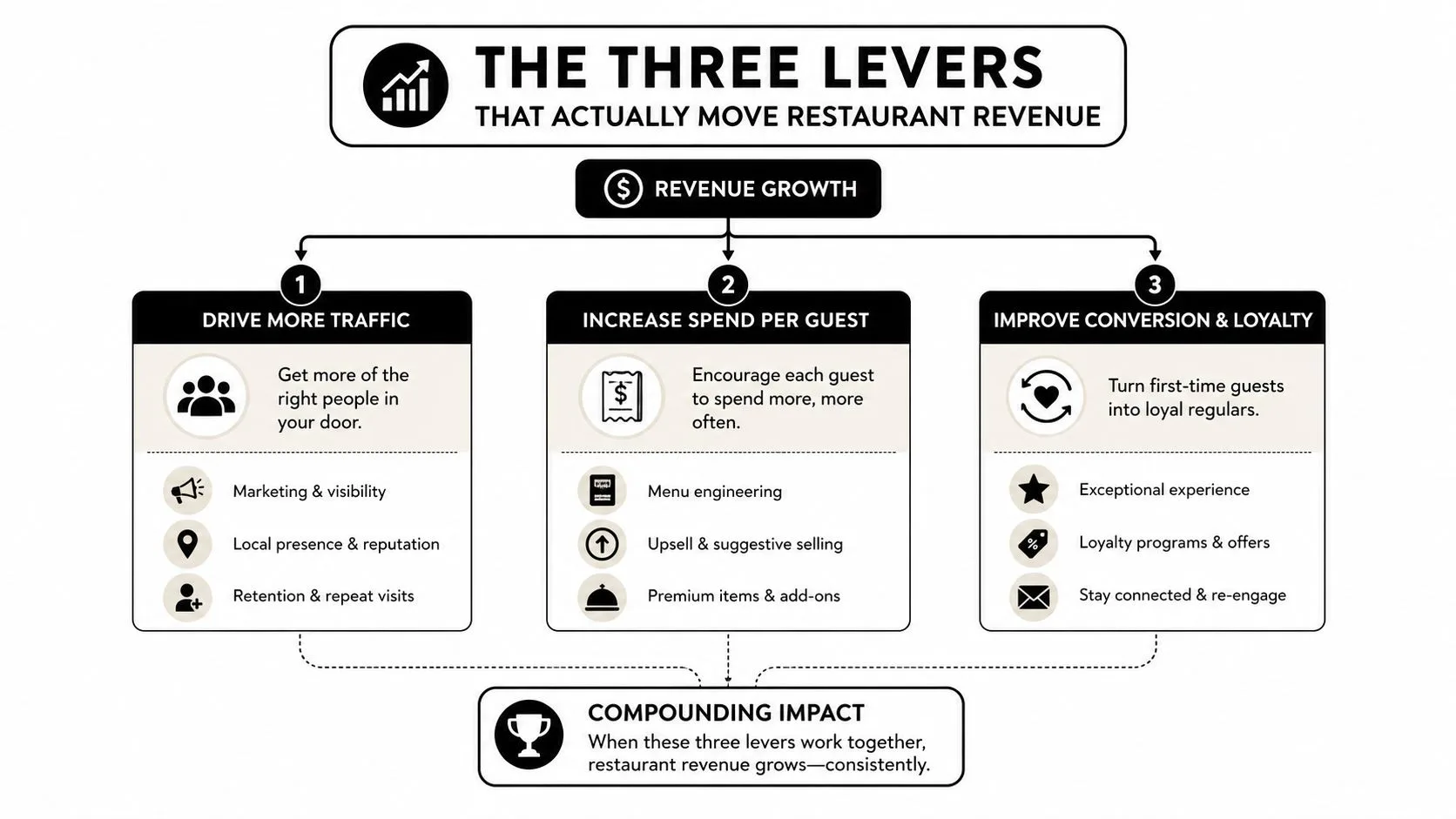
If your restaurant is stuck, stop asking, “How do I get more sales?” Ask, “Which lever is weak right now?” Restaurant growth comes from three places, more transactions, a higher average check, or a better sales mix. That's the frame operators should use because a full house doesn't automatically mean stronger profit. If labor is bloated, discounts are too deep, or the menu is pushing low-margin items, you can be busier and poorer at the same time.
Transactions are not the same as profit
More traffic matters, but only if the demand is worth serving. A packed Saturday can still be a bad night if it requires too many cooks, too many servers, or too many discounted covers. The right question is not whether the room is full, it's whether each additional guest is paying enough to justify the cost to serve them.
Practical rule: If a tactic brings in more bodies but doesn't lift ticket value or item mix, it may be buying noise, not profit.
Average check compounds faster than most owners think
A small check lift matters because it applies to every order, every daypart, every busy week. That's why menu placement, upsells, and direct-order prompts deserve attention. Industry guidance from Restaurant365's sales playbook points operators toward tracking transactions, average check, item mix, and daypart sales, then steering guests toward higher-margin items with better placement and suggestions. That's a cleaner strategy than hoping more people wander in.
Sales mix decides whether growth is worth it
A better mix means more of what you sell is profitable, not just popular. That's the part most owners ignore when they chase volume. The menu can create a room full of guests who all order the cheapest, hardest-to-produce items, which looks busy and behaves weakly on the P&L.
This week, pull one report and answer one question: Which lever is weakest, transactions, average check, or sales mix? If you can't answer that in under a minute, you're still managing by instinct, and instinct is expensive.
Menu Engineering That Lifts Average Check
A menu that just lists dishes leaves money on the table. A strong menu pushes guests toward items that grow average check without filling the plate with low-margin clutter. Every change should serve one of three levers, transactions, average check, or profit mix. This section is about the second lever, and the tradeoff is clear, better menu design can raise ticket value, but only if you accept that some weak sellers deserve less space or no space at all.
Classify the menu before you redesign it
Use the classic four-quadrant view, stars, plowhorses, puzzles, and dogs. Stars are popular and profitable, plowhorses are popular but weak on margin, puzzles are profitable but under-ordered, and dogs are weak on both sides. The job is simple, promote the stars, fix the puzzles, rework the plowhorses, and cut the dogs.
| Quadrant | Definition | Action |
|---|---|---|
| Stars | High popularity, strong margin | Give them visual priority |
| Plowhorses | High popularity, weak margin | Reprice, portion, or bundle carefully |
| Puzzles | Low popularity, strong margin | Improve description and placement |
| Dogs | Low popularity, weak margin | Remove or replace |
The discipline is the point. Owners get attached to dishes because of the story behind them or the chef who created them. Guests do not pay for sentimental value, and the spreadsheet does not care either. If you are setting prices by instinct, use this pricing and profitability guide before you touch the menu again.
Rewrite the menu for attention, not decoration
Industry material citing Cornell-linked guidance says detailed, sensory menu descriptions can raise item sales by up to 27% Peblla. Use that style on items you want to move. Do not write “chicken sandwich.” Write the texture, heat, sauce, and finish that make it worth ordering. Guests buy appetite and clarity.
Keep each category tight. Roughly 3 to 7 items per section reduces choice overload and helps the guest decide faster.
That does not mean stuffing the page with adjectives. It means telling the guest why the dish belongs in the order, then getting out of the way. If the item is a profit driver, the menu should make that obvious without making the page feel crowded.
Put winners where eyes land first
People scan menus in patterns, and the first strong options they see often win. Put your best-margin items in the upper-right, in boxes, or in other visually distinct spots. Then strip out low-profit clutter that steals attention from the items you want to sell. Variety feels generous to an owner, but too much variety slows decisions and weakens conversion.
A sane 30-day plan is straightforward. Pick one section, calculate item margin, rank by popularity, rewrite the descriptions, prune the dead weight, and reorder the page so the best item gets the best real estate. Then measure the result and move to the next section. If you also need a reminder that the guest-facing page affects trust as well as conversion, the guide for restaurant reputation repair is a useful companion, because a menu that overpromises and underdelivers hurts repeat sales just as fast as a weak menu does.
Local SEO and Online Ordering That Capture Demand
A lot of restaurant sales no longer start with a walk-in. They start with a phone in a hand, a search result, and one fast decision. If your business info is sloppy, your menu is hard to read, or your ordering path is clunky, you lose the sale before the guest ever thinks about food quality. The digital front door needs to work like a host stand that never sleeps.
Make the restaurant easy to find
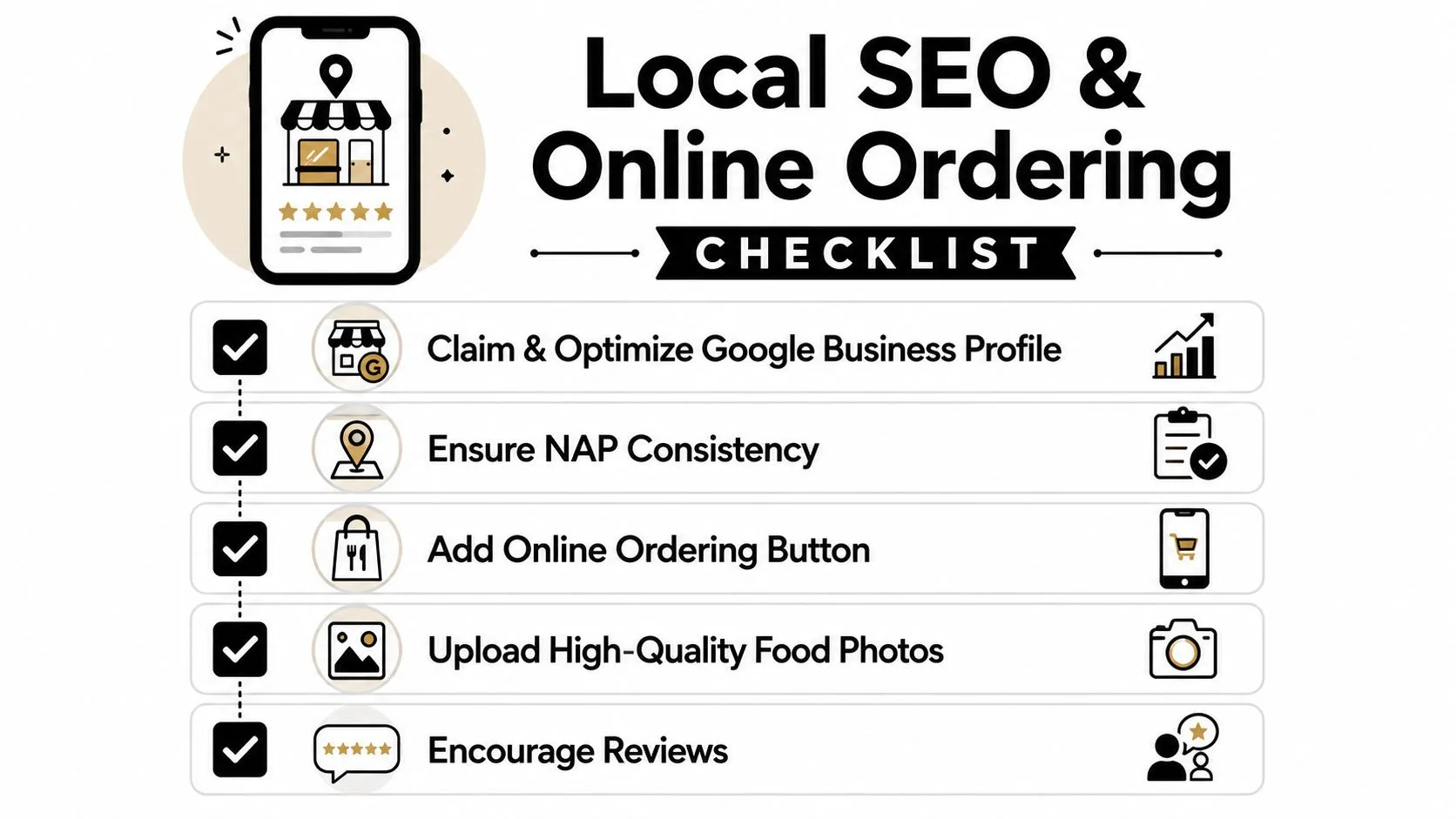
Start with the basics and do them correctly. Keep your business information accurate everywhere, use local keywords that match how people search, and make sure your reservations or ordering links are obvious on the site. The business lesson is simple. If people can’t find you quickly, they’ll buy from whoever made it easier.
Put the direct-order button in the website header, social bios, and email signatures. Keep the path to the menu short. And make the menu itself easy to scan, especially on mobile, because nobody wants to fight a PDF just to place dinner.
Remove friction from your own ordering flow
The goal is not “online ordering.” The goal is first-party online ordering that converts. That means fewer fields, fewer clicks, clear modifiers, and immediate confirmation. If the checkout feels messy, guests bounce to a marketplace because it’s familiar, not because it’s better.
Industry guidance from SpotOn’s direct-ordering playbook pushes the same point, make the ordering link obvious, simplify checkout, and automate reminders so repeat business doesn’t depend on memory. If you’re still leaning on marketplaces to carry your digital sales, you’re giving away control of the guest relationship.
Build the repeat loop after the first order
A one-time order is nice. A returned guest is the key asset. Loyalty prompts, automated reminders, and targeted promos for slower dayparts are how you make the first sale become a second sale. Keep the offer relevant and tied to behavior, not random discounting.
If reputation is part of your problem, use a guide for restaurant reputation repair to clean up the trust layer before you pour more money into traffic. A bad listing or a weak review profile can kill conversion before your food ever gets a chance. If you’re upgrading your digital payment stack to support this shift, this funding option guide is worth reviewing.
A good afternoon’s work can fix a lot here. Audit the Google Business Profile, make the direct-order link obvious, remove checkout friction, and set one automated reminder for repeat orders. That’s not glamorous, but it’s how you stop leaking demand.
Upsells, Bundles, and Staff Scripting That Add to Every Ticket
The cheapest sales lift in the building is already standing on the floor. It’s the server, cashier, or counter person who knows what to ask for and when. Most owners underuse this lever because they think upselling has to feel pushy. It doesn’t. Good upselling feels like service with timing.
Build add-ons that make sense
Good add-ons are obvious, not clever. Think sides, premium proteins, drink upgrades, dessert prompts, extra sauce, and the obvious add-on that fits the base item. The rule is simple, if the add-on makes the meal better and the margin is healthy, train the team to offer it. If it confuses the guest or slows the line, don’t push it.
Practical rule: The best add-on is the one the guest would have wanted anyway if someone had made it easy to say yes.
Give the team language they can actually use
The script should sound like a recommendation, not a pitch. A server can say, “Do you want to add the house fries? They go best with that sandwich.” Or, “I’d pair that with the citrus soda, it balances the spice.” That’s not pressure, that’s guided decision-making.
Use bundles the same way. Pair a main, a side, and a drink into a clean combo that protects margin instead of slashing price. The guest should feel simplicity and value, not a discount trap. The point is to move more dollars into the ticket without training customers to wait for markdowns.
Use the same logic online
Your checkout flow should do what your staff does in person. Suggested items at checkout, mix-and-match builders, and a default side can lift the basket without adding labor. The interface should make the higher-margin choice the easiest one to click.
Here’s the tradeoff owners need to respect. A small add-on on a portion of checks can move contribution margin, but only if the attachment rate is real and the labor cost doesn’t swell with it. If the team is rattling off five suggestions on every ticket, service slows and the guest feels managed instead of served. Keep it tight, train it well, and measure whether the average ticket moves.
Catering, Events, and B2B Partnerships Beyond the Dining Room
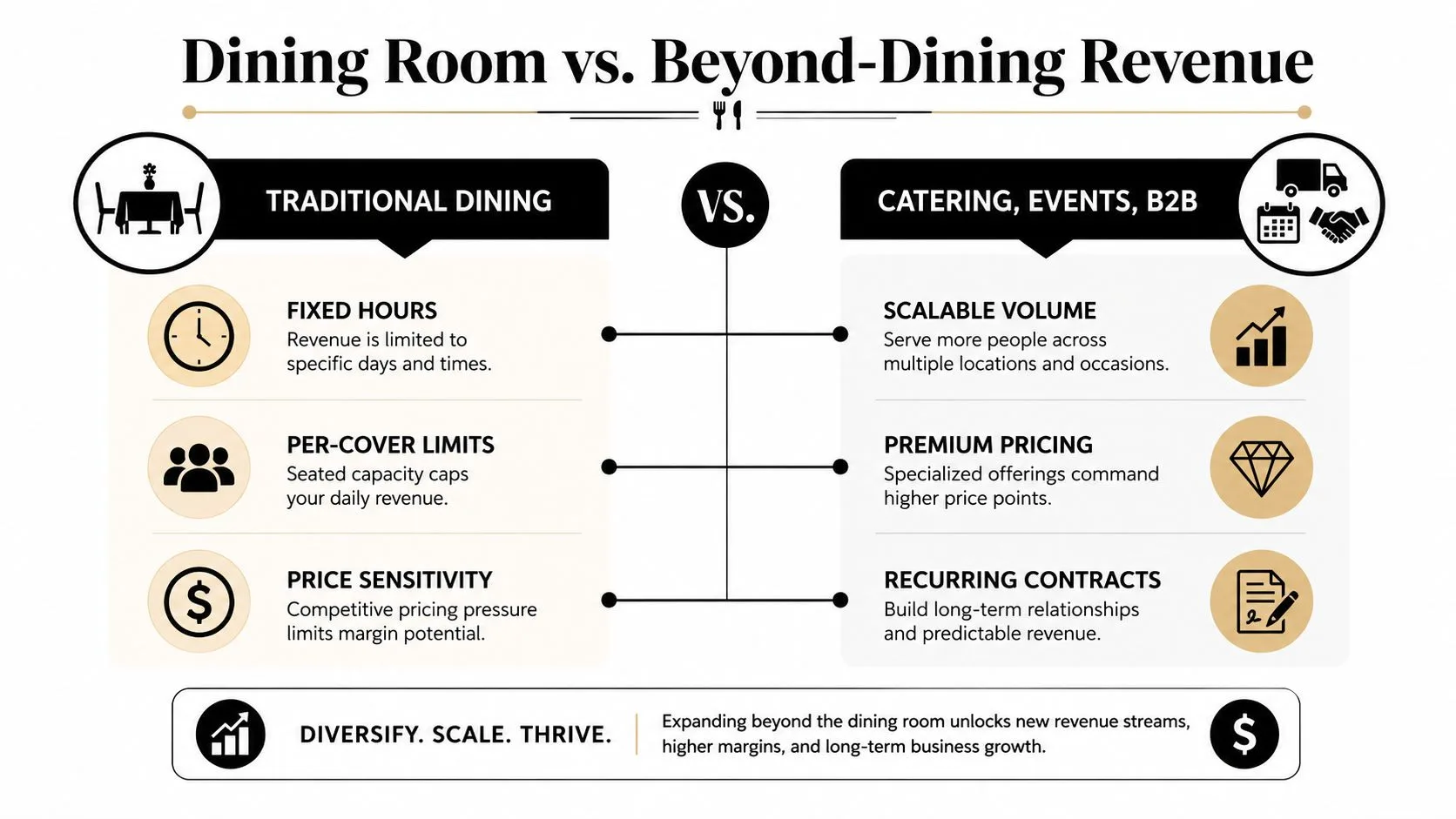
If you only rely on the dining room, you’re capping your own ceiling. Catering, private events, and local B2B accounts can create better revenue because they sell a larger basket, use capacity more efficiently, and often happen when the dining room is slower. Not every concept should chase them, but most midsize operators should at least test one lane that isn’t tied to normal seat turnover.
Compare the lanes before you commit
| Growth Lane | Typical Effort | Margin Profile | Repeat Potential |
|---|---|---|---|
| Catering | Medium | Often stronger than single checks when packaged well | Good if you win offices or regular groups |
| Private events | Higher upfront coordination | Can be strong if minimums protect labor | Moderate, depends on experience and follow-up |
| B2B partnerships | Medium to high relationship work | Attractive when routing is efficient | Strong if accounts recur weekly |
Catering usually wins on scale if the menu is tight and the logistics are controlled. Events can be profitable, but they need guardrails, especially staffing and minimum spend. B2B lunches, office trays, and recurring partner orders can be the cleanest path to repetition if you can deliver on time without disrupting the core line. For venue ideas and occasion-based demand, ABC Hire’s restaurant recommendations can help you think through the kinds of group bookings people make.
Package the offer so it’s easy to buy
Use a small catering menu built around dishes that travel well and hold quality. Set minimums that protect margin. Create a simple inquiry form with date, guest count, pickup or delivery, and budget range. Then make one-page proposals for local offices, hotels, and venues so a manager can forward the offer without rewriting it.
Separate growth from chaos
Do not let event work wreck the dining room. Staff events separately when possible, use slow dayparts to prep, and assign one person to own the quote and the follow-up. If a new channel adds revenue but creates service failures in the core operation, you didn’t grow, you just shifted the problem.
If you need capital for a catering kitchen, a vehicle, or event equipment, restaurant financing options should be tied to a specific revenue lane, not vague expansion talk. That way the money has a job before it lands in the account.
Operations and Tech That Protect Margin While You Grow
Sales and operations are not separate problems. A restaurant that gets busier but leaks labor, inventory, or order accuracy is not scaling well, it’s just getting noisier. The right systems let you serve more guests without letting margin collapse underneath you.
Staff to demand, not habit
Use sales-by-daypart data to shape labor around actual demand. If breakfast, lunch, and late night behave differently, staffing should behave differently too. Too many restaurants keep a fixed crew in place because it feels safe, then wonder why labor eats the win on lighter shifts.
Track food waste and order errors the same way. These are not “back of house issues,” they’re profit leaks. Modern POS and inventory tools make it easier to see where the money is slipping before month-end arrives and the damage is already locked in.
A busy night with bad labor cost is still a bad night.
Use tech that removes friction
Online waitlists, contactless payment, and kitchen display systems do more than save time. They help move covers through the room and cut the friction that turns a sale into a lost sale. If guests can’t get seated, can’t pay quickly, or keep waiting on a ticket handoff, you lose capacity without realizing it.
Third-party delivery marketplaces deserve skepticism. They can add volume, but the fee structure and discount pressure often chew up the profit on the order. When first-party ordering is strong, redirect demand to your own channel and keep the relationship in-house.
Protect the margin while you grow
The trap is obvious. Owners chase top-line sales, ignore the cost to serve, and then act surprised when the month doesn’t cash out. Use tech and staffing to make the operation cleaner, not just busier. If a tool doesn’t reduce friction, reduce waste, or improve conversion, it’s probably a nice-to-have, not a growth driver.
The KPIs That Tell You Whether Growth Is Real
Busy does not mean healthy. If you want to know whether your sales strategy is working, track the handful of numbers that tell the truth and ignore the vanity metrics that flatter the ego. Followers, impressions, and coupon redemptions can all look impressive while the P&L stays flat.
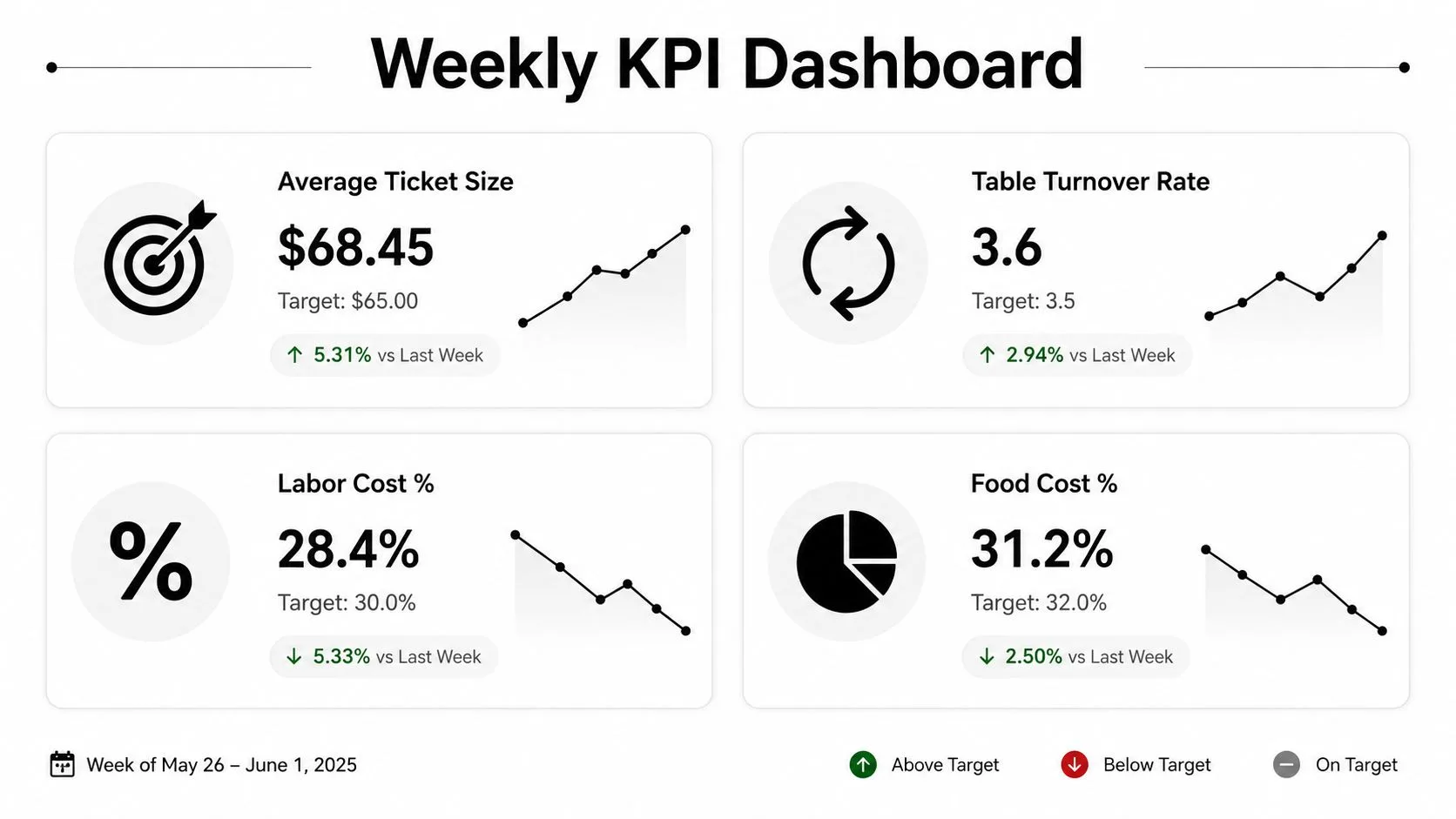
Review the right numbers every week
Your weekly dashboard should be short enough to remember without opening a spreadsheet every time. Look at average ticket size, sales mix by category, labor cost percentage, and food cost percentage. Those four numbers tell you whether the menu, the team, and the ordering flow are working together or fighting each other.
- Average Ticket Size: If this isn’t rising, your upsells, bundles, and menu design aren’t doing enough.
- Sales Mix by Category: If the wrong items are winning, you’re selling volume without steering margin.
- Labor Cost Percentage: If this keeps climbing on busy weeks, staffing is out of sync with demand.
- Food Cost Percentage: If this drifts, waste, portioning, or purchasing is hurting you.
Review the deeper trends every month
Monthly, look at average check trend, contribution margin by menu item, and channel mix between dine-in, direct online, and third-party. That view tells you where growth is coming from and whether it’s worth keeping. If direct online is growing while third-party is eating margin, the answer is obvious. If a menu item drives traffic but drags profit, it should be reworked or cut.
Use one weekly meeting, not ten reports
The best operators I’ve seen don’t drown in dashboards. They run one clean review, ask what changed, and assign one fix. That beats staring at charts and hoping the numbers improve on their own.
If you’re funding a marketing push, a POS upgrade, or a second growth lane, match the financing to the use case. Short-term working capital fits campaigns, a line of credit fits uneven cash flow, equipment loans fit kitchen or tech upgrades, SBA-backed loans fit larger expansions, and merchant cash advances fit fast, flexible needs when speed matters more than cost. Business Loan Warrior helps owners compare those options through a single application, which is useful when you need capital tied to a measurable plan instead of another vague promise.
If you’re trying to increase restaurant sales without burning margin, get serious about the financing you’re pursuing. Business Loan Warrior helps small businesses compare financing options for equipment, expansion, working capital, and other growth needs through one application, so you can fund the move that matches your numbers. Visit Business Loan Warrior if you want to pair a tighter sales plan with capital that fits the job.