
You're looking at a new piece of equipment, but you're also watching payroll, supplier invoices, and customer payments move on different schedules. One lender offers a fixed installment loan for the purchase. Another offers a line of credit you can tap when cash gets tight. The rate comparison looks straightforward until you ask the question that matters more: can the business survive the payment and rate changes that come with each option?
The practical difference in a line of credit vs installment loan decision is certainty versus flexibility. An installment loan gives you a known amount and a scheduled payoff. A line of credit preserves borrowing capacity for needs that haven't arrived yet. Neither product wins automatically, and the cheaper headline rate can be the wrong answer if it leaves your business exposed to a payment spike or a renewal decision.

Table of Contents
- Two Ways to Borrow, Two Very Different Commitments
- How Each Financing Product Actually Works
- Comparing the True Cost of Each Option
- Stress Testing Flexibility Against Predictability
- Best Use Cases for Each Funding Type
- Eligibility, Underwriting and Approval Realities
- Decision Framework and Your Next Steps
Two Ways to Borrow, Two Very Different Commitments
An owner buying a delivery vehicle faces a defined bill, a clear delivery date, and an asset expected to support revenue over time. An owner running a seasonal retail business faces a different problem: inventory arrives before sales, customer payments may lag, and the amount of cash needed can change from week to week. Putting both needs under the same financing product often creates unnecessary risk.
An installment loan delivers a lump sum when the loan begins, then requires scheduled payments through a defined term. A line of credit establishes a limit that the business can draw from, repay, and potentially use again. The Consumer Financial Protection Bureau's description of installment credit supports this basic distinction between a lump-sum loan with fixed beginning and ending dates and reusable borrowing capacity.
The honest question isn't “Which rate is lower?” It's “Which commitment fits the cash flow that will repay it?” A fixed loan can be uncomfortable if you borrow too much at the start. A line can be dangerous if you treat available credit as permanent capital.
Practical rule: Match the financing structure to the uncertainty of the need, then test whether the business can handle the worst reasonable payment outcome.
This article focuses on the trade-offs owners usually discover only after signing. You'll see how each product works, where interest and fees accumulate, why variable rates and renewals matter, which business situations favor each structure, and how lenders assess the application. The goal is a decision you can defend using your own cash-flow forecast, not a generic pros-and-cons list.
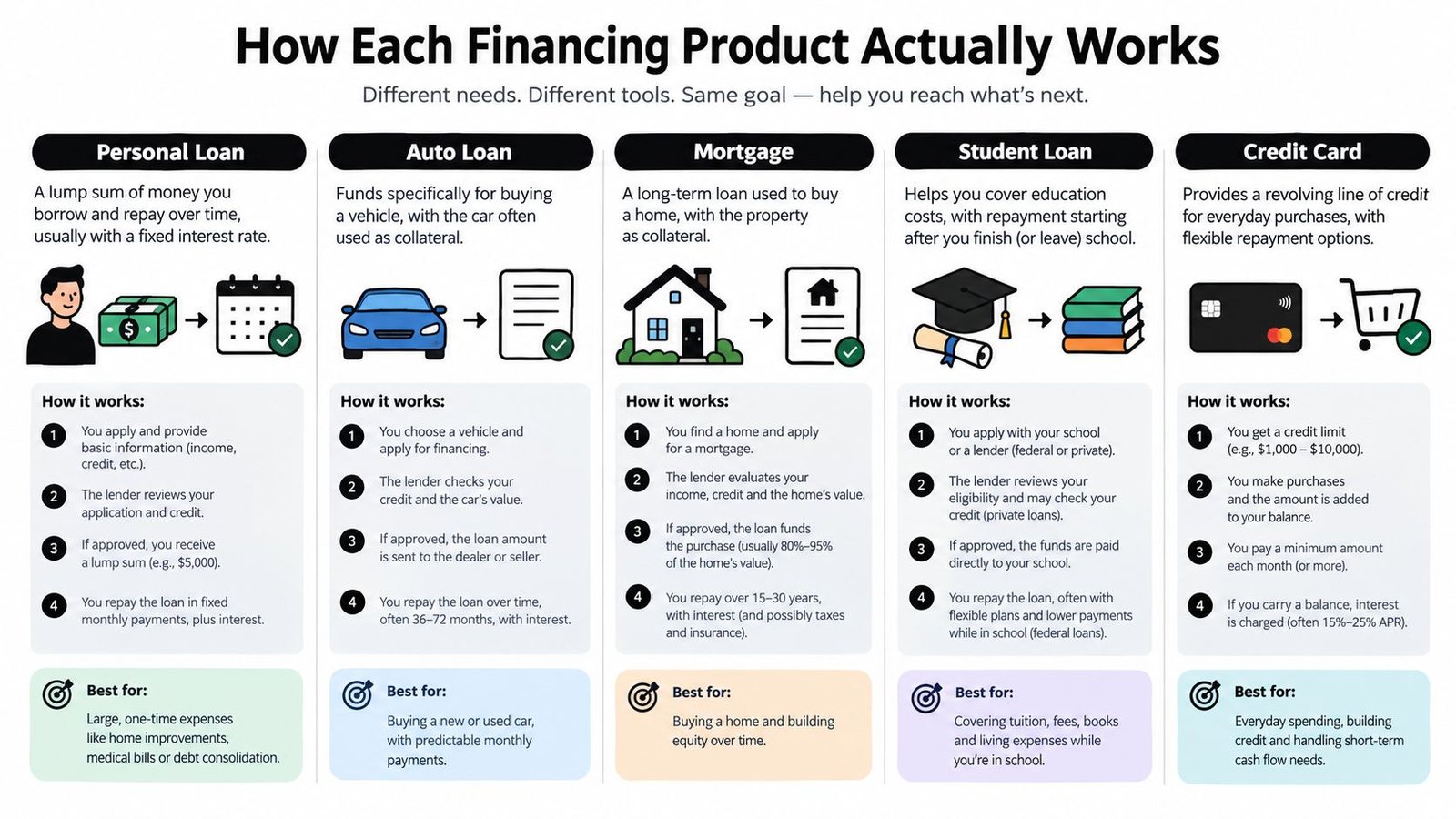
How Each Financing Product Actually Works
Installment loans turn a known need into a fixed obligation
With an installment loan, the lender advances the agreed amount at origination. The business then repays principal and interest through scheduled payments over a defined term, with a stated payoff date. Depending on the agreement, the rate may be fixed or variable, but the repayment schedule remains the central feature.
Think of it as financing a specific job. If a contractor needs machinery at a known price, the lender funds that purchase and the contractor repays according to a schedule. The loan doesn't refill after each payment, so additional capital later usually requires a new application or another facility.
The structure works well when the money has a clear purpose and the asset or project has a predictable economic life. It also makes budgeting easier because the owner can place the scheduled payment directly into the monthly forecast.
Lines of credit preserve access for uncertain timing
A business line of credit works more like a controlled business credit card. The lender approves a maximum limit, but the company draws only what it needs. As the company repays, borrowing capacity may become available again, subject to the agreement, fees, and lender controls.
Interest generally applies to the drawn balance rather than the unused limit. That can make a line efficient for short-lived cash gaps, but it doesn't make the facility free when unused. Maintenance charges, draw fees, reporting requirements, and renewal conditions may still apply.
Utilization is the amount of the approved line currently drawn. A business that repeatedly reaches its limit may look very different to a lender from one that uses the facility briefly and repays it. Peak utilization matters because it shows how much liquidity the company needs when conditions are difficult.
For a deeper explanation of draw periods, repayment mechanics, and reusable availability, review this guide on how a business line of credit works. Owners comparing facilities should also compare revolving credit terms rather than assuming every line has the same renewal and repayment rules.
The following video gives a visual overview of how different credit products are structured and used:
Comparing the True Cost of Each Option
The first cost difference is the interest basis. An installment borrower generally pays interest according to the full funded balance from the beginning. A line-of-credit borrower generally pays interest only on the amount drawn, but the facility can introduce fees and variable pricing that change the result.
| Feature | Business Line of Credit | Installment Loan |
|---|---|---|
| Interest basis | Usually the drawn balance, subject to the agreement | Usually the funded balance from origination |
| Access to funds | Draw as needed up to an approved limit | Receive the agreed lump sum once |
| Repayment | Payments can change with balance, rate, and facility terms | Scheduled payments through a defined term |
| Rate structure | Often variable, although fixed-rate structures exist | Fixed or variable, depending on the agreement |
| Common cost drivers | Interest, draw fees, maintenance fees, renewal conditions | Interest, origination fees, late charges, collateral costs |
| Main uncertainty | Rate movement and continued availability | Fixed payment despite changing cash flow |
| Best cost profile | Low or intermittent utilization | A known amount used for a defined purpose |
Consider a simple example without assuming a particular market rate. A company needs equipment costing $60,000 and uses an installment loan to fund the purchase. The company receives the full amount immediately, so interest calculations begin against the funded balance under the loan agreement. The benefit is that the repayment schedule is known, and the business can compare the payment against the equipment's expected contribution.
Now consider a line with a $60,000 limit. If the company draws only part of that limit for a short cash-flow gap, interest is generally calculated on the drawn amount, not the unused availability. If the company later draws more, the interest cost rises with utilization. A variable rate can increase the payment even when the balance doesn't change.
What owners should add to the rate comparison
A useful cost worksheet should include:
- Expected utilization: Estimate the average and peak drawn balance, not just the approved limit.
- Time outstanding: A balance used briefly has a different cost profile from one carried continuously.
- Fees: Add origination, draw, maintenance, renewal, late-payment, and collateral-related charges where applicable.
- Rate movement: Recalculate the line's interest cost if the variable rate rises.
- Repayment behavior: A line can become expensive when minimum payments allow the balance to remain outstanding.
For a practical worksheet approach, use this guide to calculate the real cost of a small-business loan. The calculation should show total cash paid, not just the advertised rate.
A line can be the lower-cost choice when utilization stays low and short. It can also be the less predictable choice when the business carries the balance, pays facility fees, and faces rate changes. A fixed installment loan may cost more on paper yet produce a more reliable budget.
Stress Testing Flexibility Against Predictability
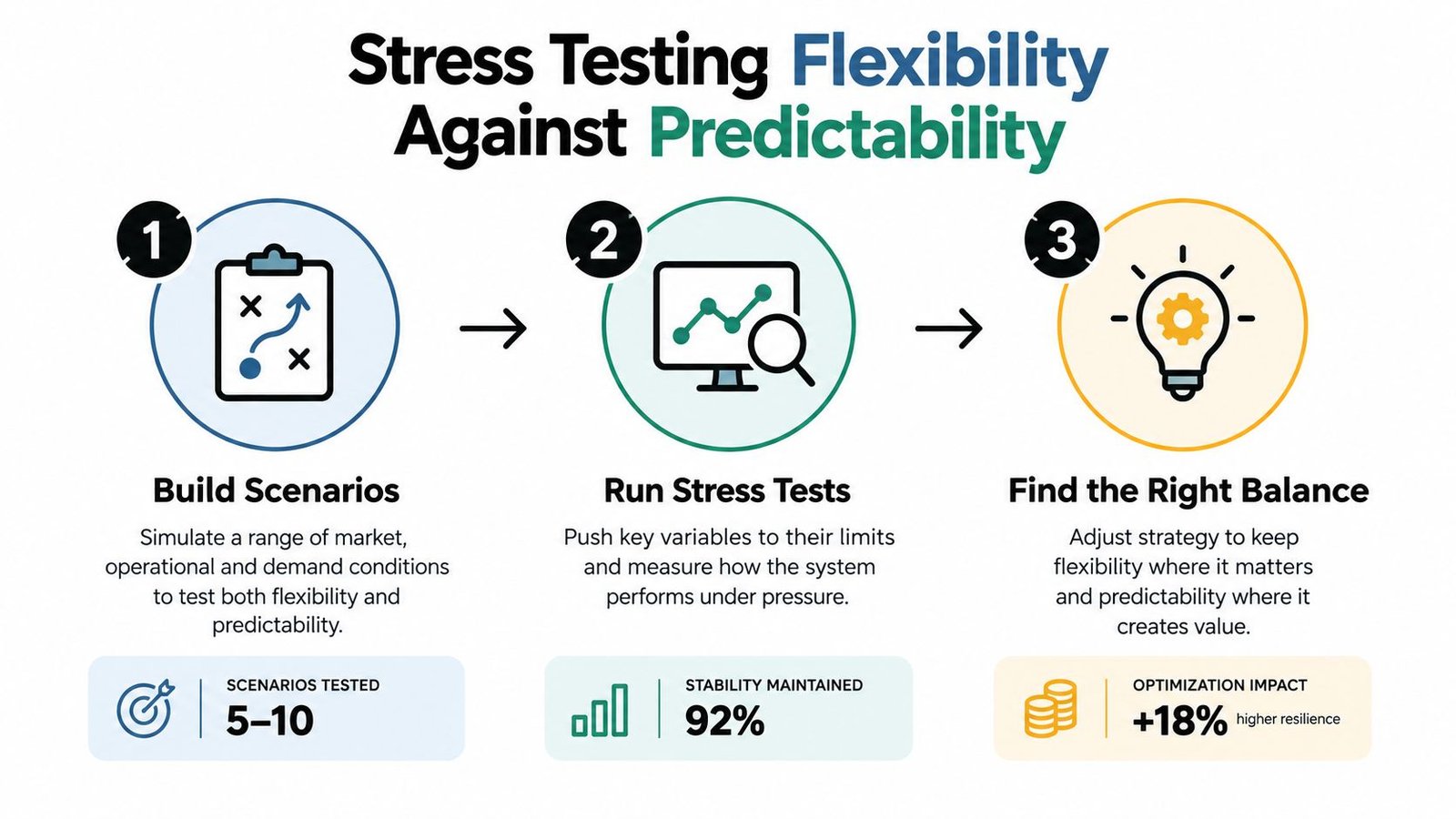
Flexibility sounds positive until the business depends on it. A revolving facility provides contingent liquidity, meaning the lender commits capacity that the borrower can draw when needed rather than distributing all the money immediately. That structure is valuable for uncertain timing, but the lender may review the facility at renewal, adjust terms, or reduce availability.
Federal Reserve lending data illustrate the institutional role of revolving facilities. In a 2025 analysis, banks held approximately $79 billion in revolving credit-line commitments to private-credit vehicles compared with about $16 billion in term-loan exposures, a roughly 4.9-to-1 ratio in that dataset. The Federal Reserve cautions that the figures cover corporate loans above $1 million made by large U.S. bank holding companies subject to stress testing, so they aren't a small-business approval or pricing benchmark. They do show how lenders use revolving commitments as contingent liquidity rather than treating them as identical to term debt. Federal Reserve analysis
Run the business through three uncomfortable questions
Start with the cash-flow trough, the point at which operating cash is most constrained. Then test:
- Payment pressure: Can the business make the installment payment during the weakest projected period?
- Rate pressure: If the line's variable rate rises, does the revised payment still fit?
- Renewal pressure: If the lender reduces availability at renewal, can the business replace the missing liquidity?
Recent Federal Reserve data reported that in the fourth quarter of 2024, variable-rate lines represented about 89% of reported bank credit-line usage, compared with 48% for fixed-rate lines. The same data reported median usage of 48% for fixed-rate lines and 37% for variable-rate lines. These figures come from a defined survey context, not a universal rule for every business, but they reinforce the need to model rate and utilization separately. FDIC survey materials
A seasonal retailer may prefer a line because inventory purchases and sales receipts don't arrive together. A restaurant may use it for short working-capital gaps. A contractor with large receivables may draw against the line while waiting for payment. But if the company needs the full facility continuously, a fixed installment loan may be safer, even with a higher headline rate, because the repayment obligation is known and doesn't depend on renewal.
Best Use Cases for Each Funding Type
Product fit starts with the purpose of the money. The right structure follows the timing, certainty, and useful life of the expense.
When an installment loan usually fits
A contractor buying machinery knows the purchase price, delivery timing, and expected operating role of the asset. An installment loan fits because the company receives the capital once and repays it on a schedule that can be compared with revenue generated by the machinery.
A business acquisition is another defined obligation. The buyer needs a specified amount at closing, not an open-ended pool that may or may not be available later. The same logic applies to a construction project with a documented budget, though the funding structure may need to reflect staged draws rather than a standard lump-sum product.
One-time expansion costs can also favor an installment structure. If a company is opening a location and has identified the build-out, furniture, and equipment requirements, a fixed repayment schedule can prevent the expansion debt from blending into everyday operating cash.
For broader guidance on matching one-time needs to a term structure, review this installment loan playbook.
When a line of credit usually fits
A retailer preparing for a seasonal rush may not know exactly how much inventory will sell or when customer receipts will arrive. Drawing only what the business needs protects cash from being borrowed too early, so a line often fits better.
A restaurant facing fluctuating payroll and supplier timing may use a line to smooth temporary gaps. The facility is most useful when the owner has a credible repayment source, such as upcoming sales or receivables, rather than a plan to carry the balance indefinitely.
An emergency repair presents a similar problem. The amount may be uncertain until the repair is diagnosed, and the timing may be immediate. Reusable access can be more practical than applying for a new installment loan for every unexpected expense.
The recommendation in each case follows the need, not a universal preference. Defined amount and defined purpose favor an installment loan. Uncertain amount and recurring timing favor a line, provided the business can withstand variable pricing and renewal risk.
Eligibility, Underwriting and Approval Realities
The best product is irrelevant if the lender won't approve it or the approval terms create a different risk. Underwriters generally assess an installment loan through the scheduled payment, projected cash flow, and the company's ability to service the debt. A line requires additional analysis of peak utilization, borrowing-base rules, collateral, reporting, and the possibility that the facility won't renew on the same terms.
For an installment loan, the lender can see the amount advanced and the expected amortization. For a line, the lender must judge both current debt and future access. Receivables quality, inventory controls, customer concentration, and seasonal patterns may influence the available limit.
Debt-service coverage ratio, or DSCR, compares cash available for debt service with required debt payments. Owners who want a plain-language explanation of the metric can review Jumpstart Partners' DSCR guide. The calculation doesn't replace a full underwriting review, but it helps an owner understand why a scheduled loan payment may be easier to evaluate than an uncertain revolving balance.
Terms that deserve direct questions
Ask the lender:
- Collateral: What assets secure the facility, and how are borrowing values determined?
- Personal guarantee: Does the owner guarantee the entire balance, future draws, or only a defined amount?
- Covenants: Which financial or operating conditions can trigger a default or limit draws?
- Reporting: How often must the company provide bank statements, financial statements, borrowing-base certificates, or aging reports?
- Renewal: Is renewal automatic, discretionary, or subject to a full credit review?
The Federal Reserve's 2023 Small Business Credit Survey found that 37% of small employer firms applied for a loan, line of credit, or merchant cash advance during the preceding twelve months. Among applicants, small banks approved at least some requested financing for 75%, compared with 66% at large banks. Federal Reserve Small Business Credit Survey
Approval conditions also depend on lender type and borrower risk. The Federal Reserve's 2025 report says nearly four in ten employer firms sought one of these financing products in the prior twelve months, while full-approval shares remained below prepandemic levels. It also describes sustained tightening in credit standards, with online lenders more likely to approve medium- and high-credit-risk firms than some other channels. Federal Reserve report on employer firms
If a bank declines the line, ask whether the issue is structure, documentation, collateral, borrowing power, or cash flow. A fixed installment request may sometimes be easier to underwrite because the proceeds and repayment are defined. Don't hide the decline from the next lender. Fix the underlying weakness and choose a channel whose requirements match the business.
Decision Framework and Your Next Steps
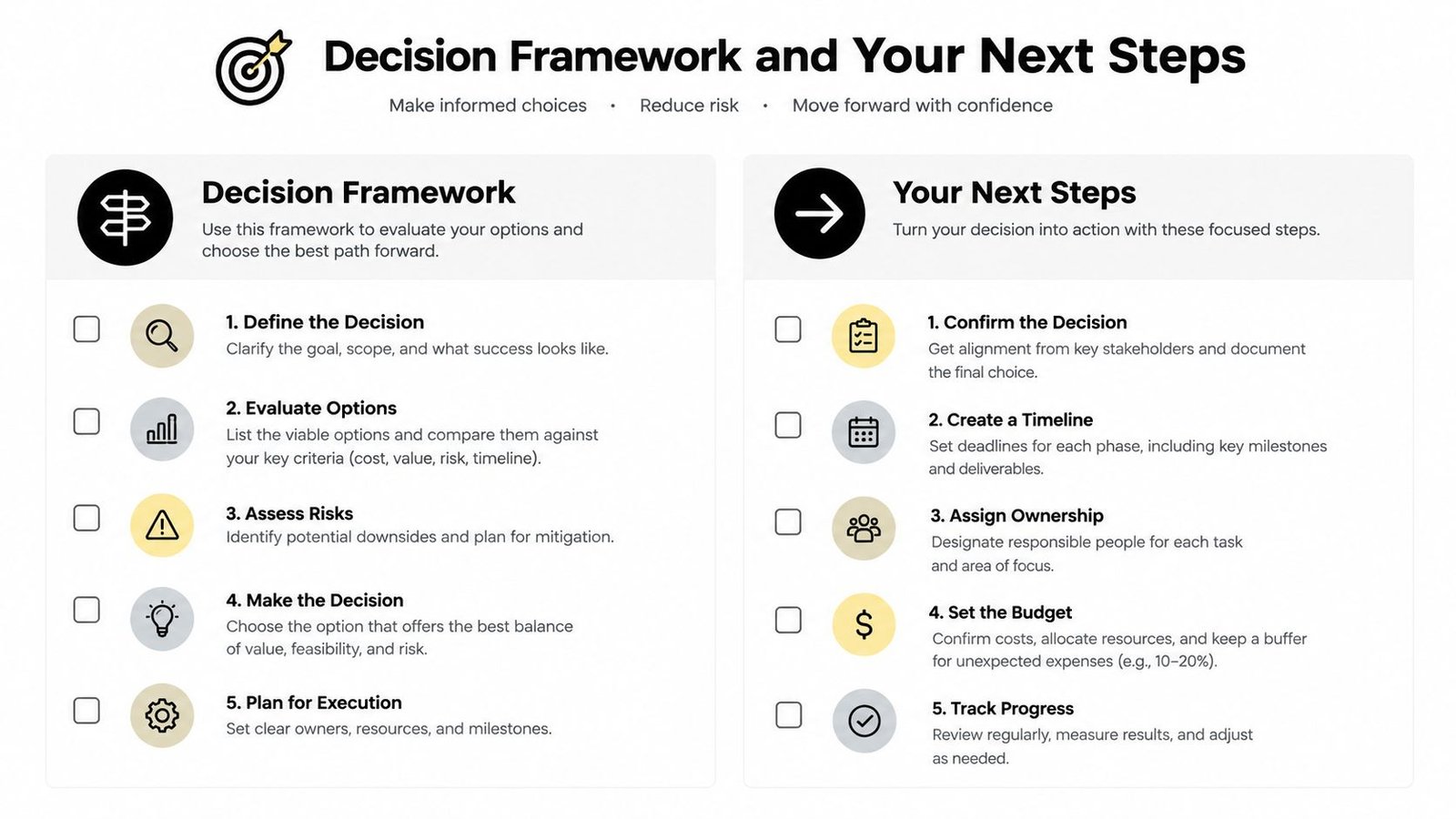
Make the decision in this order, before comparing offers.
- Define the need. Write down the amount, timing, purpose, and expected repayment source. If the amount is known and the purpose is one-time, start with an installment structure. If timing or amount is uncertain, examine a line.
- Map the cash-flow trough. Identify the period when operating cash is tightest. Include payroll, rent, taxes, suppliers, and existing debt rather than looking only at revenue.
- Stress the payment. For an installment loan, test the scheduled payment against the trough. For a line, test higher variable pricing, greater utilization, and reduced renewal availability.
- Calculate actual cost. Use expected utilization, time outstanding, interest, origination charges, maintenance fees, draw fees, and renewal costs.
- Check approval reality. Review credit quality, collateral, guarantees, covenants, reporting, and lender channel before treating an offer as available capital.
Before signing, ask whether the line can be reduced at renewal, whether the lender can demand repayment, and whether a variable rate applies to all future draws. Confirm how quickly availability returns after repayment. For an installment loan, verify the payoff date, prepayment terms, collateral release, guarantee scope, and consequences of a missed payment.
The same discipline applies to other fixed business commitments. If you're taking on premises alongside debt, use a separate checklist for navigating the office lease process, including termination rights and obligations that could compete with loan payments.
Business Loan Warrior offers a single no-fee application that lets owners check pre-approval without affecting credit, connect bank accounts, review options through a secure dashboard, and chat with underwriters across business loans, lines of credit, and SBA options. Use that process to compare structure and approval fit, not just the first advertised rate.
The central decision is certainty versus flexibility. An installment loan is usually safer for a known obligation when payment predictability matters most. A line of credit is usually more useful for recurring or uncertain cash needs, but only if the business can handle variable rates, utilization pressure, and renewal risk.
Business Loan Warrior can help you compare business loans, lines of credit, SBA financing, and other funding structures through one no-fee application. Visit Business Loan Warrior to check potential options, connect your business accounts, and discuss the right balance between fixed repayment certainty and revolving flexibility.