
SBA loan payments are generally due monthly and are usually sent to your lender or loan servicer, not directly to the SBA. The right payment destination depends on your loan's program and servicing status, so confirming the correct portal matters as much as knowing the amount due.
You've just received the funding, and now your attention shifts to payroll, inventory, or the equipment you financed. Then a statement arrives, or an online dashboard shows a due date, and you wonder whether the first payment goes to the bank, the SBA, or a separate processor. Think of the servicer as the cashier responsible for recording your payment: sending money to the wrong place can delay posting and make an on-time payment look late. Keep your funding paperwork and payment instructions together, and verify the destination before setting up an automatic debit.
Table of Contents
- The First Month After SBA Loan Funds
- How SBA Loan Payment Schedules and Terms Are Built
- Reading an SBA Loan Amortization Schedule
- Where to Send Each SBA Loan Payment
- Prepayment, Late Payments, and Default Triggers
- Common Myths About SBA Loan Payments
- Deferment and Forbearance When Cash Flow Tightens
- A Monthly SBA Payment Checklist for Busy Owners
The First Month After SBA Loan Funds
A business owner's first week after funding often involves more than putting the money to work. The lender may send closing documents, payment instructions, and information about the portal or account used to manage the loan. The owner should look for the servicer's name, the payment method, the due-date information, and a contact for questions about the balance.
The first payment date can vary with the lender's process and the loan's program. Don't assume the funding date tells you exactly when the first installment will be collected. Instead, check the promissory note and the lender's welcome materials, then confirm the due date in the servicing account. If the documents disagree, contact the lender and ask which date and payment channel control.
What the first payment represents
An SBA loan payment is a scheduled installment on the debt, generally made up of principal and interest. The lender or servicer applies the money to the account under the loan terms. The SBA guarantee supports the lender's risk management, but it doesn't make the SBA the routine payment collector for every borrower.
That distinction is practical, not academic. If the owner sees an SBA logo in one place and a bank name in another, they shouldn't guess which one receives the money. Ask the lender to identify the servicer and confirm where payments should be made.
Practical rule: Save the payment instructions, the first statement, and the servicer's contact details in the same place as the signed loan documents.
During the first month, sign in to the correct account, review the scheduled amount and due date, and check how the servicer confirms a payment. If the account isn't active yet, contact the lender before the due date rather than waiting for a reminder. A clear paper trail makes it easier to resolve a missing statement, an unfamiliar debit, or a payment that hasn't appeared in the dashboard.
How SBA Loan Payment Schedules and Terms Are Built
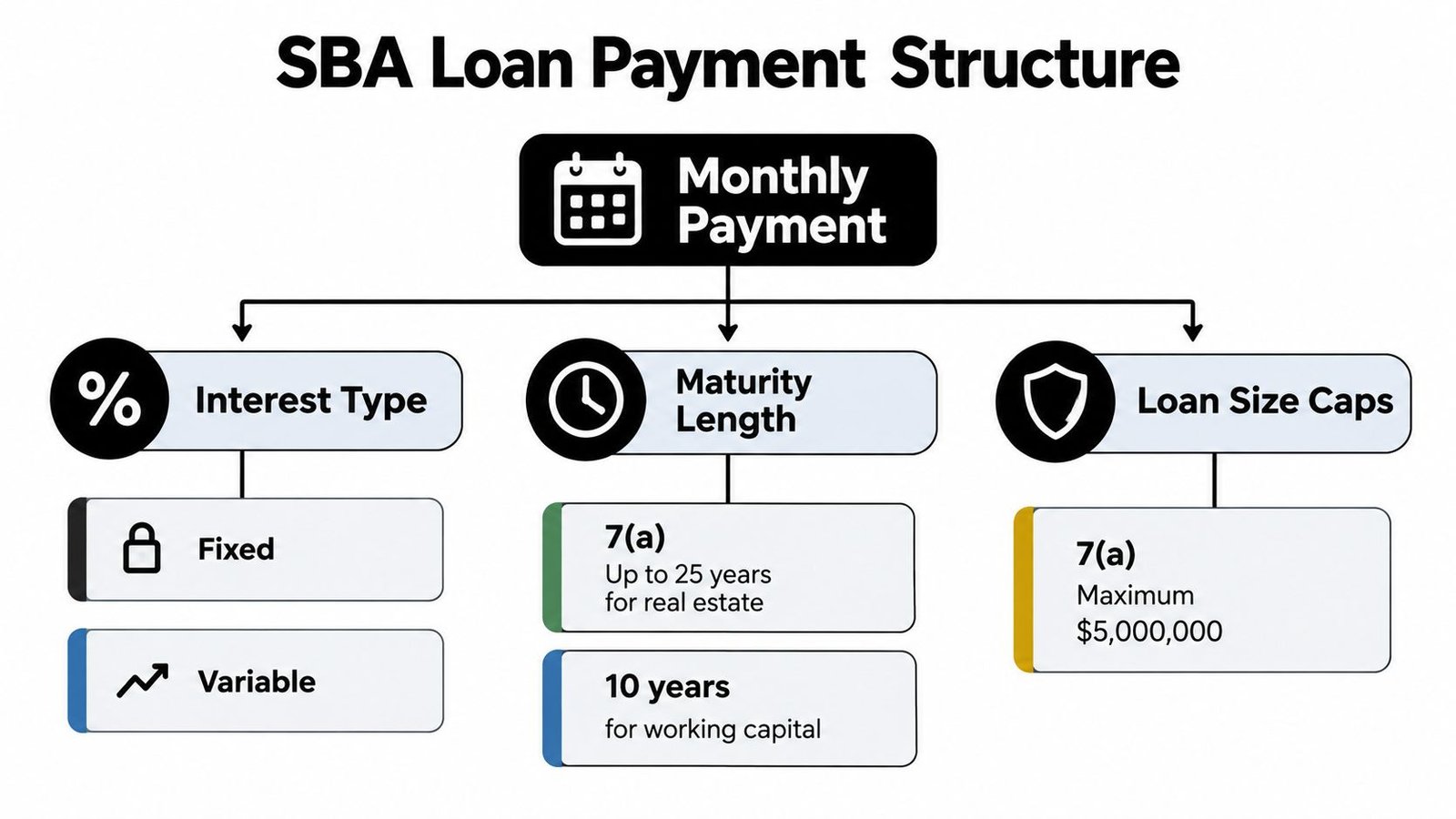
A $250,000 loan repaid over a shorter term will usually require larger scheduled installments than the same balance repaid over a longer term. Three terms shape the amount on your dashboard: the amount borrowed, how interest is calculated, and the repayment period. For 7(a) loans, payments are generally monthly installments of principal and interest. Fixed-rate payments stay constant under the loan terms, while variable-rate payments can change when the underlying rate changes (SBA 7(a) loan terms).
Fixed or variable interest
A fixed rate keeps the interest rate unchanged under the note, so the scheduled principal-and-interest installment remains constant. Your dashboard may show the same scheduled amount from month to month. That does not mean the split between principal and interest stays the same, or that fees and other account activity cannot affect the balance due.
A variable rate works differently: when its underlying rate changes, the scheduled payment may change too. If your installment rises, compare the updated statement with the rate terms in your note and any notice from the servicer. For cash planning, leave room for a payment change rather than treating today's amount as permanent.
Maturity and loan size
The repayment period depends on the loan's purpose and structure. Standard 7(a) term loans can generally run up to 10 years, while loans for real estate or certain long-term assets may have longer maturities. The 7(a) program supports loans up to $5 million. For working-capital borrowing through the SBA's Working Capital Pilot, the maximum maturity is 60 months, or five years.
The Working Capital Pilot's maximum interest-rate spread depends on loan size: base rate plus 6.5 percentage points for loans of $50,000 or less, 6.0 points for $50,001–$250,000, 4.5 points for $250,001–$350,000, and 3.0 points above $350,000. These are program limits, not a forecast of your actual rate. If your requested amount is near a tier boundary, confirm the applicable tier with your lender before finalizing the request. For help weighing repayment length against cash flow, see this guide to choosing business loan repayment terms.
Reading an SBA Loan Amortization Schedule
After the loan funds, the amortization schedule becomes a month-by-month map of what each payment does. It separates interest and principal and shows the balance left after each installment. Early on, more of a typical fixed payment goes to interest because the balance is larger. As that balance falls, the interest share usually shrinks and the principal share grows, like a snowball gathering less interest as it gets smaller.
Here is a hypothetical illustration using a $250,000 loan at a 10% fixed annual interest rate, repaid monthly over 10 years. For simplicity, the example assumes equal monthly payments and excludes fees or other lender-specific adjustments. The figures are rounded; your signed lender schedule governs.
| Illustrative fixed-rate loan, not a lender quote | Approx. principal paid | Approx. interest paid | Approx. remaining balance |
|---|---|---|---|
| First payment | $1,073 | $2,083 | $249,927 |
| Around the middle of the term | $1,692 | $1,464 | $166,494 |
| Final payment | $3,119 | $37 | $0 |
The payment stays roughly level in this simplified example, while its ingredients shift. The opening payment mostly covers interest; by the final payment, almost all of it reduces principal. Actual amounts depend on your interest rate, payment dates, and lender terms. Your dashboard or statement should let you compare the scheduled installment with the principal and interest credited each month.
Check that the schedule matches the amount borrowed, interest type, maturity, and payment frequency. For a variable-rate loan, ask what triggers a rate adjustment, how the payment may change, and when the servicer will notify you. Confirm how extra payments are handled, too. An additional amount may reduce principal, but it may not change the next scheduled installment unless the lender processes it that way.
Before signing, use the schedule to check the loan's amortization period against your cash-flow expectations. If a variable-rate payment changes, compare the new statement with the adjustment terms in your documents. Treat the schedule as a planning map, not a guarantee that a variable payment will remain unchanged.
Where to Send Each SBA Loan Payment
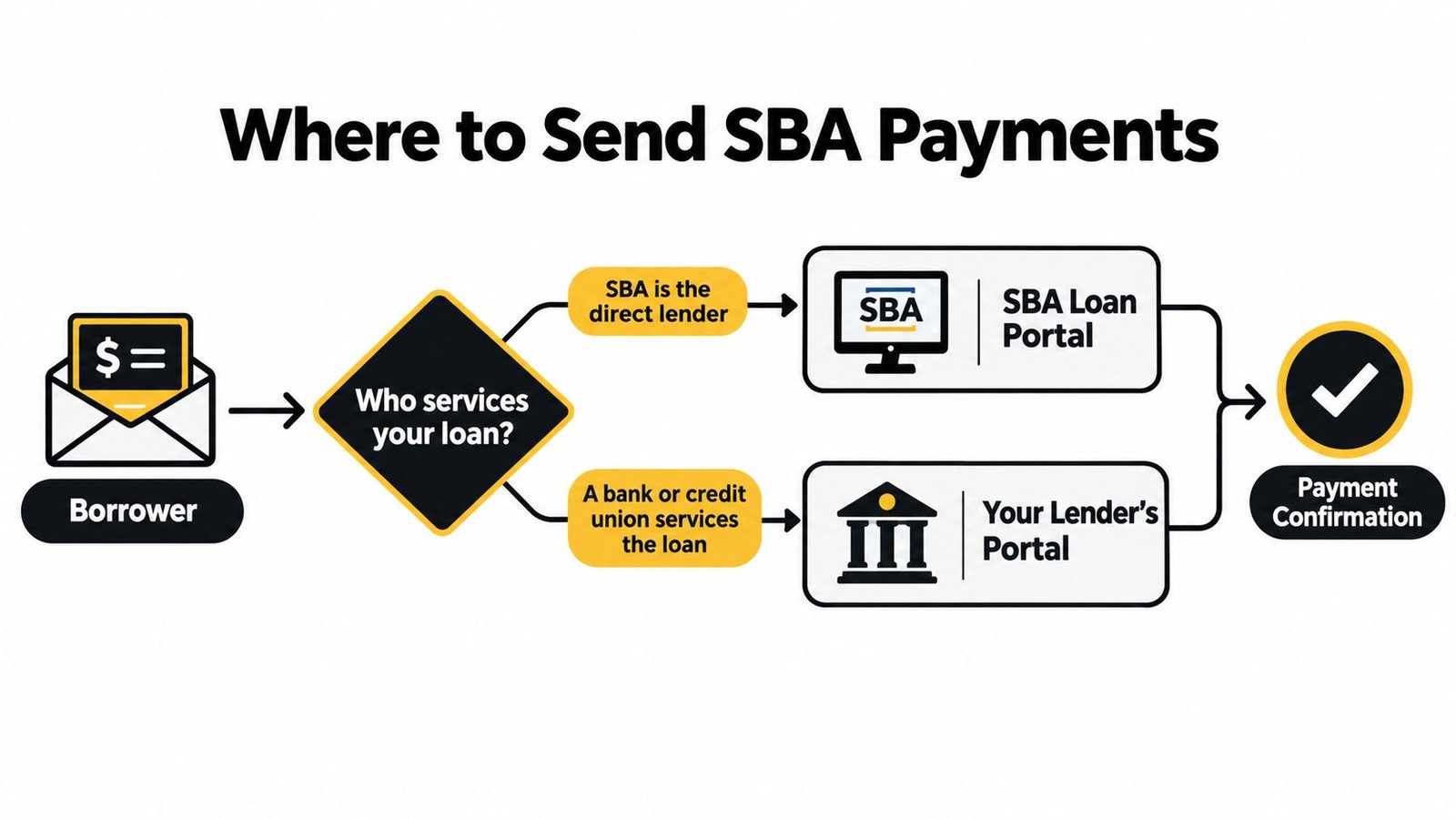
A payment can be on time and still cause trouble if it goes to the wrong place. The right destination depends on the loan's program, servicer, and status. Check the latest statement and loan documents before using a portal, especially if the SBA or another servicer has taken over payment processing.
Follow the servicing path
Use the instructions for the specific loan account:
- 7(a), not SBA-purchased: Pay through the lender's confirmed process. Depending on the loan instructions, that may be the lender's portal or Pay.gov.
- 7(a), SBA-purchased: Check whether the SBA Loan Portal is assigned to the account.
- 504, active servicing: Confirm the Central Servicing Agent and follow its ACH instructions.
- 504, debenture-purchased: Check whether the SBA portal is the required payment channel. The SBA payment options page explains the available routes.
If ownership or servicing is unclear, find out who to pay for debt to understand why the receiving party matters. For your SBA account, rely on the current statement and written confirmation from the lender or servicer. A portal used for another loan may not accept or correctly credit this payment.
Confirm the payment posted
Save the receipt or confirmation number, then check the account activity for a posted payment. If it is pending or missing, contact the servicer using verified contact details. Give them the payment date, amount, and confirmation record, and ask them to trace it before sending another payment.
This check matters when a business has several loans, is refinancing, or is acquiring assets. Sending money to the wrong portal or servicing center can delay crediting and make an account appear past due. Keep each loan's payment instructions with its own account records, even if the same business and bank are involved.
Prepayment, Late Payments, and Default Triggers
Your dashboard shows a lower balance after an extra payment, but the next installment may still be due. Treat the balance and due date as separate gauges: one tracks what you owe, while the other tracks when you must pay. The SBA guarantee does not remove the business's or owners' repayment obligations.
Check the payoff terms before paying extra
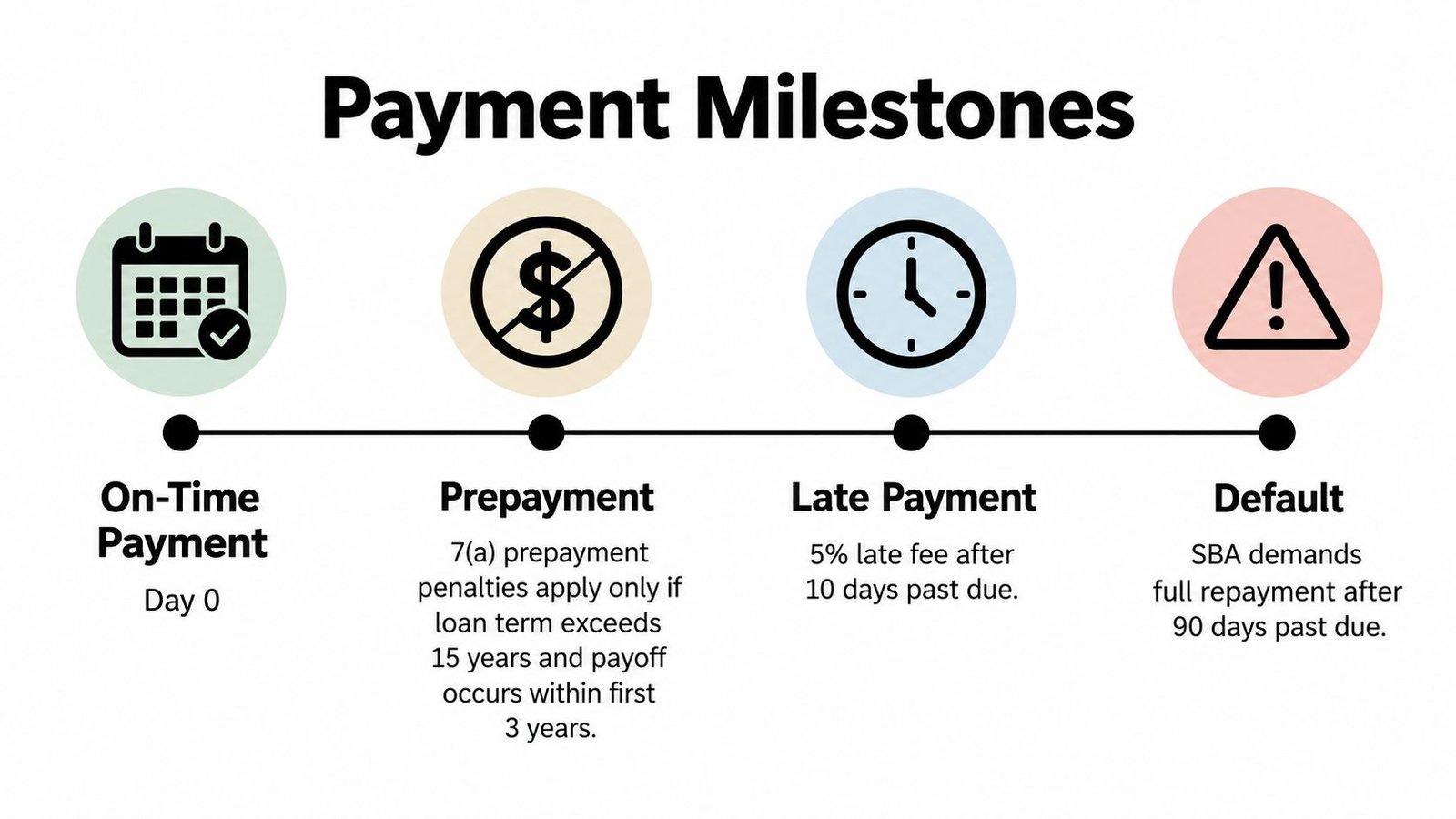
Prepayment rules depend on the program and your loan terms. Review the SBA 7(a) loan terms alongside your agreement, then ask the servicer whether your proposed payment carries a penalty.
For a full payoff, request a written payoff statement and payment instructions. For a partial principal payment, ask how the money will be applied and whether the scheduled installment remains due. These are different servicing requests, even if both reduce your balance.
A lower balance does not confirm that your next installment has been satisfied.
Before sending extra money, compare the servicer's written response with your dashboard's balance, payment amount, and due date. If they conflict, ask the servicer to explain the difference. On a variable-rate loan, also check whether a rate-change notice affects the upcoming payment, rather than assuming the previous amount still applies.
Act early when a payment is at risk
Delinquency and default depend on the applicable loan terms and servicing rules. Microloan figures should not be used to predict an individual 7(a) borrower's outcome or establish that borrower's deadlines. The GAO analysis of SBA lending provides program context, but your agreement and servicer determine what applies to your account.
Ask for the relevant deadlines before cash runs short.
If you expect a shortfall, contact the lender before the due date. Explain the problem, ask about available options, and keep the request and response. Until a change is confirmed, plan around the existing obligation. For consequences and possible responses, see this guide to defaulting on an SBA loan.
Common Myths About SBA Loan Payments
Myth: One login shows everything I need. Your borrower dashboard is a control panel, but its scope depends on the program and current servicer. Confirm which account it covers and where servicing notices arrive. The SBA payment options explain program-specific channels; your statement identifies the account you need to monitor.
Myth: The guarantee means I don't owe the balance if the business struggles. The guarantee protects the lender under applicable terms. It does not erase your repayment obligation. Treat it like a lender's safety net, not money available to cover your next installment. Review your signed documents for business obligations and any personal guarantees, alongside the SBA 7(a) loan terms.
Myth: An unchanged dashboard means my payment cannot change. For a variable-rate loan, compare any rate-change notice with the statement's interest-rate field, payment amount, and effective date. Ask when the revised amount becomes due and whether an existing automatic payment instruction will update. Notice timing depends on your terms, so do not assume a standard lead time.
Myth: The dashboard balance is the amount needed to close the loan. A displayed balance may differ from a dated payoff amount because interest and applicable charges affect the total. Request written payoff instructions and confirmation after payment that the loan has been satisfied.
Myth: A missed payment is only a credit-score issue. It can also affect account status and servicing. The GAO analysis of SBA lending discusses delinquency and default in the microloan program, rather than establishing deadlines for every SBA borrower.
A payment receipt proves submission; check the account record to confirm posting.
Deferment and Forbearance When Cash Flow Tightens
If cash flow weakens, don't wait until a payment is already overdue to ask for help. Start with the lender or current servicer, explain what changed, and ask which workout options may be available for your loan. A lender can tell you what information it needs and whether a request must go through another servicing channel. Don't assume a temporary pause is automatic or that interest and other loan terms stop applying during it.

Prepare a clear picture of the business's finances before you call. Gather current cash-flow projections, recent account activity, a list of upcoming obligations, and a concise explanation of why the shortfall occurred and how you expect operations to recover. Ask the lender what supporting records it requires, which may include financial statements or tax documentation. The more directly you can explain the gap between incoming cash and scheduled obligations, the easier it is to discuss a workable plan.
For a practical framework on managing business cash flow, focus on timing as well as totals: when customer receipts arrive, when suppliers must be paid, and which costs can be deferred without harming operations. Then compare the options the lender offers. A short-term arrangement may ease immediate pressure, while a restructuring or refinancing discussion may address a longer-lasting mismatch. Each option can affect future payments, so ask for the terms in writing before agreeing.
A short conversation with your lender is more useful when you can state the problem plainly: what changed, what you can pay now, and what would make regular payments workable again. This video can help frame that financial-planning discussion.
Don't promise a payment plan the business can't support. Review the forecast with the people responsible for cash management, then send the lender realistic figures and respond promptly to follow-up requests. If the business is facing deeper financial distress, consider getting advice from a qualified professional alongside the lender conversation.
A Monthly SBA Payment Checklist for Busy Owners
A reliable SBA loan payment routine is a small operating habit, not a year-end task. Before the due date, check the loan's current statement against your records. Confirm the amount, destination, due date, and whether the payment method is active. If your business uses automatic debit, make sure the right account is available and that the debit instruction still applies to this specific loan.
Before and after the due date
Use this short routine each month:
- Verify the account: Confirm the servicer and payment portal from the current statement or written lender instructions.
- Review the installment: Compare the amount due with the loan schedule, and look for a rate-change notice if your loan is variable-rate.
- Plan the cash: Check that funds will be available when the debit or transfer is due.
- Save proof: Keep the payment confirmation and check that the transaction posts in the account.
- Escalate discrepancies: Contact the servicer promptly if the amount, balance, or posting date doesn't match your records.
For extra payments: Get the lender's instructions first, then save the payoff quote or confirmation showing how the funds will be applied.
Once in a while, review the amortization schedule and ask whether the current payment still fits the business's cash-flow plan. If a missed payment or mounting obligations put the company under strain, don't wait for the situation to become harder to manage. Owners weighing severe financial pressure can find small business bankruptcy guidance while also speaking with their lender and an appropriate professional.
The key is consistency. When you treat each SBA loan payment as a monthly check on the amount, destination, and posting status, you're less likely to discover a servicing problem during a cash crunch.
Business Loan Warrior offers SBA loan processing and other business funding options, with a dashboard for tracking approvals and repayments. If you're evaluating financing or reviewing how a new loan could fit your cash flow, visit Business Loan Warrior to explore the available options.