
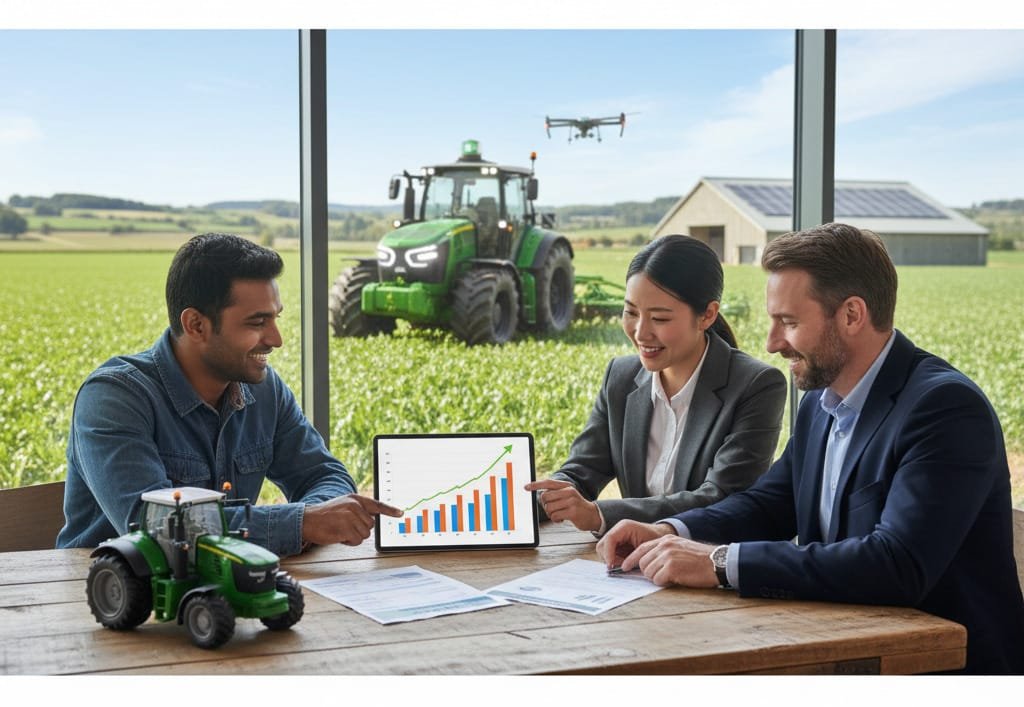
The New Frontier: Farming Meets Technology
Farming isn’t just fields and plows anymore; it’s a high-tech industry. Modern agriculture uses drones, robotic tractors, and AI-powered sensors to boost yield and cut waste. To keep up and grow, farmers must embrace this technology.
However, this cutting-edge equipment comes with a huge price tag. That’s why securing smart machinery financing is now one of the most important jobs for any forward-thinking farmer. It’s the key to unlocking better efficiency and higher profits.
The Core Challenge: Cost vs. Capital
The upfront cost of smart farming gear—like GPS-guided planters or vertical farming systems—can be enormous. Spending all your available cash on equipment instantly starves your operation of working capital needed for seeds, fuel, and payroll.
Therefore, you need to find equipment funding that lets you get the gear immediately without draining your reserves. The goal is to make the machine start paying for itself through increased efficiency and better harvests, long before you finish paying the loan.
Understanding the New Machine Financing Landscape
Gone are the days when a simple bank loan was your only option. Today, the world of machinery financing is full of specialized lenders who understand the value and life cycle of agricultural assets. They offer tailored products just for farmers.
These lenders recognize that high-tech equipment, like precision irrigation systems, provides excellent collateral. Because the asset holds value, they are willing to offer more favorable terms than a traditional bank might.
The Traditional Equipment Loan
The most straightforward way to get equipment funding is through a specific term loan. You borrow the full amount needed for the equipment, and the equipment itself acts as security for the loan. This is often the most affordable route.
These loans usually come with competitive interest rates and payment schedules designed to align with the agricultural cycle. For example, some lenders offer seasonal payments that are lighter in the winter and heavier right after harvest, helping with cash flow.
Leasing—The Rental Advantage
Leasing is essentially renting the equipment for a fixed period. This can be a smart choice for tech that changes fast, like computer software, sensors, or rapidly evolving drone technology. You get the benefit of the tech without the long-term commitment.
The great thing about a lease is the lower monthly payment compared to buying outright. Also, it’s easier to upgrade. When the lease ends, you can return the old equipment and lease the newest model, always ensuring you have the latest tools.
Tapping into Government Guarantees (SBA)

The Small Business Administration (SBA) works with lenders to make capital more accessible to farmers. An SBA-backed loan is a fantastic way to get machinery financing with long repayment periods and low rates, especially for major fixed assets.
SBA loans are perfect for buying long-term equipment or even farm real estate. They provide stability and favorable terms of business loans. If you already have an SBA loan, remember you might be able to refinance it later for even better terms. Check out SBA Loan Refinancing: When and How to Lower Your Existing Small Business Debt Payments to plan ahead.
Dealer Financing—Quick and Convenient
Many major farm equipment manufacturers and dealers offer their own financing programs. This is often the quickest path to getting your new equipment. The process is streamlined, and the dealer already knows the machine’s value.
While quick, you must carefully compare these offers to external business lending sources. Sometimes, the low promotional interest rate is only introductory, or the total cost ends up being higher than a local bank’s offer. Always read the fine print!
The Importance of Smart Debt Stacking
Modern farming often requires multiple financial tools at once. You might need a long-term loan for a new barn and a quick, short-term product for a sudden seed purchase. Combining these loans is called debt stacking.
This strategic approach uses different funding options for different needs. For example, a low-cost equipment loan covers the machinery, while a flexible Line of Credit covers unexpected operating costs. Learn how to combine loans effectively in Loan Stacking Strategy: When to Combine Different Types of Business Funding for Maximum Growth.
Understanding the Terms of Business Loans
When looking at any equipment funding, you must understand three key elements: the interest rate, the term length, and the repayment structure. A longer term means lower monthly payments but more interest paid overall.
Look closely at the Annual Percentage Rate (APR) to see the true cost of borrowing. Also, ensure the repayment schedule makes sense for a farmer—does it allow you to make larger payments after harvest and smaller ones during the slow season?
Securing Funding Even with Less-Than-Perfect Credit
If past challenges have affected your credit score, getting competitive business lending can be tough. But this shouldn’t stop you from upgrading your operation. Alternative lenders are often more flexible and creative than big banks.
They may offer secured loans where the equipment is the primary collateral. Or, they might offer revenue-based financing based on your consistent harvest sales. Don’t let a low score hold you back; explore your options with a guide like 4 Proven Ways to Secure Small Business Funding Even with Bad Credit.
Financing for Specialized Niche Farming
High-tech agricultural equipment isn’t just for huge row-crop farms. Specialty operations like urban vertical farms or aquaculture ventures also need unique machinery financing. These niche businesses often require custom, high-cost systems.
Lenders specializing in these sectors understand the technology and the higher potential margins. Their terms of business loans reflect the asset’s specific value. Even if your farm is unconventional, there is specialized funding available for your unique needs.
Preparing Your Financial Fields

Any lender providing equipment funding will scrutinize your financials. They want to see consistent revenue, a low debt-to-income ratio, and a clear plan for how the new equipment will increase profits.
Prepare detailed records of your past yields and your projections for the future. You need to show that the increased efficiency from the new high-tech machine will generate more revenue than the monthly payment costs. This proof is crucial for approval.
The Barometer: When to Buy vs. When to Lease (Table)
Deciding between owning and leasing your equipment depends on several factors, especially the expected lifespan of the technology. Use this simple guide to help you decide which machinery financing option is best for your current need.
Situation | Recommended Option | Reason |
Long-Term Use (10+ Years) | Equipment Loan | Build equity; machine holds value (e.g., barn, large tractor frame). |
Rapidly Changing Tech | Lease | Allows easy, frequent upgrades (e.g., GPS systems, drones, software). |
High Capital Need | Equipment Loan (SBA) | Lowest interest rate, longest terms of business loans. |
Uncertain Future | Lease | Lower risk and less commitment than buying outright. |
Thinking Beyond the Farm: The Hospitality Model
Even if you’re a farmer, you can learn from how other industries finance large, complex projects. For example, bar owners must juggle long-term leases with quick financing for inventory. They use smart financial mixes to stay competitive.
Applying that aggressive, strategic approach to business lending can benefit your farm. Whether it’s securing a long-term loan for a large silo or quick cash for a huge fertilizer purchase, look at every possible financing angle. See how other tough industries secure capital in The Bar Owner’s Guide: 5 Creative Ways to Finance a New Bar or Nightclub Startup.
Invest in Tomorrow's Harvest
The future of farming is here, and it’s powered by technology. Successful farmers are not just excellent agronomists; they are smart financiers. By choosing the right equipment funding—be it a long-term loan, a strategic lease, or a mix of funding options—you ensure your farm remains competitive and profitable.
Don’t let the high cost of machinery hold you back. Use these modern financing tools to acquire the assets you need, increase your yields, reduce your costs, and secure a sustainable, prosperous future for your farm.
FAQs
Q: Is new agricultural equipment good collateral?
A: Yes, high-tech farm equipment usually holds good value, making it excellent security for machinery financing.
Q: Do I need a down payment for equipment funding?
A: Some lenders require 10-20%, but specialized programs offer 100% financing for qualified buyers.
Q: What is the benefit of a seasonal repayment structure?
A: It matches your loan payments to your cash flow, allowing you to pay more after harvest when revenue is highest.
Q: Can I finance used equipment?
A: Yes, but the terms of business loans might be shorter, and the interest rate may be slightly higher due to its age.