
Ready to gather your documents for funding? Most owners start a loan application thinking they’re close, then hit a wall when the lender asks for cleaner statements, updated bank records, ownership paperwork, or one missing schedule from a tax return. That’s where deals slow down.
If you’re asking what documents do you need for a business loan, the short answer is this: more than just tax returns and bank statements. Lenders want proof your business is real, profitable, current on obligations, and organized enough to repay what it borrows. For larger, established companies, that standard gets stricter. Lenders commonly require three years of audited or certified financial statements plus projected financials for 12 to 24 months, and they use debt schedules to evaluate repayment capacity, including DSCR expectations that often need to exceed 1.25x for approval in this revenue tier, according to Bankrate’s guide to business loan documents.
This guide gives you the practical version. You’ll get a loan-type-by-loan-type breakdown, formatting tips that prevent avoidable delays, common mistakes that trigger resubmissions, and simple template ideas you can turn into your own document package.
No fluff. Just the paperwork that moves applications forward.
Table of Contents
- 1. Business Tax Returns (2-3 Years)
- 2. Personal and Business Bank Statements (3-6 Months)
- 3. Business License and Registration Documents
- 4. Financial Statements (Balance Sheet, P&L, Cash Flow Projection)
- 5. Ownership and Personal Financial Documentation
- 6. Accounts Receivable and Accounts Payable Aging Reports
- 7. Collateral Documentation and Asset Lists
- 8. Business Plan and Use of Funds Documentation
- 9. Legal Documentation and Compliance Records
- 10. Merchant Processing and Sales Data (for Retail/Restaurants)
- 10 Essential Documents Comparison
- Next Steps: Submit with Confidence
1. Business Tax Returns (2-3 Years)
Business tax returns are the first files most lenders review. They verify reported revenue, profitability, entity structure, and whether your numbers stay consistent across years. If you run a corporation, lender files usually center on the appropriate federal return and all attached schedules, not just the first few pages.
A restaurant owner buying ovens and refrigeration, for example, might use three years of filed returns to support an equipment request. A growing LLC asking for a line of credit might present two strong years plus current financials to show momentum. The point isn’t presentation alone. It’s consistency.
What lenders want to see
Submit complete returns, not partial scans. That means the signed federal return, all schedules, K-1s if relevant, and any supporting statements your accountant attached.
Use the entity name exactly as it appears with the IRS. If your bank statements say one name, your return shows another, and your Articles list a third variation, underwriting stalls while someone asks you to reconcile it.
Practical rule: If a tax return has been amended, include the amended version and a short note explaining why. Don’t wait for the underwriter to spot the mismatch.
A solid package usually includes:
- Full federal returns: Include every page and schedule.
- Entity match: Make sure the return type matches how the business is organized.
- Clean scans: Avoid cropped pages, phone photos, and unreadable PDFs.
- Transcript backup: Ask your accountant about transcript support if authenticity questions come up.
If your profitability improved across the filing periods, call that out in a brief cover note. One paragraph is enough. “Net income improved after pricing changes and lower food waste” helps an underwriter read the file faster than a stack of unexplained statements.
2. Personal and Business Bank Statements (3-6 Months)
Bank statements show how the business moves money. They reveal deposit timing, average balances, payment volume, recurring obligations, and whether the account activity supports the revenue shown elsewhere.
For some products, bank statements carry even more weight. Merchant cash advance applications typically require 6 to 12 months of merchant-card statements in official PDF format with cash-flow alignment summaries.
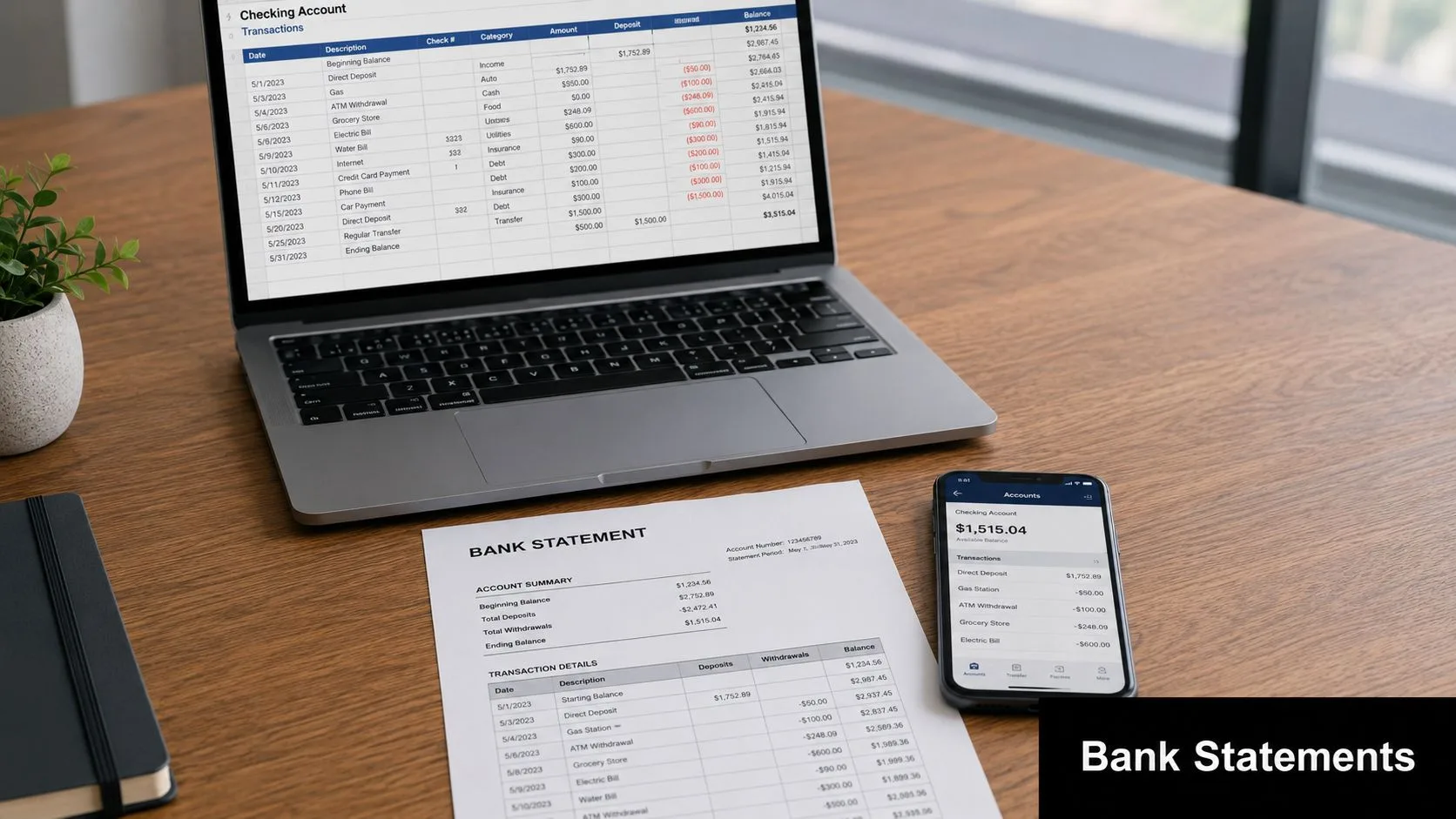
A service business with uneven monthly income can still present a strong application if the statements show healthy operating balances and regular customer receipts. A newer company with limited tax history may rely heavily on statements to prove cash flow.
Format them like a lender expects
Don’t upload screenshots. Use official statement PDFs that show the account holder name, account number, statement period, and ending balance. If you’ve got multiple operating accounts, label them clearly: “Operating,” “Payroll,” “Tax,” or “Reserve.”
Mid-month timing matters more than most owners realize. If you apply after the middle of the month, many lenders want a month-to-date bank statement, and public guides often miss that detail. One 2025 projection says 42% of alternative loan applications stall because documents are outdated by a few days rather than truly missing, according to Same Day Business Funding’s loan application guide.
Use these formatting habits:
- Name files clearly: “ABC Manufacturing Operating Account May 2026.”
- Flag unusual items: Add a one-line note for large deposits, owner contributions, or one-time withdrawals.
- Keep business separate: Mixed personal spending creates extra questions.
- Use connected access when possible: Business Loan Warrior’s business bank statement process can help streamline verification.
If your sales spike seasonally, say so before the lender asks. A retailer coming off holiday inventory purchases shouldn’t leave the underwriter guessing why cash dipped in one statement cycle.
3. Business License and Registration Documents
Some files don’t prove cash flow, but they still decide whether a lender can move forward. Business registration documents do that job. They show your company exists, is authorized to operate, and has the legal structure you claim on the application.
A contractor seeking an equipment loan should be ready with a current state license, formation documents, and EIN confirmation. A healthcare operator may also need professional credentials tied to the entity. A multi-location company should keep licensing records by location, not in one messy folder.
Build the legal identity packet
At minimum, pull together your Articles of Incorporation or Articles of Organization, any DBA filing, your EIN confirmation, and required state or local licenses. If you operate across states, organize files by jurisdiction.
Use current versions only. If a license expired last month but renewal is pending, include proof of renewal submission and a short explanation.
A practical packet often includes:
- Formation documents: Articles, certificates, and amendments.
- Operating name records: DBA or assumed-name filings.
- Tax identity: EIN confirmation and matching business name.
- Location-specific licenses: Separate files for each active site.
For trades and regulated businesses, make sure the company name on the license matches the borrower name. If your legal entity is “North Shore Mechanical LLC” and your invoices say “North Shore HVAC,” include the DBA filing so the lender doesn’t have to ask.
4. Financial Statements (Balance Sheet, P&L, Cash Flow Projection)
When owners ask what documents do you need for a larger business loan, the documentation requirements become significant. Financial statements tell the lender whether the business is managed like an operation worth financing. For established companies in the higher-revenue bracket, lenders typically require three years of audited or certified financial statements plus projected financials for the next 12 to 24 months with variance explanations, as noted earlier.

A lender will compare your P&L to your tax returns, your balance sheet to your debt schedule, and your projections to your actual trends. If those pieces don’t line up, they assume the projections are weak too.
Use clean statements, not exports with errors
QuickBooks and similar tools are fine for generating reports, but don’t send raw exports with duplicate account names, negative inventory without explanation, or uncategorized expenses. Review every report before it leaves your office.
A growing e-commerce company, for example, may show solid top-line sales and still hurt its case if inventory accounting is sloppy. A restaurant group expanding into another location may have a realistic plan, but if its cash flow projection doesn’t explain labor ramp-up and opening costs, the lender sees a gap.
Clean monthly financials beat impressive annual numbers wrapped in messy reporting.
What to include in the lender package
Your package should include a current balance sheet, a year-to-date P&L, prior year statements, and forward-looking cash flow tied to the loan request. Label projected figures clearly so no one mistakes them for historical results.
Helpful additions:
- Variance notes: Explain swings in margin, payroll, rent, or inventory.
- Debt reconciliation: Match balances to your debt schedule.
- Interim statements: Include current-period reports if the fiscal year isn’t complete.
- Projection assumptions: State what drives future revenue and expense changes.
If you want a refresher on reading profit trends before sending reports, Business Loan Warrior’s guide to managing a P&L is worth reviewing.
Here’s a quick visual walkthrough before you submit:
5. Ownership and Personal Financial Documentation
Lenders don’t just underwrite the company. They underwrite the people behind it. That means ownership proof, identification, and personal financial documents for the principals who control the business.
If one partner owns a large enough stake, that person’s file can affect the whole deal. A co-owner with strong liquidity and a clean personal profile can stabilize an application when business performance is good but recent expansion has pressured cash flow.
What to gather for each owner
Start with current photo ID, personal tax returns if requested, and a personal financial statement listing assets, liabilities, and contingent obligations. Keep the format plain. Underwriters care more about completeness than design.
For SBA-backed requests, the paperwork gets more specific. SBA loan files may require Form 1919 and, when applicable, Form 912, along with year-end P&Ls and balance sheets, reconciliation of net worth, interim statements, and month-to-month cash flow projections, as noted earlier from the Bankrate summary.
Use this rule with partners: disclose every owner the lender needs to know about up front. Don’t let an undisclosed shareholder appear later in organizational documents.
If an owner has a credit issue, address it in one calm paragraph. Explain what happened, whether it’s resolved, and why it won’t affect repayment.
A sole proprietor asking for a larger line might also include personal asset records to support liquidity. A two-owner partnership should make sure names, percentages, and signatures match across the operating agreement, application, and any guarantee forms.
6. Accounts Receivable and Accounts Payable Aging Reports
Aging reports are where a lender sees how your business really gets paid and how fast it pays others. For contractors, wholesalers, professional service firms, and B2B operators, these reports can matter as much as the P&L.
An A/R aging report shows which invoices are current, which are late, and whether you depend on a small number of customers to stay liquid. An A/P aging report shows whether you stretch vendors to cover operating pressure.
Why these reports affect approval speed
Incomplete applications often fail on details owners assume are optional. One of the most common missing items in rejected files is the accounts-receivable aging report, according to the earlier Guidant data. That matters because underwriters use aging to test whether cash coming in can support debt payments.
A contractor waiting on large municipal invoices might be a perfect fit for invoice financing rather than a standard term loan. A consulting firm with mostly current receivables and predictable payables may fit a line of credit cleanly.
Use a lender-friendly format:
- Current through a recent date: Don’t send a stale report from last quarter.
- Customer detail included: Show invoice dates, balances, and aging buckets.
- Large old balances explained: Add notes for disputes, retainage, or delayed approvals.
- Concentration risk flagged: If one customer drives a major share of receivables, say so plainly.
A good narrative matters here. If half your receivables sit in older buckets but they’re tied to normal industry billing cycles, explain that directly. Business Loan Warrior’s guide on writing the A/R aging narrative your lender wants to read can help you frame that without sounding defensive.
7. Collateral Documentation and Asset Lists
Secured loans need secured-loan paperwork. If you want equipment financing, construction funding, or a collateral-backed line, the lender needs a clear list of assets, their condition, their value, and whether another creditor already has a claim on them.
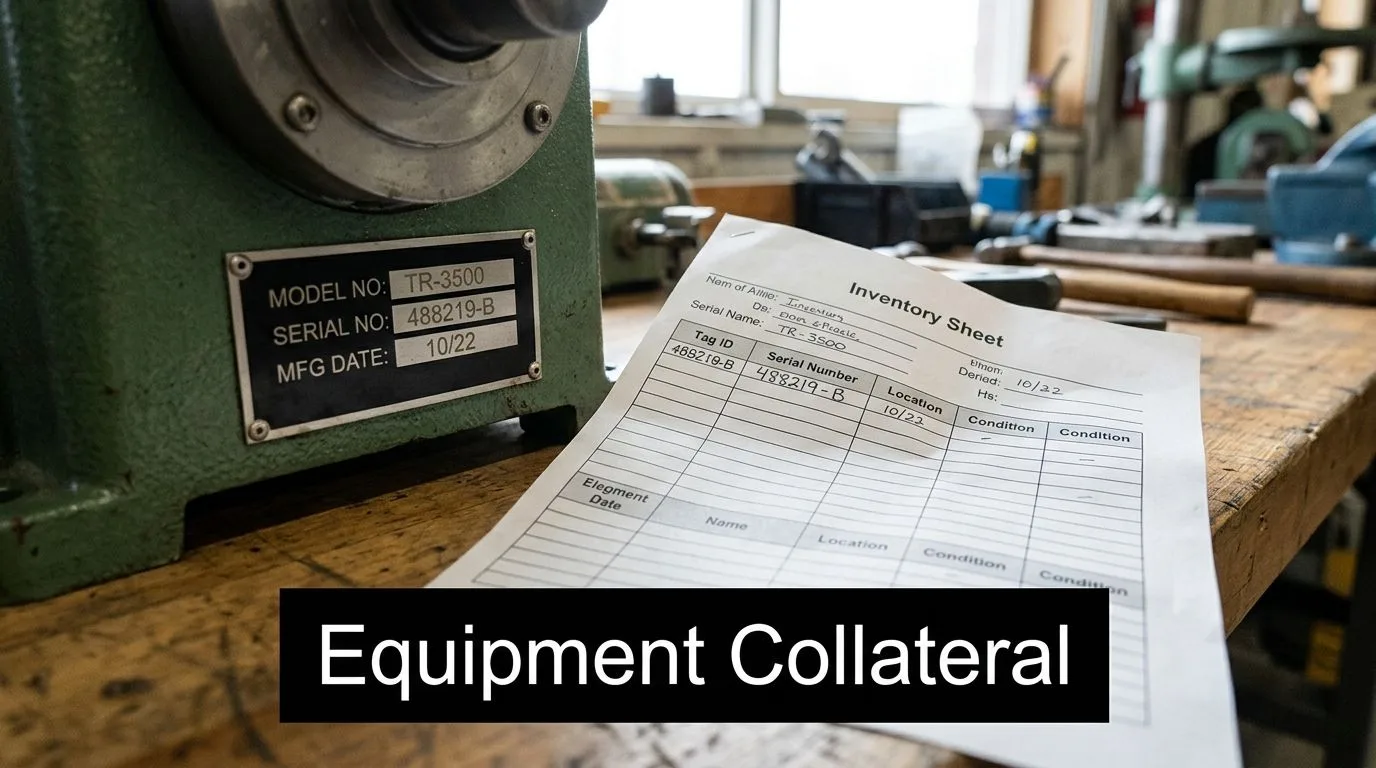
A restaurant pledging kitchen equipment should provide item descriptions, serial numbers, purchase records, and any existing financing details. A construction company may need to document trucks, trailers, heavy equipment, and titled assets separately.
Match the collateral to the loan type
For equipment and construction loans in the established middle-market bracket, lenders require equipment invoices or dealer quotes and detailed asset valuation documents for collateral, according to the earlier Guidant-based verified data. That means a vague spreadsheet saying “machinery, approx. value” won’t cut it.
For a manufacturer buying a CNC machine, include the vendor quote, model details, expected installation date, and whether the asset is new or used. For real-estate-secured requests, expect appraisal and lien-related documents as the lender defines them.
Use this structure:
- Asset list: Description, serial number, location, condition, owner.
- Proof of value: Invoice, quote, appraisal, or formal valuation support.
- Lien status: Note existing financing or UCC filings.
- Insurance evidence: Show coverage on pledged assets.
If collateral values have changed, don’t hide it. Explain it. An underwriter can work with declining asset value. They can’t work with surprises discovered after diligence starts.
8. Business Plan and Use of Funds Documentation
This is the file that answers the lender’s basic question: what are you going to do with the money?
Too many applications say “working capital” and stop there. That’s weak. A lender wants a use-of-funds statement tied to operations, timing, and expected results. Expansion, inventory, payroll support during a contract ramp, equipment replacement, acquisition costs, and debt refinance all require different documentation and different logic.
Make the use of funds specific
A retail chain opening another location should show site buildout, equipment, opening inventory, staffing, and operating runway. A service company seeking a credit line to bridge payroll on larger contracts should explain billing cycles and collection timing.
Write the use of funds in plain language. Break it into categories and link each category to a business reason. If the funds are for growth, show why growth is realistic. If the funds are defensive, explain the risk reduction.
“Working capital” is not a plan. “Inventory for Q4 purchase orders, payroll during 60-day receivable cycles, and replacement of two revenue-critical vehicles” is a plan.
A practical package includes:
- Loan purpose summary: One paragraph.
- Itemized use of funds: Categories and expected spend.
- Timeline: When each portion will be used.
- Expected business effect: Revenue support, cost savings, or operational stability.
If your projections depend on a new contract, a signed lease, or vendor pricing, attach those supporting records. It’s easier to approve a request when the lender can trace the money from funding to execution.
9. Legal Documentation and Compliance Records
Some deals don’t fail because of weak revenue. They fail because the lender spots legal risk too late. That’s why compliance documents matter.
The exact list varies by industry, but the pattern is the same. Lenders want to know your governing documents are current, your insurance is active, your required permits are in place, and there isn’t an undisclosed legal issue that could interrupt operations or drain cash.
What belongs in this file
For an LLC, include the operating agreement. For a corporation, include bylaws and authorizing resolutions if the lender asks for them. Franchises should include the franchise agreement. Regulated businesses should add permits, certifications, and any industry-specific approvals tied to the business entity.
This section also covers insurance. If you carry general liability, property coverage, workers’ compensation, commercial auto, professional liability, or other relevant policies, have declarations pages ready.
Organize it this way:
- Governing documents: Operating agreement, bylaws, partnership agreement.
- Authority records: Board or member approval where required.
- Insurance proof: Current policy declarations and carrier details.
- Compliance records: Permits, certifications, and any remediation documents.
A healthcare clinic might attach licenses and compliance certifications. A food service operator should have health permits available. A contractor may need bonding and safety-related records. If there’s past litigation or a resolved regulatory issue, disclose it with context instead of forcing the underwriter to discover it through diligence.
10. Merchant Processing and Sales Data (for Retail/Restaurants)
If you own a restaurant, retail store, salon, repair shop, or another card-heavy business, merchant statements and POS reports can carry your application. They show customer demand in a way tax returns can’t. You can see daily card volume, average tickets, transaction counts, and seasonality.
This matters even more for newer businesses. A projected 2025 National Small Business Association survey found that 68% of startups under one year old were denied initial loan applications solely because of insufficient documentation, while alternative lenders increasingly accept bank-statement-only underwriting for newer entities, according to MIWF’s guide to top loan documents and preparation.
Best uses for merchant data
A coffee shop using Square, a boutique using Shopify, or a restaurant running Toast can all export payment data that supports a funding request. If tax history is thin, these records help prove revenue is real and current.
Reconcile merchant deposits to your bank statements before sending anything. If your POS says one amount and the bank shows another, include the processor fee explanation so the lender doesn’t have to reverse-engineer it.
Useful files include:
- Merchant statements: Official monthly processor statements.
- POS summaries: Sales by day, week, or month.
- Processor list: Include every active processor, not just the biggest one.
- Deposit reconciliation: Tie card sales to bank activity.
If your business had a temporary dip because of renovation, weather, staffing, or one-time closures, note that in a short memo. Daily sales data is powerful, but only when the story around it is clear.
10 Essential Documents Comparison
| Document | Complexity | Resources | Expected Impact | Ideal Use Cases | Key Advantages |
|---|---|---|---|---|---|
| Business Tax Returns (2-3 Years) | Moderate (gathering & verification) | Low-Medium (past filings, accountant) | High (auditable income proof) | SBA, traditional loans, equipment financing | Most credible income verification; required for SBA |
| Personal & Business Bank Statements (3-6 Months) | Low (connect/upload) | Low (3-6 months of statements or API) | Medium-High (real-time cash flow visibility) | Startups, variable-income businesses, quick underwriting | Current cash flow proof; direct-connect streamlines review |
| Business License & Registration Documents | Low (retrieve/renew) | Low (state filings, EIN) | Essential (verifies legal status) | All formal lending; regulated industries | Confirms legitimacy, entity type, and ownership |
| Financial Statements (BS, P&L, Cash Flow) | High (prep + projections) | High (accounting software or CPA) | High (supports larger loan structuring) | Growing firms, larger loans, institutional lending | Demonstrates financial management and forward planning |
| Ownership & Personal Financial Documentation | Moderate (multiple owners) | Medium (personal returns, IDs, credit auth) | High (affects terms and guarantees) | Small businesses, owners with 20%+ stake | Establishes owner creditworthiness and personal guarantees |
| Accounts Receivable & Payable Aging Reports | Moderate (generate & explain) | Medium (accounting system exports) | Medium-High (assesses working capital) | B2B, contractors, invoice financing candidates | Reveals collection risk, concentration, and cash cycle |
| Collateral Documentation & Asset Lists | High (appraisals, UCC filings) | High (valuations, insurance, title searches) | High (enables secured lending & lower rates) | Equipment loans, construction, asset-based lending | Supports secured loans and larger credit lines |
| Business Plan & Use of Funds Documentation | Moderate–High (detailed narrative) | Medium (market research, projections) | High (justifies loan purpose & ROI) | Expansion, acquisitions, SBA and larger loans | Demonstrates strategy, timelines, and accountability |
| Legal Documentation & Compliance Records | High (legal reviews) | Medium-High (attorney review, insurance) | High (reduces regulatory/legal risk) | Regulated industries, franchises, formal underwriting | Verifies compliance, authorizations, and risk posture |
| Merchant Processing & Sales Data (Retail/Restaurants) | Low–Moderate (export/validate) | Low (POS/processor exports) | Medium-High (real-time revenue evidence) | Retail, restaurants, merchants with limited tax history | Objective daily sales data; enables merchant-based financing |
Next Steps: Submit with Confidence
Once you’ve gathered the core files, don’t just upload them in a rush. Package them like someone on the lending side has to review them quickly, because they do. Clear names, complete PDFs, current dates, and short explanations for anything unusual will save you time.
A useful way to organize the package is by folder. Create one folder for tax returns, one for financial statements, one for bank records, one for ownership documents, one for legal and compliance files, and one for loan-specific materials like equipment quotes or POS data. Inside each folder, use file names that begin with the business name and end with the statement period. That sounds small, but it reduces confusion when underwriters compare documents side by side.
If you’re applying for a traditional bank loan or SBA-backed product, assume the file will be reviewed line by line. Include your debt schedule, interim statements, and any required SBA forms in the same packet. If you’re applying for equipment financing, add quotes, serial-number lists, and collateral support from the start. If you’re seeking short-term capital or a merchant advance, make sure the merchant statements, bank statements, and deposit reconciliation all agree.
You should also check freshness before you submit. Currentness matters. A complete package that’s already outdated can slow things down almost as much as a missing package. Review dates on statements, licenses, and insurance certificates the same day you upload them.
Compression helps too, especially when lender portals reject oversized uploads. Just make sure the compressed version stays readable.
If you want downloadable templates, start with the basics:
- A one-page use-of-funds sheet
- A debt schedule
- An A/R explanation memo
- A monthly cash flow projection
- An ownership summary with percentages and guarantors
Those five templates solve a surprising number of lender follow-up requests.
The final check is simple. Ask yourself four questions before you hit submit: Are the files complete? Are they current? Do names and numbers match across documents? Have I explained anything an underwriter would otherwise question? If the answer is yes, your application is in strong shape.
Most loan delays aren’t caused by owners lacking a real business. They’re caused by owners sending an incomplete or inconsistent story. Tighten the file, make the story easy to follow, and you’ll give yourself a much better shot at fast, clean approval.
If you want a faster path from document gathering to funding, Business Loan Warrior gives you one place to check pre-approval without a hard credit hit, connect accounts, upload paperwork securely, and track your application with real underwriting support. It’s a practical option if you want less back-and-forth and a clearer view of what your lender still needs.