
The underwriting process is the lender's risk-evaluation stage, where your application, financials, and credit are reviewed to decide approval, pricing, and terms. In insurance, it also turns raw applicant data into a risk-based premium or coverage limit, so this isn't just a yes-or-no step, it's the decision engine behind the price you get.
If you've just hit submit on a business loan application and the status says pending, that pause usually means someone is reading your file closely, not ignoring it. For most owners, that's the stressful part, because the lender knows more about your deal than you do at that moment.
Table of Contents
- What the Underwriting Process Actually Means for Your Business Loan
- The Step-by-Step Underwriting Workflow Lenders Follow
- Key Criteria and Documents Underwriters Check
- How Underwriting Differs Across Business Loan Types
- Why Underwriting Can Feel Inconsistent or Opaque
- Practical Tips to Improve Your Approval Odds and Speed
- Key Takeaways for Navigating the Underwriting Process
What the Underwriting Process Actually Means for Your Business Loan
You send in the application on a Tuesday afternoon, and by Wednesday you're staring at a pending status, wondering whether the lender liked your deal or buried it in a pile. That's underwriting at work. It's the part where the lender reviews your business, your personal profile, and your numbers, then decides whether to accept the risk, reject it, or change the terms. Business Loan Warrior's application guide fits neatly here, because underwriting only starts once the borrower has already put the file in motion.
What underwriting is really doing
Underwriting isn't the same as a quick credit pull. A credit check tells the lender something about your borrowing history, but underwriting pulls that information into a broader decision about risk, pricing, and structure. In insurance, the same logic applies, where similar risk profiles get grouped and priced accordingly, and the lender or insurer uses those inputs to decide the premium, coverage limit, or loan terms. The key point is simple, underwriting converts data into a risk-based decision.
Practical rule: if your file is clean, complete, and consistent, underwriting often feels routine. If the numbers don't line up, the process gets slower and more manual.
That's why two applicants can have the same loan amount in mind and get very different outcomes. One owner has organized financials, stable cash flow, and a clear repayment story. Another has gaps, unexplained deposits, or mismatched records, and the lender has to dig deeper before saying yes.
The underwriting lens matters because approval isn't the only outcome. Pricing and terms can change if the lender sees more risk, even when the loan still gets approved. That's the part many borrowers miss, underwriting is about both access and cost.
The Step-by-Step Underwriting Workflow Lenders Follow
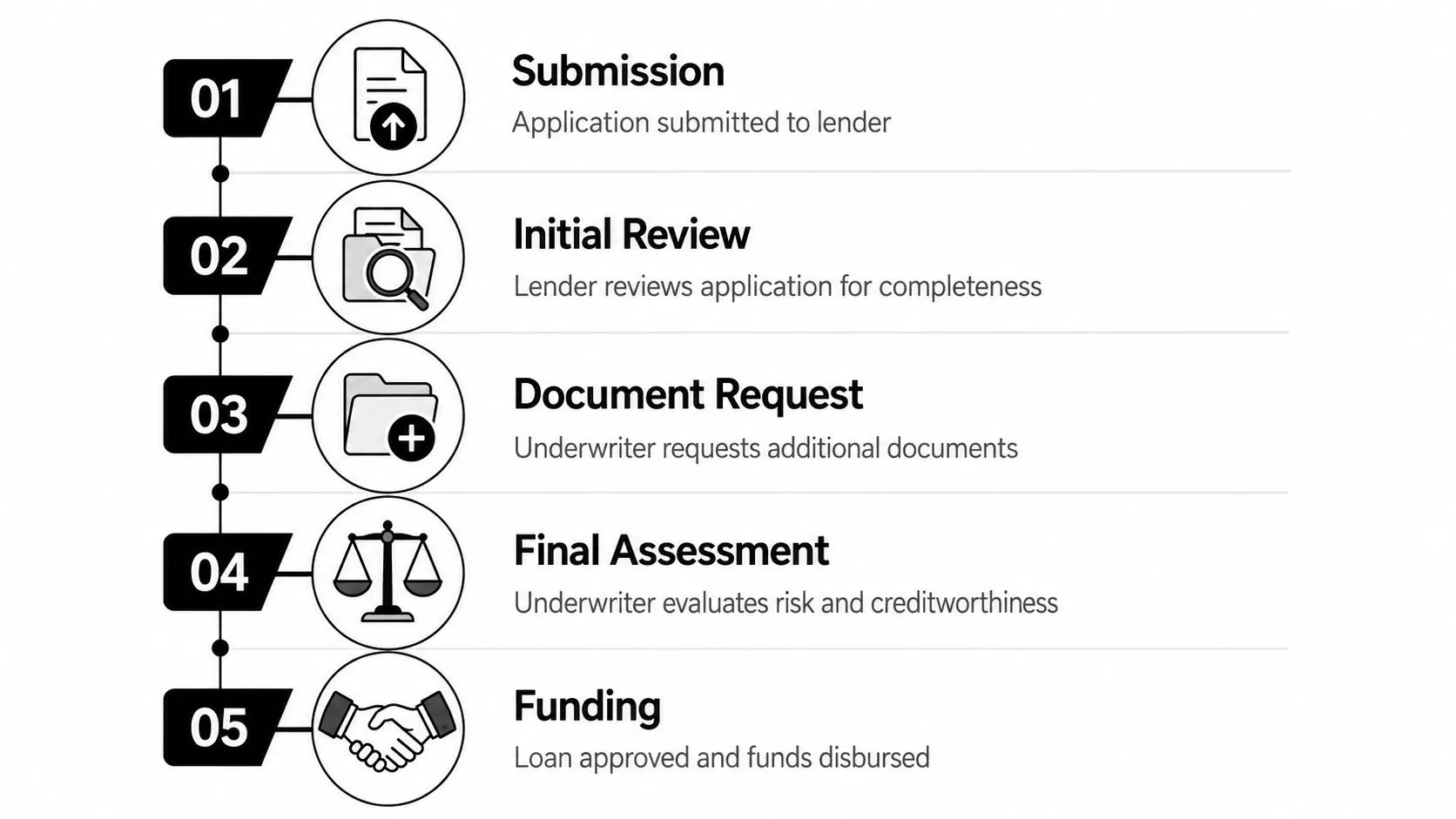
A borrower can feel like the file is “in review” and nothing is happening. On the lender side, underwriting is usually moving through a sequence of checks, and each one answers a different question about fit, risk, and whether the deal can be approved on program terms. When a file slows down, it is usually because one piece does not match the rest, not because the lender is trying to be mysterious.
1. Eligibility screening and identity checks
The first pass is basic, but it sets the tone for the rest of the file. The lender checks whether the application matches the product, whether the person applying is really the person tied to the business, and whether the ownership and entity details line up cleanly. If the legal name, tax records, or ownership information conflict, the file can get pended right away for clarification.
That early pause is more common than borrowers expect. A small mismatch can look minor from the owner's side, but to an underwriter it can signal that the file needs manual attention before anyone can rely on the rest of the numbers.
2. Credit and repayment review
Once the application clears the first screen, the lender looks at personal and business credit together with repayment capacity. The core question is simple: can the business generate enough cash to handle the payment after normal operating expenses are covered? If the answer is unclear, the file usually gets more scrutiny.
Clean credit, stable cash flow, and a repayment story that makes sense can help the file move faster. Weak credit does not always end the discussion, but it often means the lender will lean harder on the rest of the package, especially if the request depends on the owner's personal guarantee or a tighter margin of safety.
3. Collateral and supporting evidence
Some loans depend heavily on collateral, while others rely more on recurring cash flow and overall credit strength. Either way, the lender wants proof that the request is grounded in real assets and real performance. That proof can include bank activity, tax returns, financial statements, asset verification, or other records that show the borrower can support the exposure being requested.
This is also where files often get pended for missing backup. If the lender sees a number on one document and cannot match it to another, the underwriter may stop and ask for more support before moving the deal ahead.
4. Risk scoring and exception handling
At this stage, the file is often translated into a scorecard or internal risk grade. The lender also checks for policy exceptions, such as missing documents, unusual account activity, or debt levels that do not fit the program. Those issues do not always mean denial, but they often push the file into manual review, where a person has to decide whether the exception is explainable or too far outside the box.
That manual review is where modern fintech platforms can save time without removing human judgment. They compress routine checks and surface problems faster, but they still rely on a person to weigh the story behind the file when something does not fit neatly into the standard pattern.
5. Final approval and funding
If the file clears the required checks, the lender approves it, sets the terms, and moves it toward funding. If the file still has open questions, it may be declined or returned with conditions that need to be satisfied first. Either way, underwriting is the gate between application and money in the account.
Underwriting slows down when the file creates more questions than answers.
For a plain-English version of the paperwork side, meeting commercial loan standards is a useful way to think about what lenders expect, especially when the business is larger or the file is more document-heavy.
For a visual walkthrough of the file lifecycle, the infographic above matches the same sequence the lender follows. If you want the video version of that process, watch this overview.
Key Criteria and Documents Underwriters Check
A file can look fine at first glance and still get pended once the underwriter starts matching the numbers. That usually happens when one document says one thing, another document says something slightly different, and the lender cannot tell which version reflects the actual business.
Underwriting is a consistency check as much as a credit check. The underwriter is looking for a paper trail that holds together, so the tax returns, bank statements, and revenue story all point in the same direction. If they do, the file feels easier to approve. If they do not, the file usually gets set aside for questions.
The documents that usually matter most
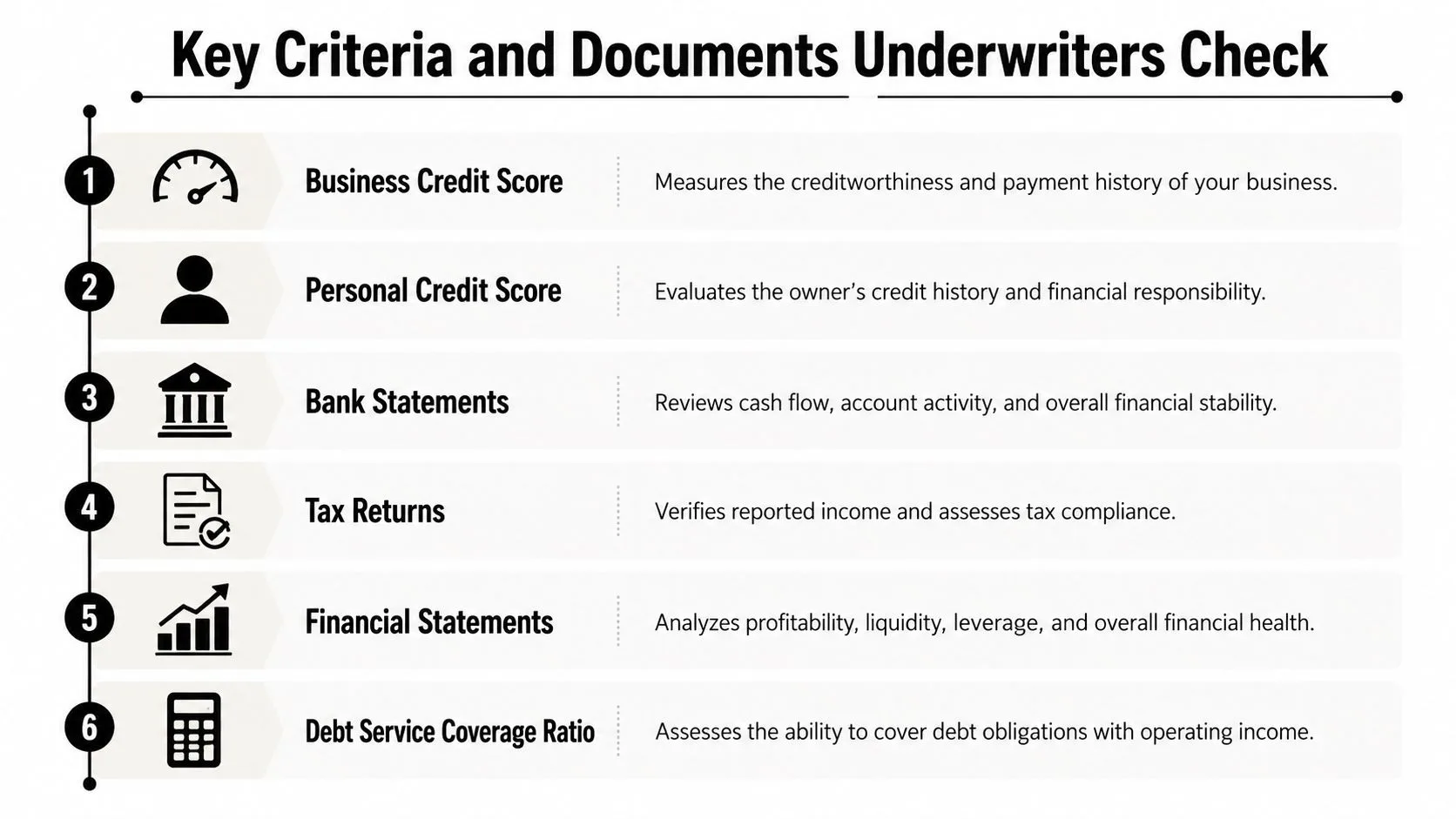
Underwriters commonly review business and personal credit, bank statements, tax returns, financial statements, debt service capacity, and collateral support. Each item answers a different question. Credit shows how obligations have been handled, bank statements show actual account activity, tax returns show reported performance, financial statements show operating health, and collateral shows what backs the risk if the loan runs into trouble. The internal guide at what documents do you need is a useful place to line up that paperwork before the file goes in.
A few patterns matter more than borrowers expect.
- Business Credit Score: this helps the lender judge how the company handles obligations in its own name.
- Personal Credit Score: many small-business files still rely on the owner's personal history, especially when the business is young or lightly capitalized.
- Bank Statements: these show cash flow, deposits, withdrawals, and whether the account activity matches the story in the application.
- Tax Returns: these help the lender compare reported income against stated revenue and spot inconsistencies.
- Financial Statements: these show how the business performs, not just how it was described.
- Debt Service Capacity: this tells the lender whether current obligations leave enough room for a new payment.
That is why lenders care so much about clean paperwork. A statement that is missing, a deposit that is not explained, or figures that do not tie together can send the file back for more review. It does not always kill the deal, but it does slow the process and usually means a person has to read deeper into the file.
Why gaps create friction
Small-business underwriting gets slower when the file raises questions that the first pass cannot answer. An underwriter may flag a mismatch between deposits and reported revenue, ask for support on a large transfer, or pause the review until a missing tax page is provided. That kind of pend is common because the lender is deciding whether the story in the file is complete enough to support the risk.
The working reality is simple. Borrowers who can show clean, consistent records tend to move faster, while borrowers with gaps usually trigger manual review. Modern fintech platforms can compress the routine checks, but they do not remove human judgment when the numbers or documents do not line up.
If you are trying to align your file with lender expectations, the commercial lending resource on meeting commercial loan standards is a useful reference point. It helps frame the kind of documentation lenders expect when the request is larger or the file is more document-heavy.
How Underwriting Differs Across Business Loan Types
Not every loan gets the same level of scrutiny. Some products lean hard on documentation and repayment modeling, while others trade that rigor for speed or flexibility. That's why the same borrower can get a fast answer on one product and a much slower answer on another.
The underwriting lens changes by product
SBA-style loans usually involve more paperwork and tighter documentation review because the lender is aligning the file with program rules. Traditional term loans often focus heavily on financial statements, credit, and repayment capacity. Equipment financing can lean on the equipment itself as part of the support package, so the asset matters more than in an unsecured deal.
Merchant cash advances usually move faster and can be more flexible on traditional credit, but the lender is still looking at revenue behavior and repayment strength in a different way. Invoice financing centers on the quality of the invoices, the customer base behind them, and whether receivables are likely to turn into cash on time.
| Loan Type | Key Underwriting Focus | Typical Timeline |
|---|---|---|
| SBA Loans | Documentation, program fit, cash flow, owner credit | Slower, due to added review |
| Term Loans | Credit, repayment capacity, financial statements | Moderate, depending on file quality |
| Equipment Financing | Asset value, collateral, business strength | Often faster than full unsecured review |
| Merchant Cash Advances | Revenue pattern, business activity, bank flow | Often faster, with lighter document depth |
| Invoice Financing | Invoice quality, customer reliability, receivables | Usually tied to receivable verification speed |
The practical takeaway is that the “right” loan type depends on what your file can support. A business with thin collateral may do better with a product that emphasizes revenue and bank flow. A company with strong statements and predictable earnings may qualify more smoothly for a more traditional structure.
Match the product to the file you actually have, not the file you wish you had.
That small shift in strategy can save a lot of frustration, because underwriting gets easier when the lender's focus matches your strongest proof points.
Why Underwriting Can Feel Inconsistent or Opaque
Borrowers often think the lender has already made up its mind, then a new document request arrives and the whole file seems to change direction. That feeling usually comes from exception handling, not randomness. Underwriters are looking for consistency, and when something doesn't line up, they ask for more proof.
Why files get pended
A file can get pended when the underwriter needs clarification before making a final call. Maybe the bank feed doesn't match the revenue reported on the application. Maybe there's a thin credit file, a recent business change, or a revenue pattern that needs context. Recent industry analysis also points to a workflow-and-controls approach, with human-in-the-loop review and confidence thresholds playing a bigger role than full automation, which is why the file can move back and forth instead of moving straight through.
That's also why people complain underwriting feels opaque. The lender isn't just checking boxes, it's deciding whether the available data is reliable enough to support the risk. If the answer isn't clear, the file moves to manual review.
You can see the same logic in fintech versus banks and faster approvals, where speed improves when data is cleaner and workflows are better organized. The underlying judgment still matters, though, because a faster system doesn't remove the need for review.
What usually triggers follow-up
- Inconsistent revenue signals: bank deposits, tax returns, and stated sales don't line up.
- Thin or messy documentation: the lender can't verify key figures quickly.
- Unclear ownership or entity records: the file needs confirmation before it can move forward.
- Policy exceptions: the deal is close, but one part doesn't fit the lender's standard rules.
The most useful response is fast, direct, and complete. If the underwriter asks for context, answer the exact question and keep it short. Overexplaining usually slows the file more than it helps.
Practical Tips to Improve Your Approval Odds and Speed
The fastest way through underwriting is to make the lender's job boring. Clean files move better than clever stories, because the underwriter is paid to trust evidence, not enthusiasm.
Do the boring work early
Start with your records. Keep bank statements, tax returns, financial statements, and debt schedules in one place before you apply. If an account has unusual activity, prepare a short explanation now instead of waiting for the lender to ask.
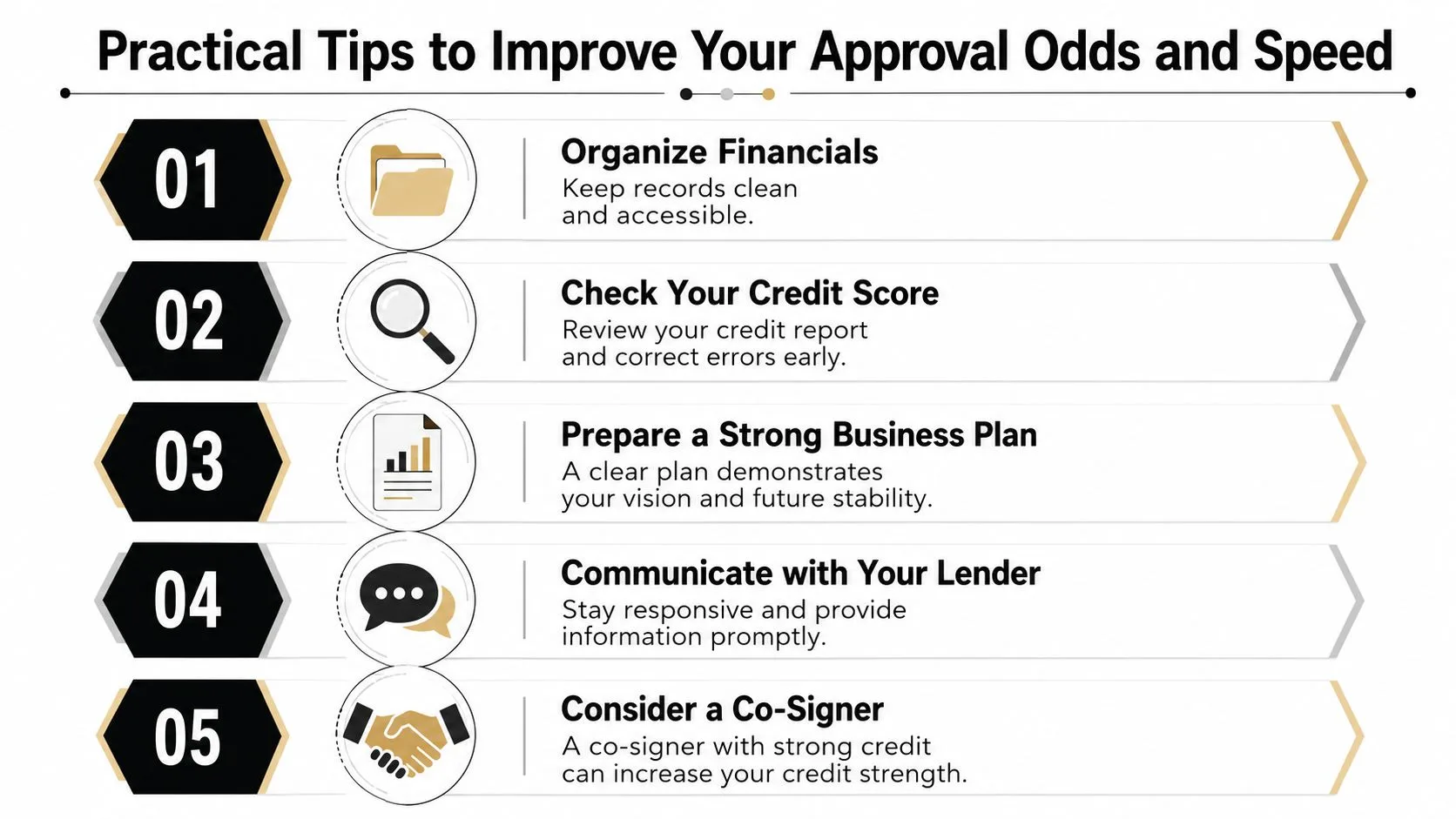
A few practical moves help a lot:
- Organize Financials: keep everything labeled, current, and easy to send.
- Check Your Credit Early: review for errors before the lender does.
- Prepare a Simple Business Narrative: explain how the business makes money and what changed recently.
- Respond Quickly: delays often come from slow replies, not hard problems.
- Bring in Support if Needed: a co-signer or additional collateral can strengthen a weak file.
Use tools that reduce back-and-forth
Digital verification can shorten the waiting game because income and asset data can be pulled faster than paper collection. Plaid notes that digital income and asset verification can take 1–2 days versus a week or more manually, and underwriting decision plus funding can happen in about 3 days once the file is ready, which shows why connected data matters. That speed doesn't remove human judgment, but it does cut down on the time lost to email threads and document chasing.
Business Loan Warrior is one platform that combines a single application, secure bank connections, a dashboard for tracking the process, and direct access to underwriters, which can help owners keep the file moving without losing visibility. Used well, that kind of setup turns underwriting from a black box into a managed process.
The point isn't to push every file into automation. It's to present a cleaner file, answer questions faster, and reduce the number of times the lender has to stop and ask for more.
Key Takeaways for Navigating the Underwriting Process
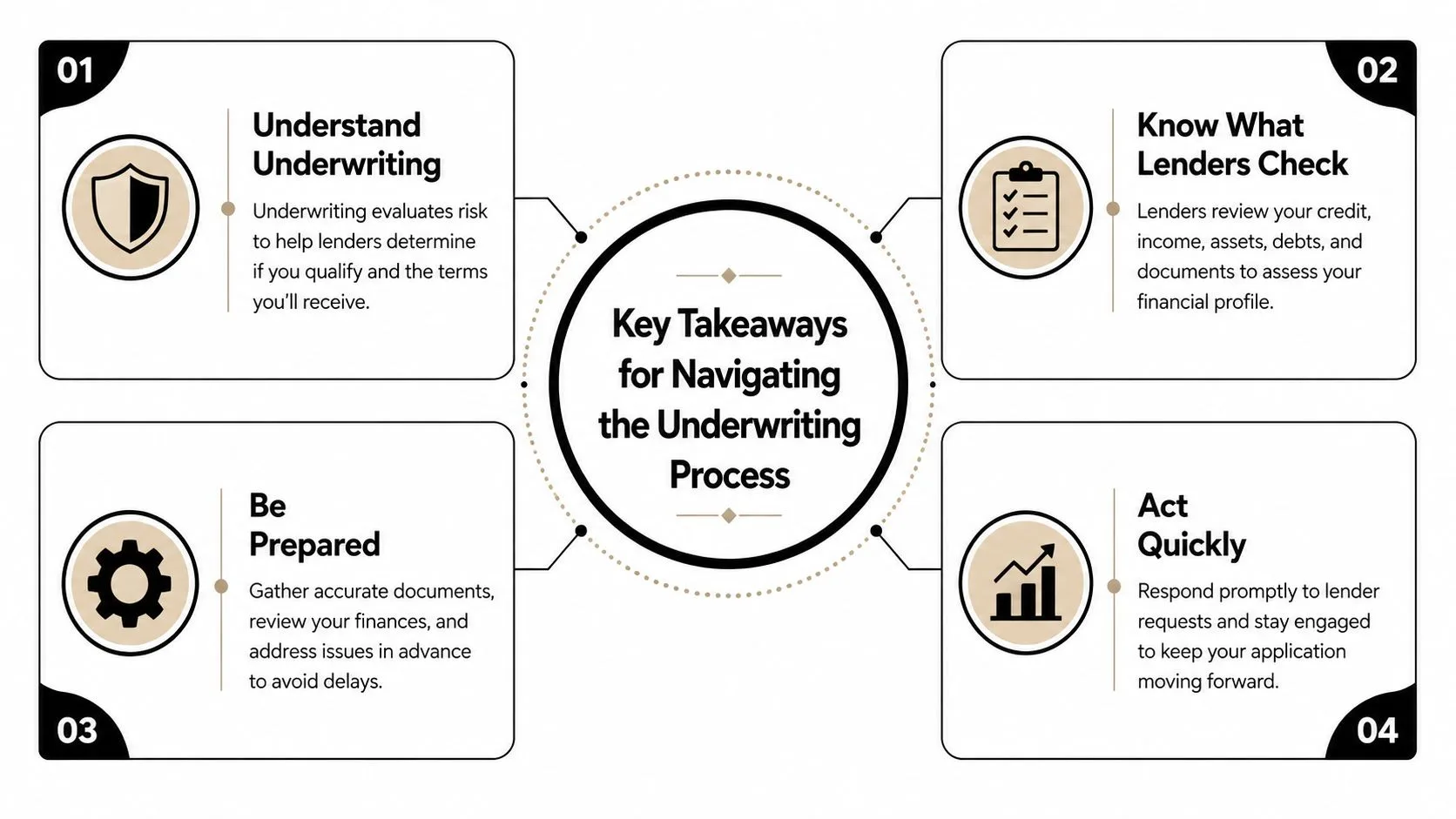
Underwriting is the lender's judgment step, but it's not mysterious once you know what it's trying to measure. The underwriter is checking whether your business can support the loan, whether the data is consistent, and whether the proposed terms match the risk.
The part you can control
You can't force an approval, but you can shape the file. Clean documents, consistent numbers, and fast responses lower friction. So does choosing a product that fits your credit profile, collateral, and revenue pattern.
The biggest mistake owners make is treating underwriting like a formality. It isn't. It's the stage where the lender decides if your business is financeable on the terms you want, or only on different ones.
Clear files move faster because they leave less room for interpretation.
That's the core lesson. Underwriting rewards clarity, and it punishes confusion with conditions, follow-up, or delay.
If you're getting ready to apply, take an hour to line up your records before you send anything. If you'd rather work through the process with a platform that combines application intake, bank connections, and underwriter access, visit Business Loan Warrior and compare the funding options that fit your business today.