
Paying cash or taking a standard equipment loan isn't automatically the smart choice. That advice treats every asset as if it will remain productive, valuable, and useful for the same length of time. A fleet vehicle, a custom production line, and a software-heavy technology stack carry very different ownership risks, even when each appears on the same capital expenditure budget.
The better question is: Do you need to own the equipment, or do you need reliable access to what it produces? That distinction affects working capital, repayment risk, tax treatment, resale exposure, and your ability to upgrade when the asset reaches the end of its useful life.
Business equipment financing has become a strategic cash-flow decision rather than a simple purchase mechanism. In the U.S., the estimated equipment finance market reached about $1.34 trillion in 2023, while equipment and software investment expanded 5.3% to $2.3 trillion in nominal terms. Roughly 57.7% of that investment was financed, and 82% of businesses that acquired equipment or software used at least one financing method during the year, according to the Equipment Leasing & Finance Foundation's 2024 Horizon Report.
Table of Contents
- Rethinking How You Acquire Business Assets
- Comparing Core Equipment Financing Options
- Navigating Credit and Lender Requirements
- Structuring Terms and Maximizing Tax Benefits
- The Shift From Ownership to Access Models
- Executing a Fast and Successful Application
- Aligning Equipment Strategy With Business Growth
Rethinking How You Acquire Business Assets
Many owners start with the wrong comparison: cash versus loan. Cash may look inexpensive because there's no stated interest charge, but it can remove the liquidity you need for payroll, inventory, customer acquisition, repairs, or the next growth opportunity. A loan preserves more liquidity, but it can leave you making payments after the equipment has lost productivity or resale appeal.
The financing structure should follow the asset's lifecycle. A machine with durable output and a broad resale market can justify ownership. Technology that becomes outdated quickly may be better accessed through a lease, rental, or service arrangement. Specialized equipment requires a closer look because its value depends heavily on finding the right buyer when you no longer need it.
The market has treated financing as a mainstream acquisition tool for years. A historical Horizon Report benchmark noted that the equipment finance industry had remained around the $1 trillion level since 2015, while a 2018 end-user survey found that 55% of private-sector equipment investment was financed through leases, secured loans, or lines of credit.
The asset should pay for its capital
I advise owners to judge an equipment proposal by the cash flow it creates, not by the excitement of owning a new asset. Ask whether the equipment adds capacity, reduces outside spending, improves reliability, supports a signed contract, or replaces a bottleneck. Then compare that expected operating contribution with the full payment obligation, maintenance costs, insurance, downtime risk, and likely resale value.
Commercial finance rule: Don't finance an asset merely because the payment fits. Finance it because the asset has a credible path to supporting the payment.
This approach changes the conversation with lenders. Instead of presenting equipment as an expense, you show how the asset fits the operating plan and why the proposed term matches its productive life. That makes the request easier to evaluate and helps you avoid borrowing against equipment that won't generate enough usable cash flow.
Ownership isn't always the objective
Ownership gives you control and residual value, but it also gives you disposal responsibility. Access structures can transfer some of that risk to a lessor, vendor, or service provider, particularly when upgrades, repairs, trade-ins, or end-of-life handling matter more than title.
The right decision depends on utilization, depreciation, service requirements, resale liquidity, and the pace of technological change. The old loan-versus-lease debate is too narrow for a mid-market company managing multiple asset categories. The real question is whether your business benefits more from owning the asset or buying dependable access to its output.
Comparing Core Equipment Financing Options
The main financing vehicles differ in more than their names. Each one changes who owns the asset, who carries residual-value risk, how much cash leaves the business early, and what happens at the end of the agreement.
| Financing Type | Ownership & Equity | Cash Flow Impact | Best Fit Scenario |
|---|---|---|---|
| Equipment loan | The business owns the asset and builds equity as principal is repaid | Larger structured payment, often with an upfront contribution | Durable machinery, vehicles, and assets expected to remain useful after payoff |
| Capital lease | The business generally receives ownership-like economic benefits, subject to contract terms | Predictable payments with a possible purchase obligation or residual | Equipment the business expects to retain while managing initial cash needs |
| Operating lease | The lessor retains ownership and residual-value exposure | Can preserve cash and support upgrades, but contract payments continue for the agreed term | Technology or equipment likely to become obsolete |
| SBA-backed equipment financing | Ownership depends on the underlying loan structure | Can support a larger project with structured repayment and broader eligibility considerations | Major capital expenditures where a conventional structure doesn't fit the full need |
Equipment loans
A secured equipment loan is usually the cleanest structure for long-lived assets with a dependable secondary market. You borrow to purchase the equipment, retain title, and build equity as the balance declines. When the loan is paid off, the company still controls an asset that can support operations or be sold.
The trade-off is that you carry the asset's resale and obsolescence risk. A loan also requires careful attention to the down payment, collateral coverage, personal guarantees, covenants, and payment timing. If the asset won't produce useful cash flow until a later point in the project, a standard amortization schedule may create unnecessary pressure.
For a broader review of lender selection, compare this commercial equipment lenders guide before requesting proposals. The lender matters as much as the product.
Leases and SBA programs
A capital lease can resemble ownership economically, but the contract controls the treatment. Review the purchase option, residual obligation, maintenance responsibility, insurance requirements, early termination language, and end-of-term conditions. Don't assume a lower monthly payment means a lower total cost.
An operating lease can be more practical for rapidly changing technology or equipment that you expect to replace. You're paying for use and flexibility, not necessarily for long-term equity. That can be a strong trade when the cost of holding obsolete equipment would exceed the value of ownership.
SBA-backed programs can make sense when equipment is part of a larger expansion, acquisition, or facility project. The process may require more documentation and coordination, but the structure can support a broader capital plan than a narrow asset loan. Owners considering a lease-to-own arrangement can also review this resource on a Birmingham AL lease purchase program to understand how lease purchase concepts are commonly framed.
Navigating Credit and Lender Requirements
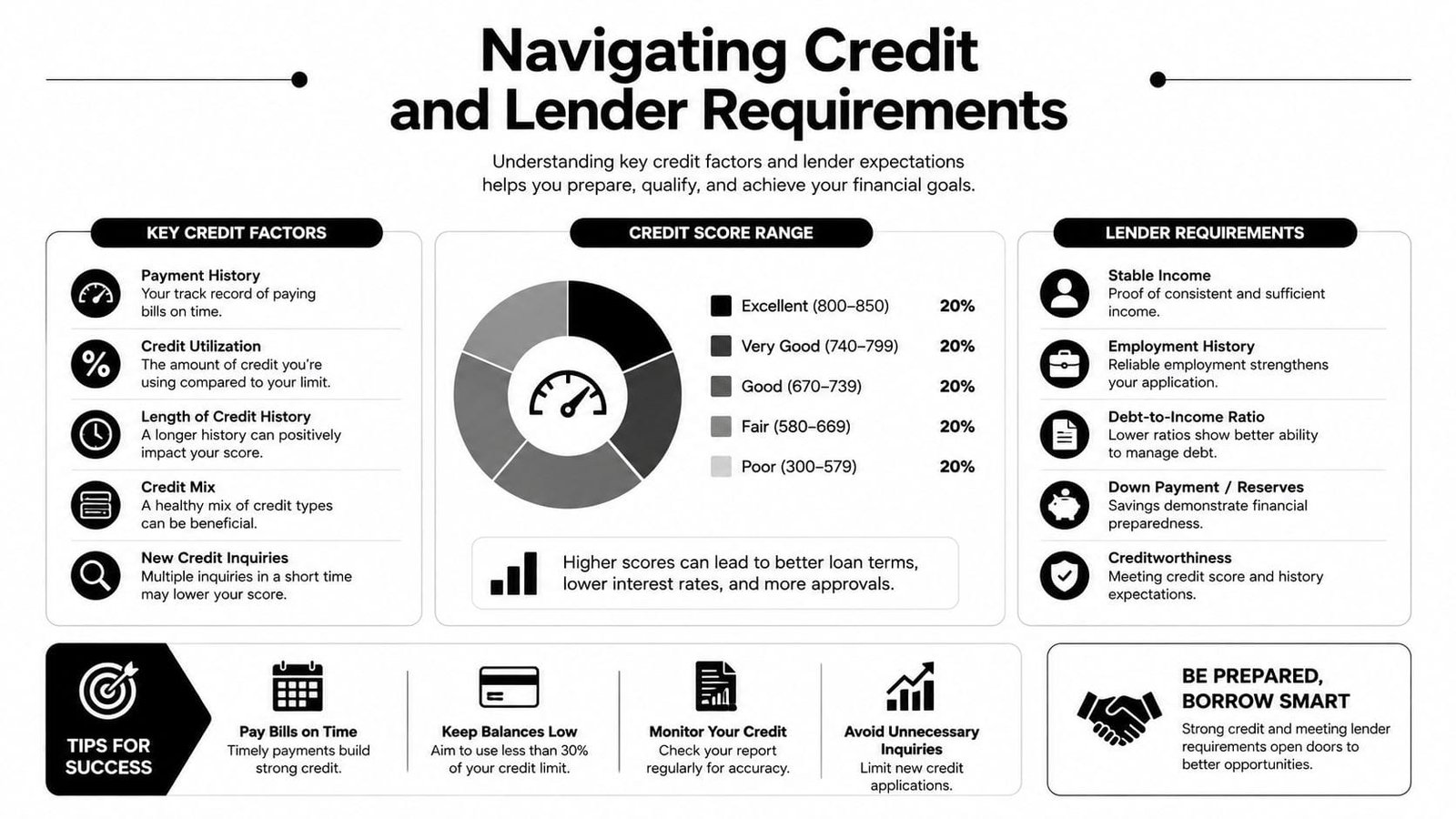
Approval isn't determined by your personal credit score alone. Underwriters examine the borrower, the asset, the transaction structure, and the lender's ability to recover value if the business defaults.
That last point matters. A standard vehicle, common construction machine, or widely used manufacturing asset may have a clear resale market. A customized machine built for one facility may be productive for you but difficult for a lender to liquidate. The lender will price and structure those requests differently.
Independent market benchmarks indicate that standard equipment loan terms often run 2 to 7 years, while heavy or specialized equipment may extend to 10 years. The same benchmarks place stronger files around 6% to 9% APR, while thinner-credit borrowers may see 10% to 20% or more, depending on the transaction and risk profile. These figures come from the equipment financing calculator and market guide, and they should be treated as reference ranges, not quotes.
Lender type changes the outcome
A bank may emphasize historical profitability, debt-service coverage, deposits, guarantor strength, and relationship history. A captive finance company tied to a manufacturer may understand the equipment thoroughly and structure around its expected resale. An independent equipment finance company may focus more heavily on collateral, industry experience, and the transaction's cash-flow logic.
The 2026 lending data shows why lender selection deserves attention. In January 2026, U.S. equipment finance new business volume reached a record $11.6 billion, but bank volume fell 11.7% from the prior month, while captive finance company volume rose 14.9%. Approval rates slipped to 76.8%, even as delinquencies remained at 2.1% and losses at 0.46%, according to January 2026 equipment finance activity coverage.
The point isn't that one lender category always wins. The point is that a borrower can be financially sound and still approach the wrong capital source for the asset or timing requirement.
Collateral quality controls leverage
Market benchmarks indicate that new equipment with an active resale market may support 80% to 100% LTV, while used, customized, or thin-market equipment is often capped lower. That difference reflects liquidation uncertainty, not necessarily a judgment about your business.
Prepare the lender for the collateral. Provide the manufacturer, model, year, serial number, condition, invoice, specifications, warranties, and independent valuation support where available. If the equipment has a recognized auction or dealer channel, document it. If it's custom, explain the components that retain value and identify realistic buyers beyond your own company.
Underwriting insight: Strong business credit can't fully compensate for weak collateral liquidity. A financeable asset needs both productive utility and credible recovery value.
Structuring Terms and Maximizing Tax Benefits
The interest rate is only one part of the economics. A low rate on a term that outlasts the equipment can create a poor result, while a slightly higher cost attached to a well-matched structure may protect working capital and reduce operational strain.
Start with the asset's expected productive life, not the payment you want. Equipment financing commonly follows the asset's useful life and resale value because the equipment serves as collateral. A long-lived machine with stable demand can support a longer repayment period, while rapidly depreciating or highly specialized equipment usually calls for more conservative amortization.
Build the structure in the right order
Use this sequence before accepting a proposal:
- Define the operating purpose. Identify the revenue, capacity, labor efficiency, quality improvement, or cost reduction the asset is expected to support.
- Estimate usable life. Include maintenance requirements, expected utilization, technology changes, and the point at which replacement becomes more economical.
- Assess resale value. Ask how easily the asset could be sold if the company changed direction. Broad secondary markets generally support stronger advance rates and more flexible pricing.
- Match payment timing to cash generation. Seasonal businesses may need payment dates or structures that reflect their collection cycle rather than a flat assumption about monthly cash flow.
- Review the exit. Confirm whether the business will own the asset, refinance a residual, return the equipment, or sell it before the obligation ends.
A larger down payment can reduce the financed balance, but it also removes liquidity. Preserve enough cash for implementation, training, maintenance, inventory, and unexpected delays. A machine that arrives without the working capital needed to operate it isn't a successful financing outcome.
Use tax treatment as part of the decision
U.S. tax rules can materially change after-tax economics. Section 179 may allow immediate expensing of qualifying equipment up to an indexed annual cap, reducing taxable income in the purchase year and potentially improving cash flow relative to straight-line depreciation. The specific eligibility, limits, and timing depend on current tax rules and the company's circumstances, so have your tax adviser confirm the treatment before signing.
For a practical equipment-specific reference, review this tax deduction lab equipment guide. It can help identify the questions to raise with your accountant, but it shouldn't replace tax advice specific to your entity and filing position.
You should also distinguish tax ownership from accounting presentation. A contract can produce different financial-statement and tax outcomes depending on its terms. Review interest deductions, depreciation, expensing elections, residuals, fees, and payment timing together rather than evaluating one tax benefit in isolation. This equipment depreciation guide provides additional background for that conversation.
The Shift From Ownership to Access Models
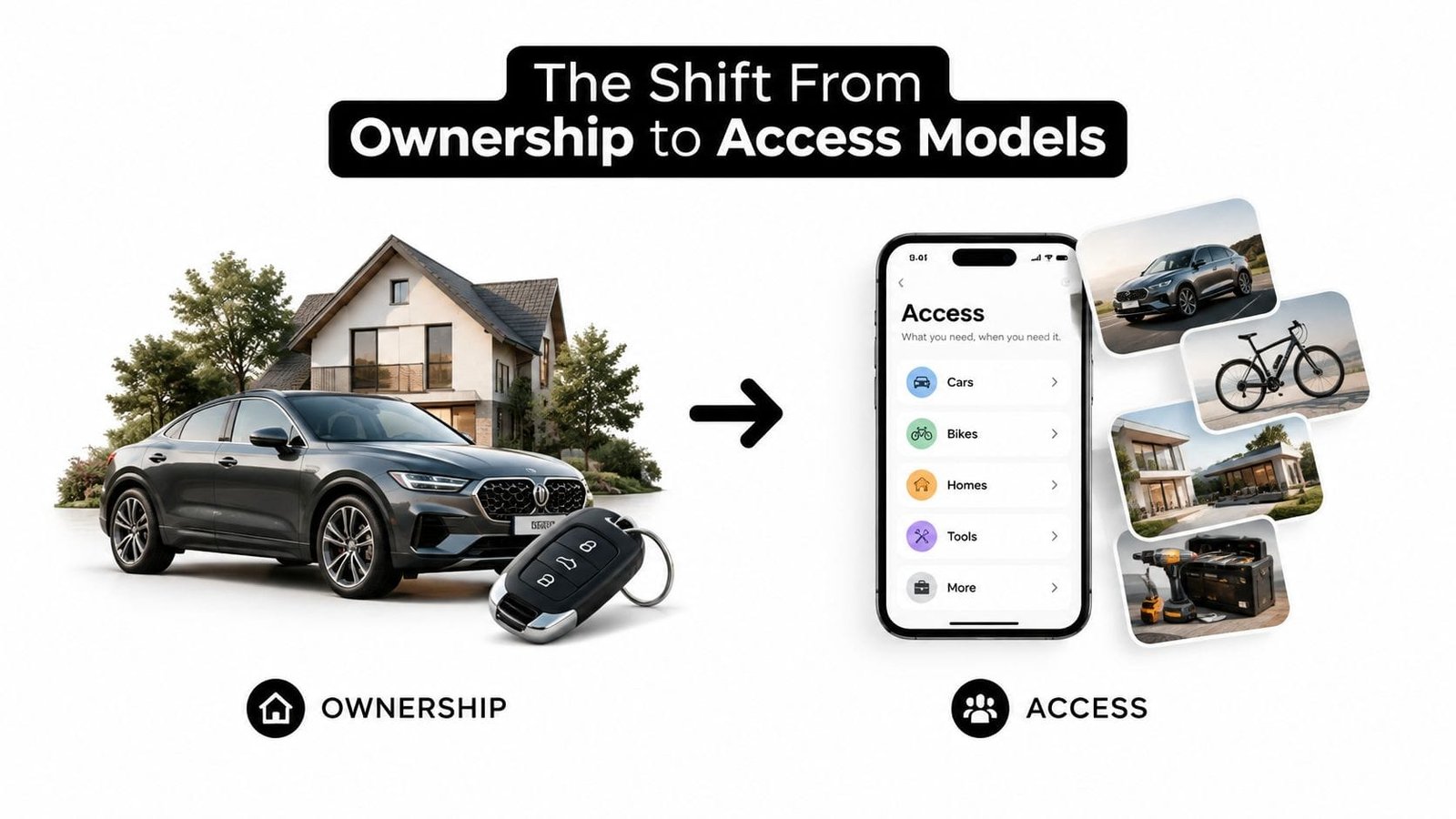
The biggest change in equipment finance isn't just a new loan product. It's the move toward paying for availability, output, or usage instead of purchasing every physical asset outright.
Equipment-as-a-service, pay-per-use agreements, rentals, flexible leases, and balloon-payment structures are reshaping acquisition decisions, particularly for businesses that value predictable cash flow and operational flexibility. A company may not need to own a machine if a supplier can guarantee access, maintenance, replacement, and performance under a commercially sensible agreement.
Recent industry coverage identifies this as a major feature of the projected 2026 equipment finance outlook. One European outlook reported that 45% of businesses already finance at least a quarter of their equipment through usage-based models, while 53% expect that share to hold or grow, as described in coverage of equipment finance trends for 2026.
Decide whether the output matters more than the title
Access models deserve serious consideration when the equipment has fast obsolescence, variable demand, intensive maintenance needs, or uncertain resale value. They can also work when the supplier has better trade-in channels and technical expertise than your internal team.
Ownership remains preferable when utilization is high and stable, the asset has a long productive life, resale markets are dependable, and the business wants maximum control over deployment. A loan may produce a lower total cost over the full life of the equipment, provided the company can carry the payments and manage the eventual sale or replacement.
The contract still requires discipline. Compare the usage definition, minimum commitments, overage charges, service-level obligations, downtime credits, renewal terms, upgrade rights, insurance requirements, and termination provisions. A flexible label doesn't guarantee a flexible agreement.
Use existing assets strategically
A sale-leaseback can release capital from equipment you already own while allowing continued operational use. It may help fund expansion or stabilize liquidity, but it replaces ownership with a payment obligation and can be expensive if the asset valuation or lease terms are unfavorable. Review this sale-leaseback definition before treating the structure as a simple cash-out transaction.
The decision has moved beyond loan versus lease. For each asset, compare ownership economics with access economics, then choose the structure that leaves the company strongest at replacement time.
Executing a Fast and Successful Application
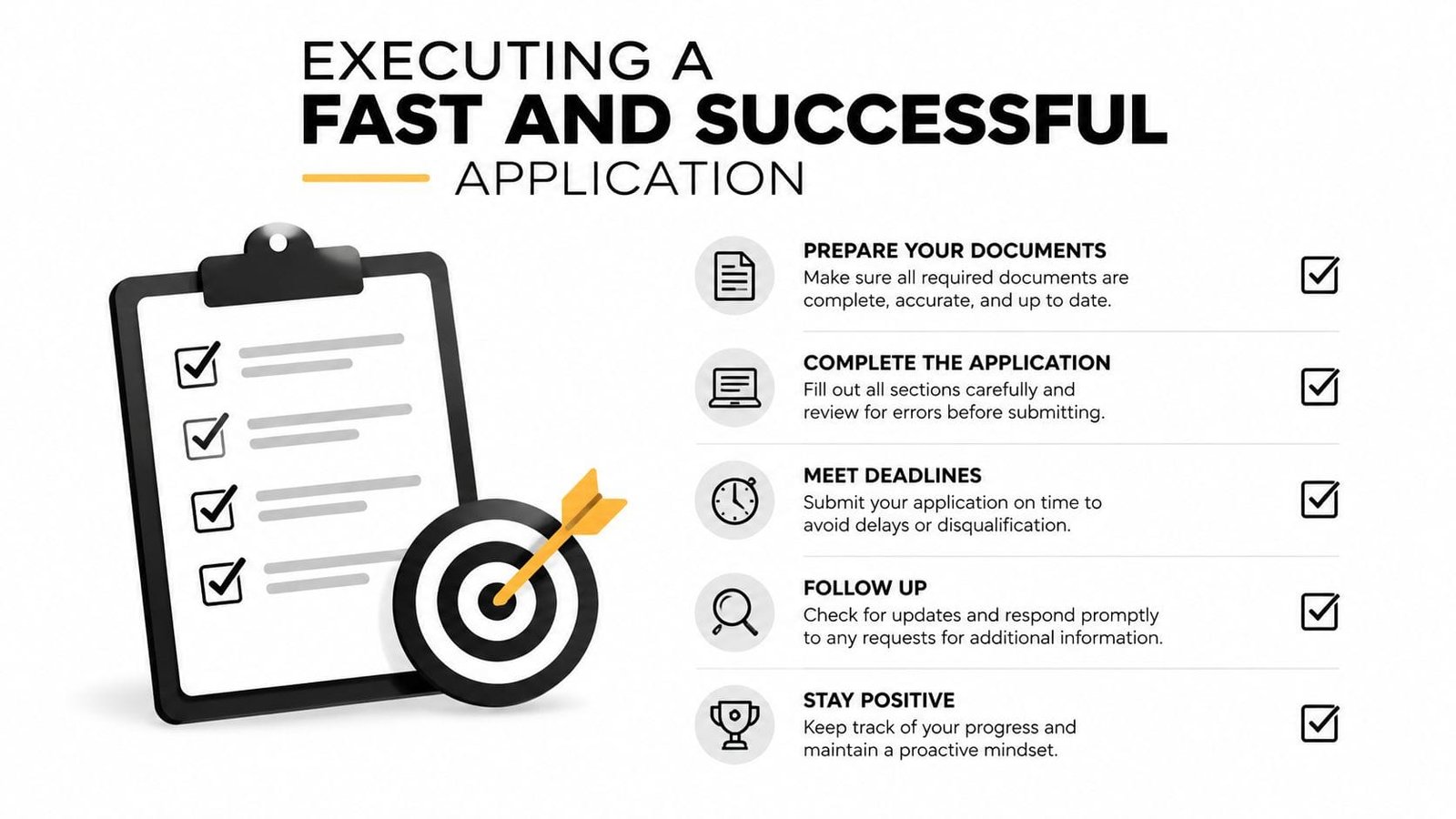
A clean application reduces avoidable questions. Underwriters move faster when they can verify the borrower, understand the asset, and connect the requested structure to a clear operating purpose.
Start by building the file before you submit. Don't send a vague request for “equipment funding” and expect the lender to design the transaction from incomplete information.
Assemble the underwriting package
Step one, define the purchase. Include the vendor quote, equipment description, model, condition, delivery details, installation costs, and any related software or improvements. The lender needs to know exactly what its collateral will be.
Step two, organize financial records. Prepare business tax returns, current interim financial statements, accounts receivable and payable aging, debt schedules, bank statements, and ownership information. If the lender requires guarantor information, provide personal financial statements and authorization forms at the outset.
Step three, explain repayment. Write a short operating memo that states what the equipment does, when it will be deployed, which contract or workflow it supports, and how the company expects to generate the cash needed for repayment. Keep the explanation specific and measurable without making unsupported promises.
Step four, request the right structure. State the desired loan or lease amount, proposed down payment, preferred payment frequency, seasonal considerations, and intended exit. If you want ownership, don't let a low payment obscure a residual or buyout obligation.
Step five, compare complete proposals. Review total repayment, fees, collateral requirements, guarantees, covenants, prepayment terms, maintenance obligations, insurance, and documentation charges. Rate alone isn't an adequate comparison.
Make technology work for the process
Some digital platforms let applicants check pre-approval without affecting credit, connect bank accounts securely, and monitor requests through a dashboard. Those tools can reduce document exchange and give borrowers clearer visibility into outstanding conditions, but you should still verify the lender, data-security practices, consent language, and final underwriting terms.
Business Loan Warrior is one available option for owners seeking a single application process that can support equipment purchases, connect financial accounts, provide approval tracking, and offer access to several business funding structures. Treat it as a channel to compare against banks, captive lenders, and independent finance companies, not as a substitute for reviewing the transaction terms.
Respond to conditions quickly, but don't answer blindly. If an underwriter asks about a revenue dip, customer concentration, aged receivables, or a customized asset, provide a concise explanation supported by documents. Clear answers often prevent a small question from becoming a stalled file.
Aligning Equipment Strategy With Business Growth
Equipment financing should support the next phase of the business, not just solve today's purchase order. The right structure preserves enough liquidity to operate, gives the company a realistic payment burden, and leaves a sensible exit when the asset reaches replacement age.
Start with the business objective. Expansion equipment should align with signed demand, credible capacity needs, or a defined operational bottleneck. Replacement equipment should be evaluated against downtime, repair expense, quality problems, and the cost of delaying the purchase. A tax deduction can improve the result, but it can't rescue an asset that lacks a sound operating case.
The strongest financing strategy usually separates assets by lifecycle:
- Long-life, liquid assets often fit secured ownership financing when the business wants residual value.
- Obsolescence-sensitive equipment may fit a lease, rental, or service model that preserves upgrade flexibility.
- Specialized assets require conservative financing, documented valuation, and a clear resale or fallback plan.
- Mixed expansion projects may need a broader capital structure rather than a standalone equipment note.
Decision standard: Choose the structure that leaves your company with the most useful cash, the clearest exit, and the least damaging obligation when the asset no longer earns its keep.
Lender choice should evolve with the company. A relationship bank may be appropriate for a stable borrower with strong financial statements and a straightforward asset. A captive lender may understand a manufacturer-specific machine better. An independent finance company may offer a more asset-focused review when conventional bank criteria don't fit. Compare all three when the purchase is material to your operating plan.
Don't treat funding as a one-time event. Maintain updated financial records, monitor equipment performance, review replacement timing, and revisit the capital structure before the next purchase becomes urgent. That discipline lets you negotiate from strength instead of financing under pressure.
Business Loan Warrior offers a single application pathway for equipment purchases, equipment leasebacks, SBA financing, lines of credit, and other business funding needs, with tools for pre-approval checks and approval tracking. Visit Business Loan Warrior to compare potential financing routes and start matching your next equipment acquisition to the asset's lifecycle and your company's cash-flow plan.