
You formed the LLC for a reason. You wanted liability separation, cleaner ownership, and a safer way to hold property, then the lender started asking for documents that look nothing like a normal home loan file. That's the point where most owners realize mortgage loans for LLC aren't a minor variation on residential lending, they're a different game entirely.
The question isn't whether you can get financing through an LLC. It's whether the extra cost, the stricter underwriting, and the personal guarantee are worth the protection you're getting. If you treat that as a math problem instead of a checklist, you'll make a better decision and waste less time chasing the wrong loan.
Table of Contents
- Why Your LLC Changes the Mortgage Game
- Conventional and Government Loans Are Off the Table
- The Four Loan Types LLCs Actually Use
- How DSCR Underwriting Actually Works
- Understanding the True Cost of Borrowing Through an LLC
- Your 90-Day Preparation Checklist
- Common Mistakes That Kill LLC Mortgage Deals
- Choosing the Right Path for Your Business
Why Your LLC Changes the Mortgage Game
The moment the borrower becomes an entity, the lender changes the file from a personal mortgage to a business-purpose credit decision. That shift matters because residential programs are built around individual borrowers, and Fannie Mae's business-structure rules reflect that reality. FHA, VA, and USDA are generally not available when the property is purchased through an LLC, so the file usually moves into a commercial, portfolio, or investor-focused lane. That is why a title decision can change the entire funding path. California asset protection guide is a useful reminder that asset protection and financing strategy are related, but they are not the same decision.
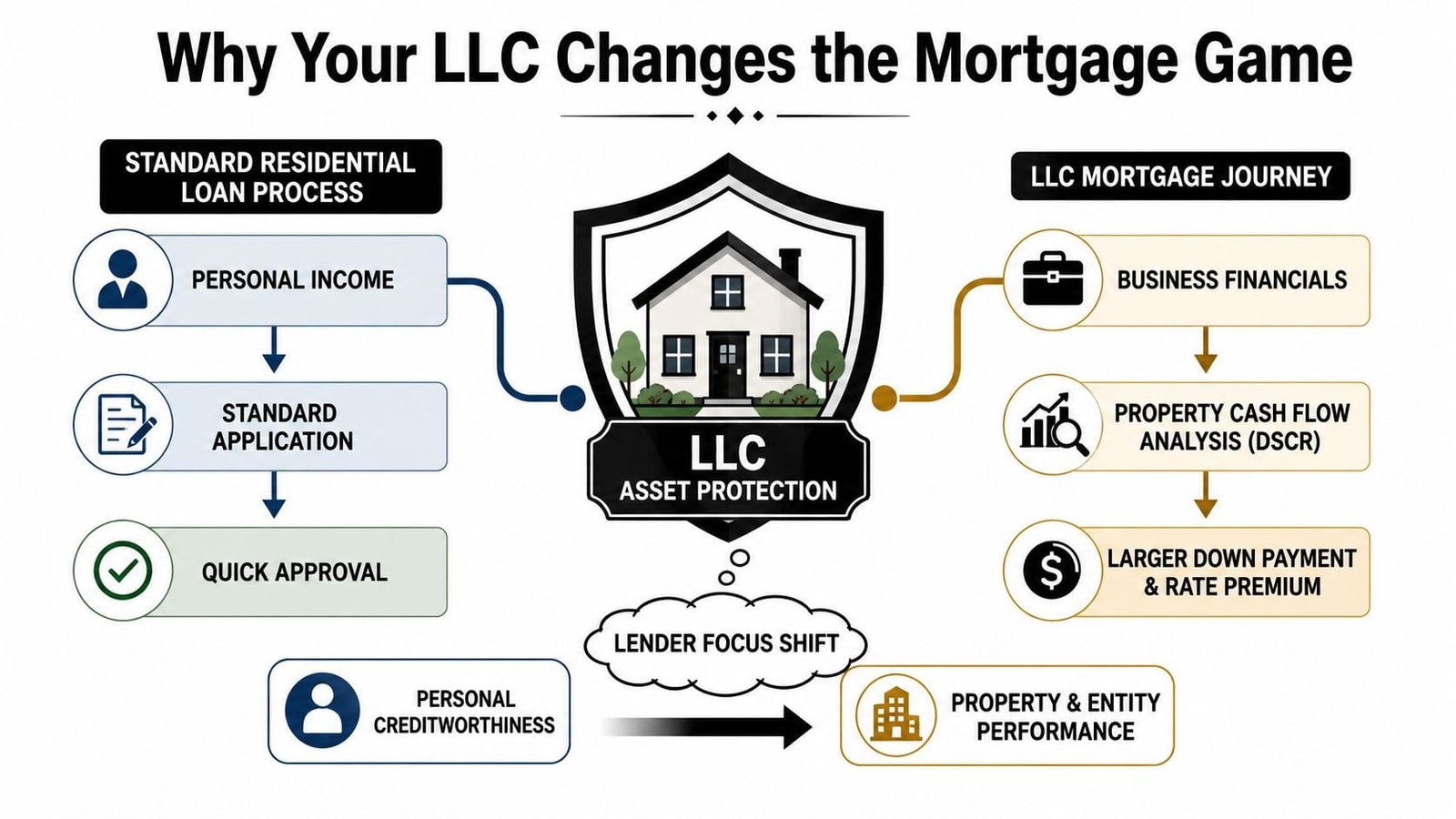
The lender is underwriting the entity, not just the owner
That shift changes the question the lender asks. It is not only, “Can this person pay?” It is also, “Does this property produce enough cash flow, and does this entity have the authority and structure to borrow?” The entity side matters because the loan sits with the LLC, not with you personally, so the lender wants clean documentation of who formed the company and how it can act. For the difference between entity setup documents, see articles of incorporation vs articles of organization.
The mortgage market is enormous. According to homebuyer.com guidance on business structures, Americans owed about $13.19 trillion in mortgage debt in Q1 2026, spread across 86.97 million mortgage accounts with an average balance of $151,673. That scale explains why lenders keep standard residential products tied to individual borrowers. LLC deals get routed somewhere else.
Practical rule: If you want residential pricing and residential underwriting, borrow as an individual when that is legally and strategically acceptable. If you want the liability shield, expect the lender to price and underwrite the deal as a business-purpose loan.
Business owners also miss the timing. LLC financing is usually not just a title change after closing. It changes the loan category, the credit standard, and the approval package. If you are buying rental property, mixed-use property, or a building tied to business use, the lender wants a structure that matches the use case. That is why the file feels slower and more demanding. It is not a glitch, it is the design.
The tradeoff is the whole story
You are buying liability separation with money and paperwork. The financing usually costs more, the review is tighter, and you give up some of the consumer-friendly protections that come with a plain residential loan. If the liability shield is worth it for the property and the risk, accept the higher cost and underwrite the deal accordingly. If it is not worth the premium, keep the property out of the LLC and preserve the cheaper mortgage path. That is the core math, and it should drive the decision.
Conventional and Government Loans Are Off the Table
An LLC borrower does not fit the standard residential mortgage box, so start there and stop trying to force it. Fannie Mae and Freddie Mac do not buy loans made to LLCs, which removes the normal conforming path for the deal. FHA, VA, and USDA are also designed for owner-occupants and individual borrowers, not entities. That is not a lender quirk. It is how those programs are built.
Why the structure matters more than the title
Owners often assume they can close first and “fix” the title later by adding the LLC. That approach causes trouble because loan eligibility is decided at origination, not after the fact. The lender underwrites the borrower, the occupancy, and the property use from day one. If the borrower is an LLC, the file leaves the consumer mortgage lane and moves into a business-purpose review.
That is the part people resist, and it is the part they need to accept. The question is not which government program you can squeeze this into. The question is which loan type matches the way the property will be held and used. If the property is an investment, a mixed-use asset, or part of a business structure, expect the lender to steer toward portfolio, DSCR, non-QM, or commercial financing. That is normal. It does not mean the deal is weak.
What that means in practice
Walk into a lender conversation with an LLC borrower and a residential rate expectation, and you will usually get a quick no or a fast redirect. The lender needs a structure it can keep or sell inside its own rules, and government-backed residential products are not built for entity borrowing. The file has to fit the program, not the other way around.
The clean way to frame it is simple:
- Conforming residential loan: built for an individual buying a home.
- Government-backed home loan: built for an owner-occupant, not an entity.
- Entity-owned property financing: built around business purpose, cash flow, and collateral strength.
That is the fork in the road. Once you choose the LLC path, stop shopping the wrong aisle and compare the products that fund entity deals.
The Four Loan Types LLCs Actually Use
An LLC borrower has fewer paths, and that is fine. The mistake is pretending every property should fit the same loan. I would sort the options into four buckets and judge them by one question, does the structure match the property and the financing cost that comes with it?
DSCR loans for rental cash flow
DSCR loans are the cleanest fit for single-asset rental deals where rent is doing the work. The lender cares about whether the property cash flows, not whether your personal tax return is pristine. For many small landlords holding real estate in an LLC, that is the straightest route to approval.
If you want to understand how lenders read that file, start with a debt schedule and the income line that supports it. A clear debt schedule explanation helps you see why one property closes and another gets priced harder. If you want more lender-side training, you can also find DSCR loan training materials.
Portfolio loans for local flexibility
Portfolio loans work when the lender keeps the loan on its own books and can bend a little on structure. That matters on deals that look messy on paper, such as a unique building, a borrower with several entities, or a property that falls outside a standard box. These lenders can move faster than big secondary-market shops because they are not trying to package the file for resale.
That flexibility comes at a cost. You usually pay for it in rate, fees, or both, so use portfolio financing when the property justifies the tradeoff.
Non-QM investor loans for nonstandard borrowers
Non-QM investor loans sit between residential rules and commercial rules. They are built for borrowers who do not fit standard documentation, but the property still looks like a real investment and the exit plan makes sense. If your income profile, entity setup, or loan documentation would get rejected in a conventional channel, this lane can still work.
This bucket is also where underwriting gets more customized. That can help a strong borrower who has an unusual file, but it can also expose weak deals faster, so do not assume flexibility means easier money.
Commercial mortgages for business property
Commercial mortgages fit true business property, not a rental with a fancy label. Office, retail, mixed-use, and owner-operated real estate belong here when the property lives on a business balance sheet. The lender underwrites the asset as income-producing or operating property, and the file usually gets more detailed from there.
That extra scrutiny is the price of using business-purpose financing. If the property is really a business asset, commercial debt is the cleanest match. If it is not, forcing it into this lane usually makes the deal more expensive than it needs to be.
Bottom line: Stop asking which loan is “best” in the abstract. Ask which loan fits the property's actual use, your LLC structure, and the financing cost you are willing to pay for liability protection.
LLC Mortgage Options at a Glance
| Loan Type | Best For | Typical Term | Underwriting Focus |
|---|---|---|---|
| DSCR loan | Rental property held in an LLC | Often 5-, 7-, or 10-year balloon with 20–25 year amortization | Property rent coverage |
| Portfolio loan | Borrowers needing flexible lender rules | Varies by lender | Property strength and borrower profile |
| Non-QM investor loan | Nonstandard income or documentation | Varies by program | Investment purpose and credit story |
| Commercial mortgage | Business-use or mixed-use property | Varies by lender | Property performance and business use |
The core takeaway is straightforward. LLC borrowers rarely receive a generic mortgage. They are matched to a product that reflects the risk, the property, and the exit plan. Understand this before comparing quotes, or you will waste time on the wrong lender.
How DSCR Underwriting Actually Works
DSCR is the number that tells a lender whether the property can carry its own debt. It stands for Debt Service Coverage Ratio, and the formula is gross monthly rent divided by monthly PITIA, which means principal, interest, taxes, insurance, and HOA dues (Alpine Banker). If the rent does not support the payment, the file gets harder to approve and the pricing usually gets worse. That is the whole point of the metric.
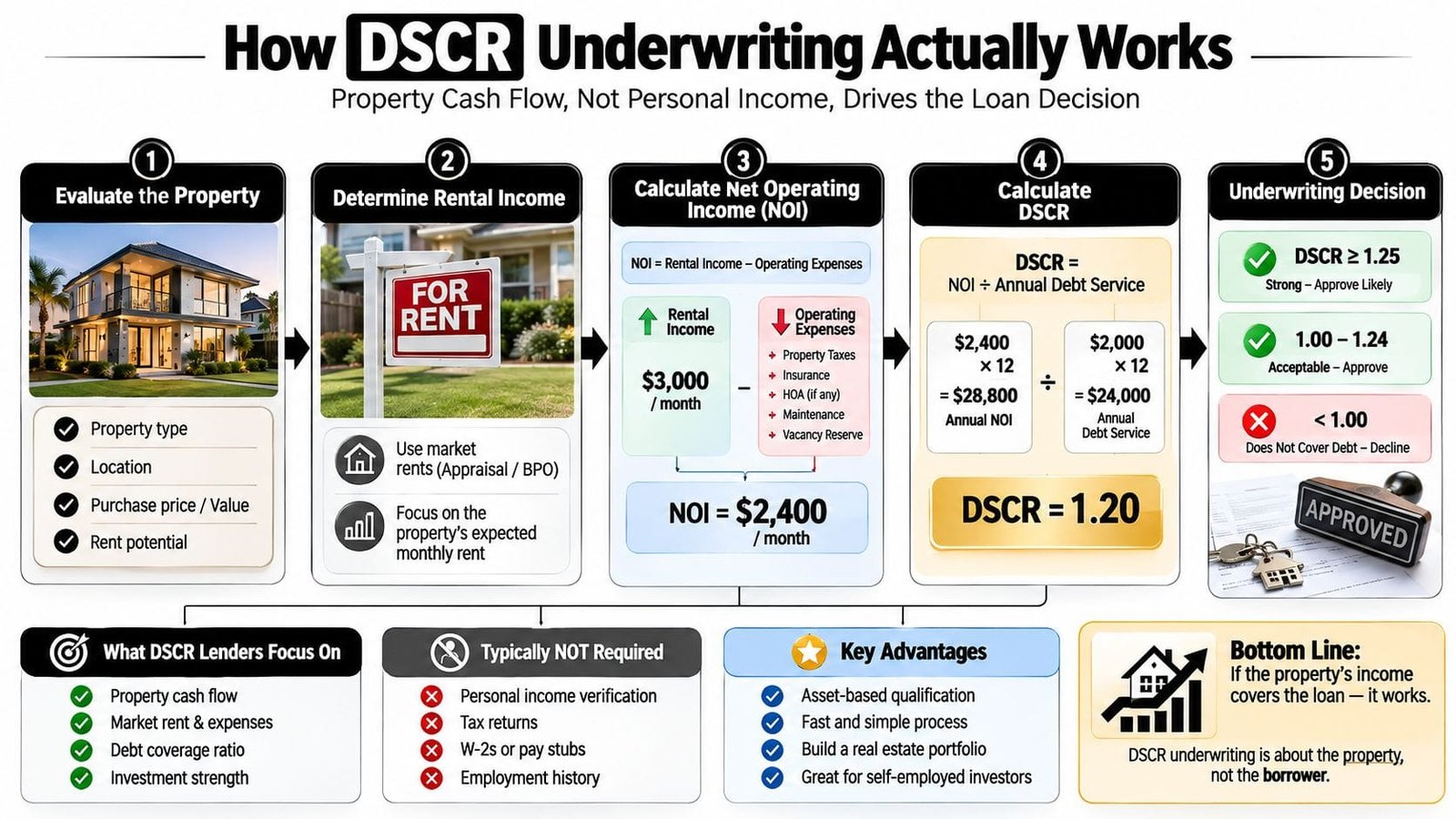
What the ratio is really telling the lender
A 1.0 DSCR means the property breaks even on paper. Anything below that means the rent does not fully cover the debt, which is a harder file to sell. Many lenders look for roughly 1.0 to 1.25+ as a minimum, and stronger ratios usually help with approval odds and pricing (Alpine Banker). The lender is not being sentimental. It is measuring how much vacancy risk, maintenance risk, and rent volatility it is willing to absorb.
The core lesson is simple. A clean LLC does not rescue a weak rent roll. Cash flow drives the deal, and the entity paperwork only tells the lender that the borrower is organized and legally able to hold the property. If you want liability protection, you still have to make the numbers work.
What the file has to include
LLC loan packages need more than a purchase contract and a credit pull. Expect to provide the Articles of Organization, Operating Agreement, EIN, Certificate of Good Standing, and a borrowing resolution. Lenders also commonly ask for reserves, and some cite 6 months of PITIA as a typical benchmark (Alpine Banker). That stack does two jobs. It confirms the LLC can legally borrow, and it gives the lender comfort that the property can absorb a vacancy or a delayed rent payment.
The reserve side matters because it is part of the lender's view of the whole file, not just the rent math. A borrower with thin liquidity can still qualify on paper and still be a bad credit risk in practice. If you want a cleaner read on how lenders weigh cash flow against other obligations, review what a debt schedule does for your business financing before you submit the file.
For a closer look at how lenders read the cash-flow side of the file, find DSCR loan training materials before you talk to a lender.
A clean LLC name on title does not save a weak rent roll. The lender cares about the property's ability to pay the debt first.
If you are building your deal around DSCR, underwrite the property before you send the application. Run the rent against PITIA, check the reserves, and make sure the entity documents are ready. That is how you keep the file from stalling halfway through.
Understanding the True Cost of Borrowing Through an LLC
The sales pitch usually gets fuzzy, so cut through it. LLC financing almost always costs more than owner-occupied conventional financing, and that extra cost is the price of separating the property from your personal balance sheet. Independent guidance notes that LLC-backed investment-property loans often carry about 0.5% to 1% more in pricing, and industry guidance also points to 20% to 30% down payments and 6 to 12 months of reserves as common requirements (AmeriSave guide). These loans also often require a personal guarantee from one or more members. That is the tradeoff, not the polished brochure version.
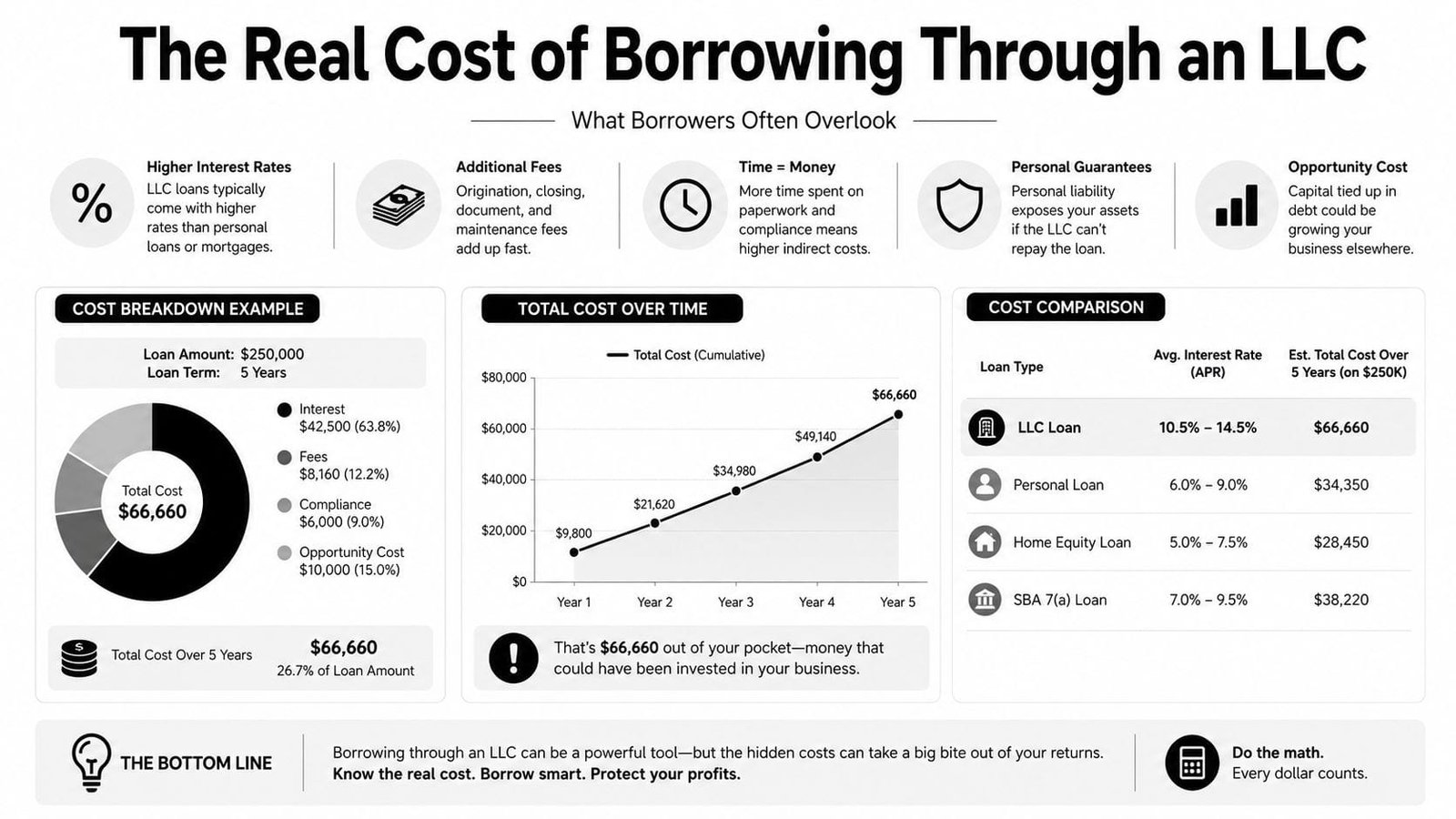
The financing drag shows up in three places
The rate is usually worse than a primary residence loan because the lender is pricing an investment property, not a consumer mortgage. The down payment is larger, which ties up more cash on day one. The reserve requirement keeps more liquidity off-limits after closing.
That combination matters because it changes monthly pressure and the capital you still have for repairs, vacancy, or the next acquisition.
If you want a broader look at how lenders price entity-owned property, commercial real estate loan rates give you a useful comparison point.
The break-even question you should actually ask
Do not ask whether the LLC loan is “good.” Ask what the liability shield is worth to you in dollars.
If the property is low-risk, easy to insure, and unlikely to create personal exposure, the extra cost is hard to justify. If the property carries tenant risk, operating risk, or a real chance of legal claims, the protection can be worth the higher rate and bigger cash requirement.
My rule: If the LLC does not materially reduce your downside, do not pay for it just because it sounds professional.
That is the right framework for a small business owner. You are not choosing between “safe” and “unsafe.” You are choosing between paying more now and accepting less protection later. Put the numbers next to the risk, and the answer gets a lot clearer.
Your 90-Day Preparation Checklist
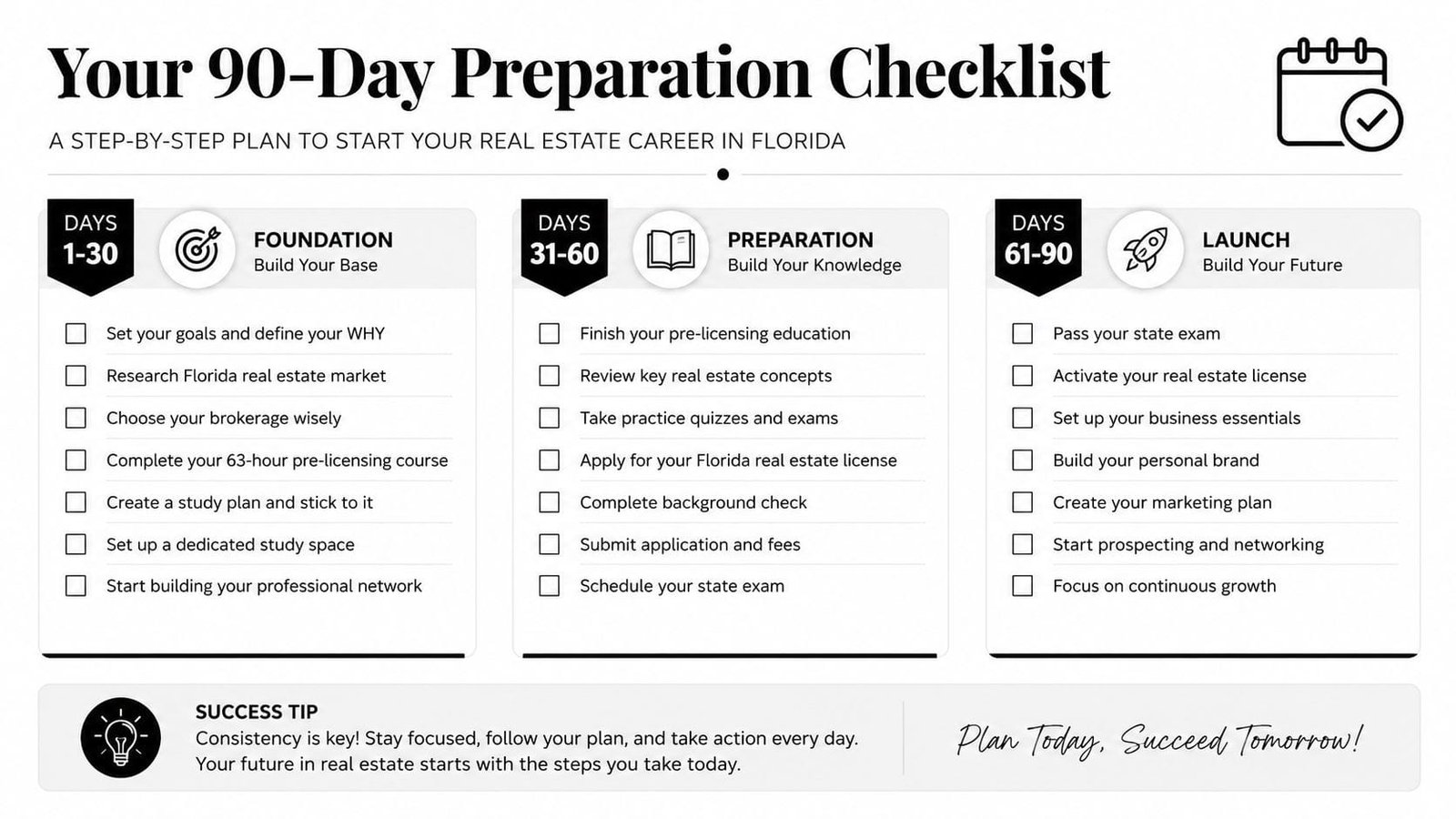
You don't need a perfect property to start preparing. You need a complete file. The borrowers who close cleanly on mortgage loans for LLC usually spend the weeks before application getting their entity, financial records, and property story in order. Lenders reward that kind of discipline because it lowers friction and makes the file easier to price.
Start with the entity paperwork
Your first job is to make sure the LLC is real, active, and organized. Gather the Articles of Organization, Operating Agreement, EIN, and Certificate of Good Standing. If you're borrowing through the entity, add the borrowing resolution and make sure the names on the documents match the way you want the lender to see the file. If those records are sloppy, the lender will assume the rest of the file is sloppy too.
Clean up the financial trail
Next, build the borrower story around cash and consistency. Lenders want to see where the money comes from, how it moves, and whether the entity can support the debt. For self-employed owners, that often means separating business deposits from personal activity and making sure the records aren't a mess of transfers and unexplained balances. If your books are disorganized, fix that before you apply.
Get the property ready to be underwritten
Then underwrite the property the way the lender will. If it's a rental, verify the rent. If it's mixed-use, be ready to explain how the space functions. If it's an operating property, be ready to show that the business use is real, not just something added after the fact to get a better loan label. The property has to fit the product, not the other way around.
Send the lender a file that answers questions before they ask them. That's how you keep underwriting from dragging.
If you want a practical view of how business debt gets organized before a loan file is submitted, this debt schedule overview is a useful companion resource.
Pick the lender before the listing gets serious
Don't wait until the contract is signed to figure out whether you need DSCR, portfolio, non-QM, or commercial financing. Talk to the right lender early, confirm the reserve expectations, and understand whether the loan is likely to require a personal guarantee. If you're buying into an entity, the lender should be part of the planning process, not the rescue team.
Final prep list
- Entity documents: make sure the LLC records are current and consistent.
- Bank statements and bookkeeping: show a clean source and use of funds trail.
- Property income proof: verify rent or business-purpose support early.
- Reserve liquidity: know what the lender will expect you to leave in the account.
- Lender fit: choose the product before the contract deadline makes the decision for you.
Common Mistakes That Kill LLC Mortgage Deals
The biggest mistake is assuming the LLC itself does the hard part. It doesn't. The lender still cares about credit, cash flow, paperwork, and whether the property use matches the loan program. An LLC can help with liability separation, but it does not make a weak deal strong.
The transfer-after-closing trap
A lot of buyers try to close personally and transfer to the LLC afterward. That sounds convenient, but it can trigger lender consent issues or violate the original loan terms. In other words, the plan that feels smartest before closing is often the plan that creates problems after closing. If the goal is entity ownership, deal with that from the start instead of treating the transfer like a harmless cleanup step.
Misreading the use case
Lenders are paying closer attention to whether the property is investment or business purpose, rather than owner-occupied. That's a problem when the title strategy and the actual use don't line up. If the borrower wants the benefits of a business-purpose loan, the file has to look like one. If it looks like a personal residence dressed up as an LLC purchase, the lender will push back.
Forgetting the personal guarantee
Another common failure point is acting surprised when the lender asks for a personal guarantee. That's normal in most LLC financing, not a special punishment. If a member won't sign, many deals won't close. The guarantee exists because the lender wants recourse if the property underperforms, and that's part of the price of borrowing through an entity.
If the lender can't verify the entity's authority or the borrower's backing, the deal slows down fast.
Paperwork gaps that stall the file
Missing organizational documents, inconsistent ownership records, and vague operating agreements are all preventable problems. They don't just slow underwriting, they make the lender question the entire structure. The fix is boring but effective, get the entity records clean before the application goes in.
Choosing the Right Path for Your Business
If you own one rental in a single-asset LLC, your decision is mostly about cost versus protection. If your operating company is buying its own building, the loan has to fit the business use first. If you're scaling a portfolio, the cleanest path is usually the lender that understands entity borrowing and doesn't need the deal explained from scratch. The right move depends on business stage, property type, and portfolio size, not on which loan sounds simplest.
A good next step is to talk to a DSCR or portfolio lender before you lock in the entity strategy, not after. I'd also look at the practical market guidance on Dream Destin Realty's blog if you're comparing property-use angles alongside financing. The point is to match the title, the loan, and the exit plan before you get too far into contract territory.
Business Loan Warrior helps small business owners compare funding options with less guesswork and more speed. If you're weighing mortgage loans for LLC ownership against the cost of a personal guarantee and a higher rate, visit Business Loan Warrior to explore your financing options and get a clearer path to funding.