
Your sales are healthy, but the timing is wrong. Payroll is due this week, a major customer won't pay for several more weeks, and inventory has to be ordered before the next sales cycle begins. A lender offers working capital, and approval feels like the hard part. It isn't.
The decision begins when the term sheet arrives. A working capital loan term determines not only how much capital you receive, but how quickly cash leaves your operating account, how much flexibility you retain, and whether the repayment schedule matches the way your business earns money. A low headline rate can still create a dangerous cash squeeze if the lender debits you daily or locks the pricing for only a short period.
The practical question is simple: can your business comfortably repay the facility under its actual cash-flow pattern, not an optimistic forecast?
Table of Contents
- Decoding the Working Capital Term Sheet
- Standard Maturity Windows and Pricing Spreads
- Navigating SBA Rate Ceilings and Structures
- The Cash Flow Impact of Repayment Frequency
- Strategic Capital Allocation for Mid-Market Firms
- Red Flags and Negotiation Tactics for Borrowers
- The Final Term Sheet Evaluation Checklist
Decoding the Working Capital Term Sheet
A business owner recently described a familiar situation. The company needed funds to purchase inventory ahead of a busy period. The proposed loan had an appealing rate and a maturity that seemed manageable. Only after reviewing the repayment schedule did the problem become clear: the lender would withdraw money every business day. The company collected much of its revenue in uneven bursts, so the financing would arrive as a lump sum but leave the bank account in constant small withdrawals.
That structure can work for a business with stable daily receipts. It can be a poor fit for a restaurant with weekday variability, a retailer with seasonal demand, or a service company that invoices customers and waits for payment.
Read the schedule before the rate
A term sheet should tell you the principal amount, pricing method, maturity date, payment frequency, amortization method, fees, collateral, guarantees, and financial covenants. Treat those items as one system. The rate doesn't tell you whether the loan is affordable until you know how the lender converts the balance into actual debits.
A monthly amortizing loan generally gives the finance team a clear recurring obligation. A daily or weekly structure may reduce the apparent size of each withdrawal, but it can consume cash before receivables arrive. If the agreement uses a factor rate or fixed repayment charge rather than conventional interest, ask the lender to translate the cost into an estimated APR so you can compare offers consistently. A practical primer on the distinction appears in this explanation of APR versus interest rate.
Test the restrictions, not just the proceeds
Covenants can limit distributions, additional borrowing, capital expenditures, ownership changes, or minimum liquidity. A covenant isn't automatically unreasonable. It becomes a problem when the threshold ignores the business's normal seasonality or when a technical breach gives the lender broad remedies.
Prepayment terms deserve the same attention. If a business expects a strong receivables collection or an asset sale, a prepayment penalty can prevent it from reducing interest expense. Ask whether the lender will waive the fee, reduce it over time, or permit partial principal reductions.
Practical rule: Read the agreement as a cash-flow document. Mark every date and every condition that can move money into or out of the business.
Finally, identify structural protections that may not appear prominently in the commercial summary. A personal guarantee, blanket lien, cross-default provision, or broad material adverse change clause can matter more than a modest difference in the quoted rate. Approval is useful only when the resulting obligations remain workable under ordinary operating conditions.
Standard Maturity Windows and Pricing Spreads
Working capital financing is usually designed to cover a temporary operating gap, not to fund an asset that produces returns over many years. That purpose explains why common repayment windows are often short. Major business-finance guides describe working capital maturities ranging from 3 to 24 months, with many products clustered around 6, 12, and 18 months. Some general-purpose guides describe working-capital borrowing as debt repaid within two years or less. These benchmarks are summarized in industry coverage of average working capital loan terms.
The exception is important. SBA guidance for certain working-capital and equipment uses can reach up to 10 years, while the SBA 7(a) Working Capital Pilot Program, launched on August 1, 2024, permits maturities of up to 60 months. The SBA estimated approximately 270 loans totaling $337 million in fiscal year 2025 for that pilot, according to the same reference.
Pricing varies just as widely. Bank working capital loans are commonly reported around 6% to 12% APR, SBA 7(a) working capital around 10% to 13% APR, business lines of credit around 8% to 22% APR, and online working capital loans around 12% to 35% APR. Broader guides show a range from approximately 3% to 99%, depending on the borrower's qualifications and the product structure. For additional market context, 2025 benchmark data cited by Bay Street Lending placed standard business loans around 7.3% to 7.6% APR and lines of credit around 6.5% to 8% APR. These figures come from working capital loan pricing coverage.
| Lender Type | Typical APR Range | Common Term Length |
|---|---|---|
| Bank working capital loan | 6% to 12% | 3 to 24 months |
| SBA 7(a) working capital | 10% to 13% | Up to 60 months under the pilot |
| Business line of credit | 8% to 22% | Revolving |
| Online working capital loan | 12% to 35% | 3 to 24 months |
The table is a benchmarking tool, not a quote. A bank may offer a lower rate but require stronger documentation, collateral, and a slower closing process. An online lender may fund faster while charging more for speed and accepting a shorter repayment window.
Term length changes the economics in two directions. A longer maturity can reduce the scheduled payment burden, but interest may accrue for longer. A shorter maturity can reduce the period of outstanding debt, yet the required payments may place greater pressure on operating cash. Compare the total repayment, payment frequency, and cash-flow timing, not just the annual percentage rate.
Navigating SBA Rate Ceilings and Structures
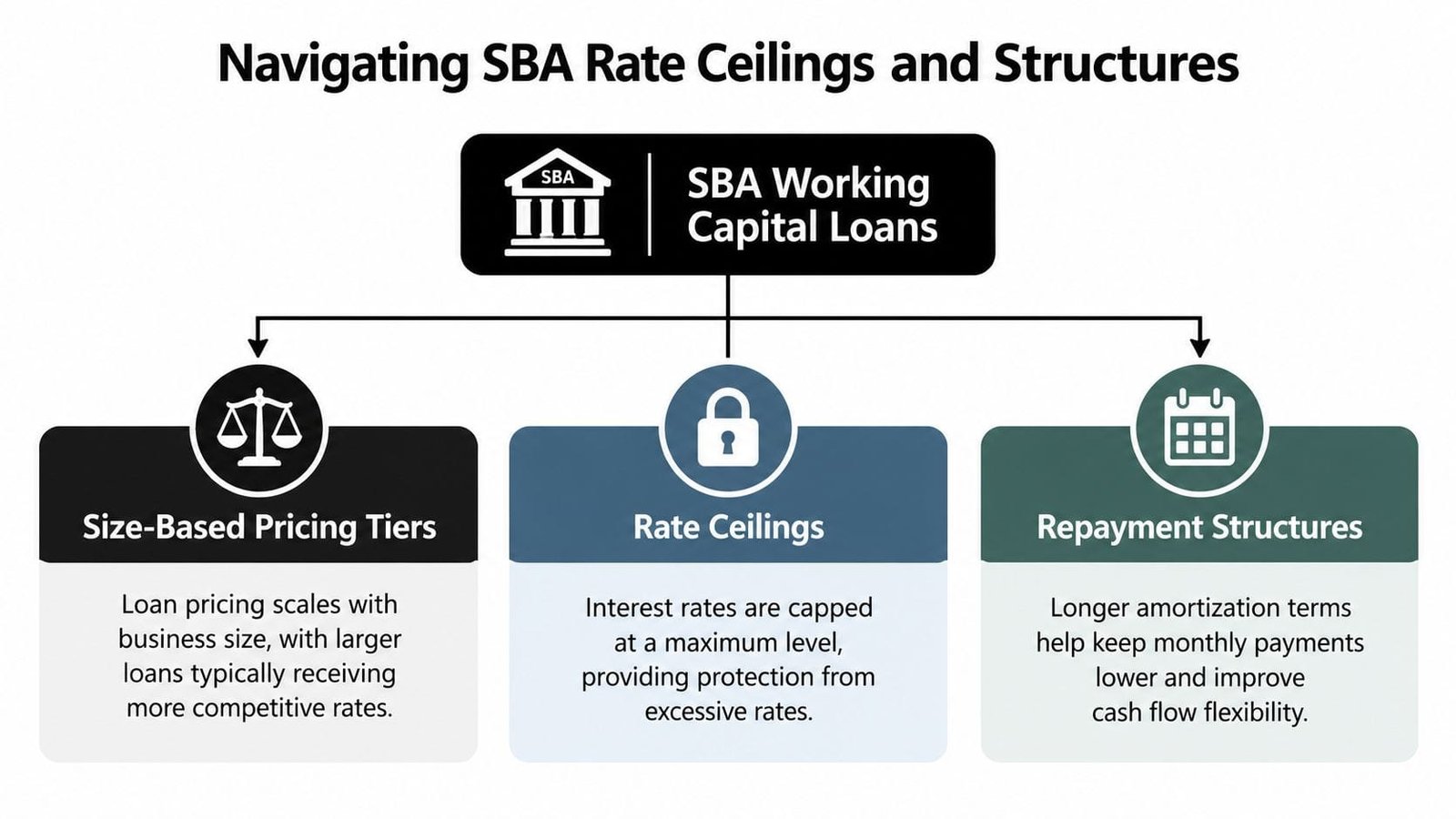
SBA-backed working capital facilities use a size-based pricing structure. The lender and borrower negotiate the rate, but the program establishes maximum spreads over the applicable base rate. The permitted spread generally becomes narrower as the loan size increases.
The applicable ceilings are:
- $50,000 or less: base rate plus 6.5%
- $50,001 to $250,000: base rate plus 6.0%
- $250,001 to $350,000: base rate plus 4.5%
- $350,001 and greater: base rate plus 3.0%
These program rules are described in the SBA lender guidance. The distinction matters for borrowers comparing facilities with different principal amounts. A $40,000 request falls into the highest permitted spread tier, while a $400,000 facility falls into the lowest listed tier. The base rate still matters, and the lender doesn't have to charge the maximum, but loan size changes the regulatory boundary.
Apply the cap in four steps
- Confirm the program. Make sure the facility is being offered under the SBA structure that governs the quoted ceiling.
- Identify the loan size. Use the principal amount in the final agreement, not an informal estimate from an early conversation.
- Separate the base rate from the spread. Ask the lender to show both components clearly.
- Negotiate below the ceiling. A maximum is not a target. Strong financial reporting, dependable repayment capacity, and a credible use of funds can support a request for a lower spread.
The SBA guarantee can also involve separate costs and documentation requirements. Review the treatment of those charges through this explanation of the SBA guarantee fee, then compare the resulting all-in economics rather than focusing only on interest.
Compliance and documentation become more important as the structure grows more complex. If your finance team needs help organizing lending controls or regulatory processes, a resource on practical compliance solutions for firms may help frame the operational questions for counsel and management.
The Cash Flow Impact of Repayment Frequency
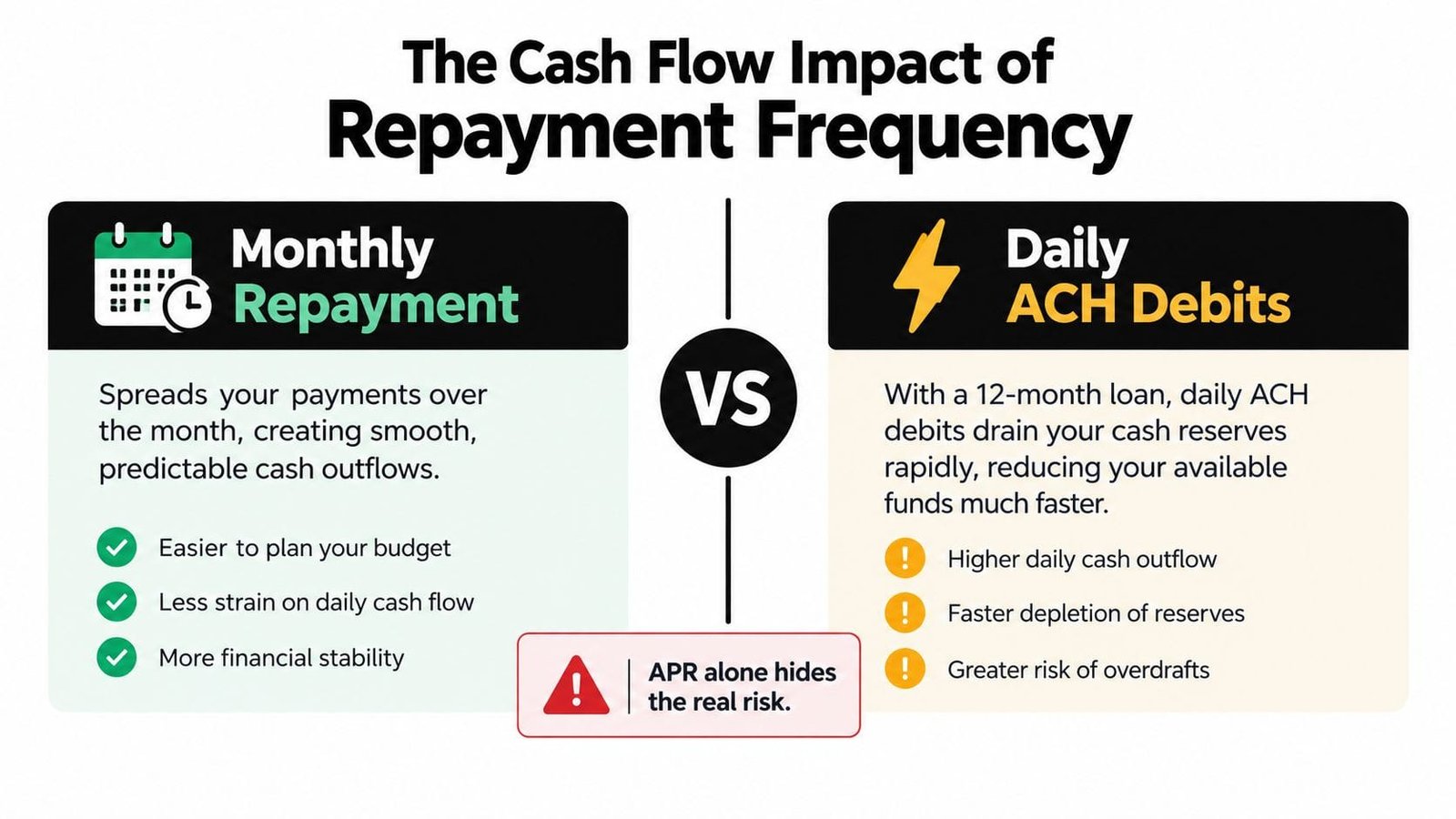
APR answers an important question, but it doesn't answer the question that causes many working capital failures: when does the cash leave the business?
A 12-month loan with daily ACH debits can behave very differently from a 12-month loan with monthly amortizing payments. Even if the total interest cost were identical, the daily structure would draw funds from the operating account throughout the month. The monthly structure would give management more time to collect receivables, pay suppliers, and plan around a known due date.
Match debits to receipts
Restaurants, retailers, and seasonal service firms often experience uneven inflows. A fixed daily debit doesn't become harmless because each withdrawal is small. It can create a persistent drain that reduces the cash buffer available for wages, inventory, taxes, and supplier payments.
Monthly amortization isn't always superior. A business with predictable daily card receipts may prefer frequent payments because the obligation is distributed across the revenue cycle. The correct test is whether the debit pattern follows the actual conversion of sales into available cash.
APR measures the price of capital. Repayment frequency determines how much operating oxygen remains between receipts.
Variable structures require another layer of scrutiny. Some lines of credit charge interest only on drawn balances, which can be efficient when the business borrows intermittently. The trade-off is that the rate may change, and a lender may offer a rate lock for only 30 to 90 days, according to guidance from JPMorgan. A delayed closing can therefore expose the borrower to different pricing than the initial discussion. The same source also describes working capital facilities and the importance of understanding how repayment interacts with cash flow in its working capital loan guide.
Before signing, build a payment calendar using the exact proposed frequency. Place scheduled debits beside payroll, rent, debt service, inventory purchases, tax obligations, and expected customer receipts. For card-heavy businesses, understanding settlement timing is equally useful. This guide from on card settlement provides operational context for when card sales become available cash.
For a deeper repayment comparison, use this analysis of business loan repayment terms. The goal isn't to choose the least frequent payment automatically. It's to choose a schedule that won't force the company to borrow again just to make the previous debit.
Strategic Capital Allocation for Mid-Market Firms
A term loan is useful when the need is known, the amount is defined, and the repayment source is clear. It becomes less efficient when a company repeatedly draws and repays capital for inventory, payroll bridges, or uneven customer collections.
A revolving line of credit can better fit that pattern because the borrower draws when needed and pays interest on the amount used. The facility may carry fees, renewal conditions, borrowing-base requirements, or variable pricing, so flexibility isn't free. It is valuable when the company can keep utilization disciplined and draw only against a documented operating need.
Corporate and virtual cards serve a different purpose. They can support controlled purchasing, supplier payments, and expense visibility, but they shouldn't replace a liquidity plan. A card facility can be useful for short operating cycles, while a term loan may be more appropriate for a defined inventory build with a known liquidation period.

Choose the structure by use case
- One defined cash need: A term loan creates a fixed amount and a fixed payoff path. It works when management can identify the repayment source.
- Recurring seasonal draws: A revolving facility avoids borrowing the full amount before it is needed. Interest generally applies to drawn balances, subject to the agreement.
- Frequent operating purchases: Corporate or virtual cards can centralize spending, but management must control limits and settlement obligations.
- Asset acquisition: Equipment financing can separate a long-lived asset from ordinary working capital. For warehouse projects, review warehouse equipment tax deduction tips with your tax adviser before assuming the financing and tax treatment align.
The strategic case for external working capital is becoming more important. Visa's 2025-2026 Working Capital Index says growth corporates planned to increase their use of working capital solutions in 2025, with the largest expected increase in corporate and virtual cards. The same verified briefing notes that another 2025 market report found more than half of SBA 7(a) loans in early fiscal year 2025 were under $150,000, pointing toward operational funding demand rather than only large expansion checks. Review the Visa Working Capital Index for that market context.
For companies in the $20 million to $50 million revenue band, the decision often isn't whether to borrow. It's whether repeated needs deserve a reusable facility, a controlled card program, or separate term debt. Match the product to the operating cycle, then set a borrowing limit that prevents convenience from becoming permanent debt.
Red Flags and Negotiation Tactics for Borrowers
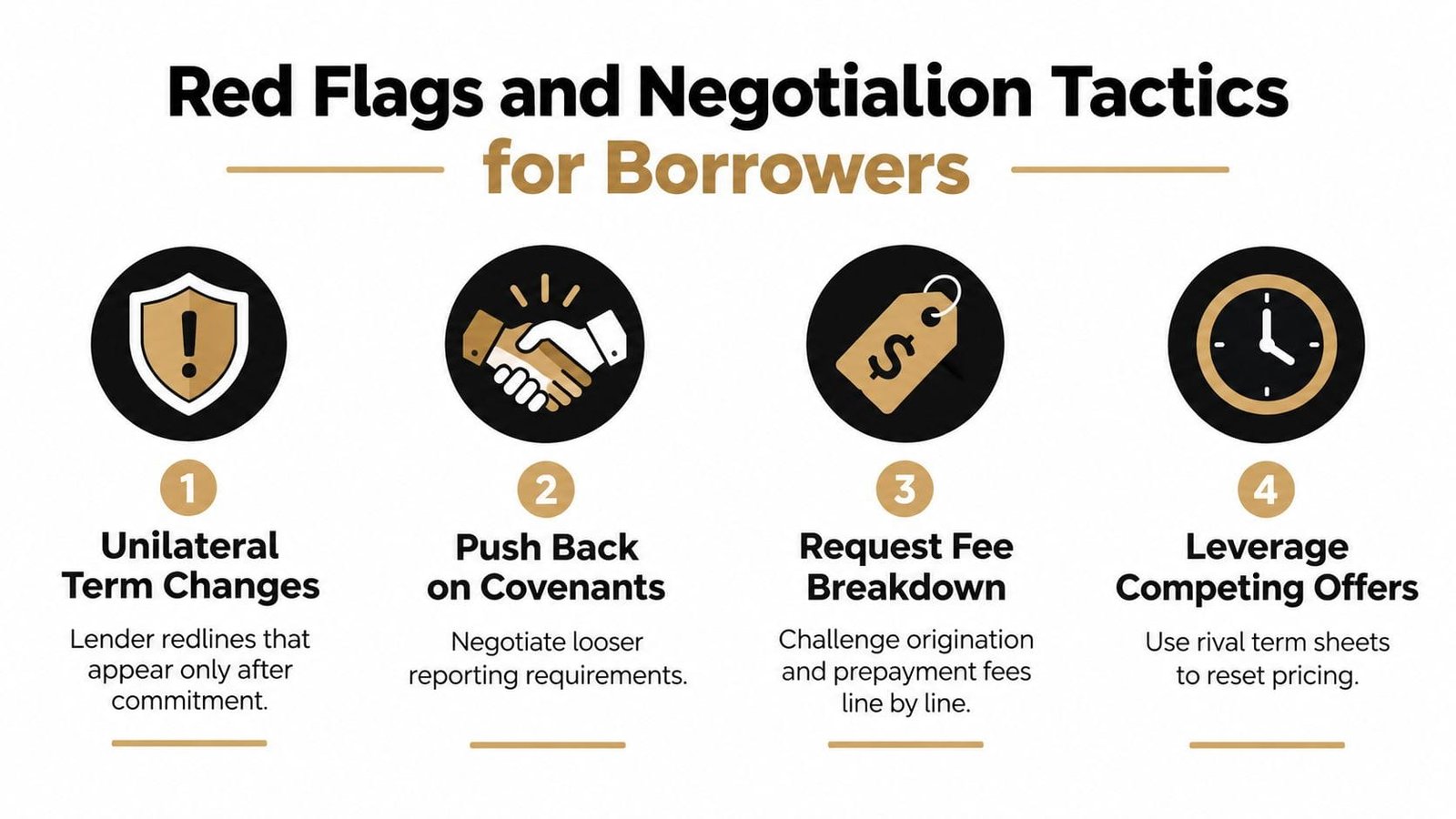
The first offer protects the lender's downside. It doesn't necessarily reflect the strongest terms your business can obtain. Borrowers with clean financial reporting and competing options should negotiate the structure, not just the rate.
Start with the provisions that can change the risk after closing:
- Cross-default clauses: A breach of another loan, lease, or obligation may trigger a default here. Ask for materiality thresholds and reasonable cure periods.
- Confessions of judgment: Treat these provisions as a serious legal issue and obtain qualified counsel's review before signing.
- Material adverse change language: Vague wording can give the lender broad discretion. Request objective triggers tied to repayment capacity.
- Unilateral changes: Confirm that the lender can't alter fees, reporting duties, or repayment mechanics without notice and defined limits.
Negotiate the economics line by line
Request a complete fee schedule covering origination charges, administration fees, wire fees, renewal charges, late fees, and prepayment penalties. Ask whether prepayment reduces the total cost or merely ends the schedule early. If the loan uses daily or weekly withdrawals, negotiate a payment frequency that reflects your collection pattern.
Use competing term sheets carefully. Compare the same principal, maturity, collateral package, guarantee requirements, repayment frequency, and total repayment amount. A lower rate on a restrictive facility may be inferior to a slightly higher rate with monthly amortization and no punitive prepayment provision.
The agreement should also specify how collateral is released after payoff. If the lender takes a blanket lien, ask what filing will be terminated and when. A business owner should know exactly when the company regains unrestricted access to its assets.
Walk away when the lender won't explain the total repayment, refuses to disclose the debit schedule, or relies on broad default language that management can't monitor. Speed matters only when the financing remains safe after the funds arrive.
The Final Term Sheet Evaluation Checklist
Before signing, reconcile the commercial proposal with the definitive loan agreement. Don't rely on the summary page if the repayment schedule or fee language appears elsewhere.
Confirm the economics
- Principal: Does the funded amount equal the amount discussed after fees and reserves?
- Pricing: Is the rate fixed, variable, or expressed as a fee or factor? Can you calculate the estimated APR?
- Total repayment: What is the exact amount paid if the loan follows its scheduled course?
- Fees: Are origination, administration, renewal, late, wire, and prepayment charges itemized?
- Rate lock: When does the quoted pricing expire, and what can change before funding?
Confirm the cash-flow mechanics
- Frequency: Are payments daily, weekly, or monthly?
- Amount: Is each debit fixed, variable, or linked to revenue?
- First payment: When will the first withdrawal hit the operating account?
- Seasonality: Can the business meet every payment during its weakest normal collection period?
- Draws: If the facility is revolving, do you pay interest only on drawn balances, and are there unused-line charges?
Confirm the lender's remedies
- Covenants: Can the company comply without abandoning ordinary operating plans?
- Defaults: Do cross-defaults, technical breaches, or vague adverse-change clauses create disproportionate risk?
- Collateral: What assets secure the obligation, and when will liens be released?
- Guarantees: Who is personally liable if the business cannot pay?
- Reporting: What financial statements, bank data, or certificates must management deliver?
Run a cash-flow forecast using the actual debit dates, not a monthly average. Include slower collections, supplier demands, payroll, taxes, and expected operating reserves. If the business can make payments only under the base-case forecast, the structure is already too tight.
Working capital loan terms are sound when the lender's repayment design reflects the company's revenue cycle. If the agreement creates a cash shortfall that requires another advance, the financing hasn't solved the problem. It has moved it forward.
Business Loan Warrior helps owners compare business loans, SBA financing, lines of credit, equipment funding, and other capital options through a single application and a secure dashboard for tracking approvals and repayments. Visit Business Loan Warrior to review financing options with the repayment frequency, total cost, and cash-flow fit in view.