
Your customers are ready to buy, but your supplier wants payment before the goods leave the warehouse. Meanwhile, the cash from those sales may not arrive until weeks later. You may have strong demand and a profitable product, yet still find yourself unable to place the next purchase order.
That timing problem is why businesses search for loans for inventory. The right financing can keep shelves stocked while customers convert stock into cash. The wrong facility can leave you paying interest on products that sit in storage, lose value, or never sell.
This guide focuses on that distinction. You'll learn how inventory financing works, how five common options fit different stages of the cash-conversion cycle, what lenders evaluate, and when reducing purchases is smarter than borrowing. For a practical complement on pricing and forecasting for turnover, review your expected sell-through before you discuss funding.
Table of Contents
- The Cash Gap That Makes Businesses Search for Loans for Inventory
- Understanding Inventory Financing and How It Works
- The Five Main Ways to Finance Inventory
- Eligibility Requirements and What Inventory Loans Really Cost
- Choosing the Right Option for Your Sales Cycle
- When Borrowing for Inventory Is the Wrong Move
- How to Apply for Inventory Financing Step by Step
The Cash Gap That Makes Businesses Search for Loans for Inventory
A retailer may sell through a popular product every week, but the supplier may require payment before replenishment ships. A manufacturer faces a similar squeeze when it buys raw materials today, completes production later, and invoices a customer after delivery. The business has a real commercial opportunity, but its cash is parked in the gap between purchase and collection.
That gap can be short for fast-moving goods and much longer for seasonal, specialized, or made-to-order products. Inventory financing exists to bridge it, but only when the stock has a credible path to sale and repayment.
The scale of the issue is easy to underestimate. In January 2025, U.S. manufacturers, wholesalers, and retailers held approximately $2.592 trillion in inventory, while the total business inventories-to-sales ratio was 1.37, meaning inventory value equaled roughly 1.37 months of sales on an aggregate basis. The ratio was 1.38 in January 2024, so the national picture changed only modestly year over year, according to the U.S. Census inventory and sales data.
Practical rule: Borrow to bridge a measurable timing gap, not to hide weak demand.
Before applying, map your purchase dates, expected sell-through, customer payment dates, and supplier terms. The business inventory management guide can help you organize that picture. Once you know where cash leaves and where it returns, you can judge whether you need a revolving facility, order-based funding, receivables finance, or no new debt at all.
Understanding Inventory Financing and How It Works
Think of inventory as cash parked on shelves. You paid for the merchandise, components, or materials, but customers haven't yet converted those goods back into money. Inventory financing lets you borrow against that parked value, subject to the lender's view of how reliably the goods can be sold or liquidated.
The basic process is straightforward:
- You identify the stock or purchase need.
- A lender reviews your business, sales history, inventory records, and repayment capacity.
- The lender advances funds, either as a lump sum, a revolving draw, or financing tied to a customer order.
- You use the money for eligible inventory or related working-capital needs.
- Repayment follows the agreed schedule, sales pattern, or receivables cycle.
The collateral is rarely valued at its retail price. Finished goods may be easier to sell than raw materials, while work in progress may have limited value outside your production process. Seasonal goods can lose value after the selling window closes. Damaged, obsolete, or highly specialized stock may receive a steep discount because a lender needs to estimate what it could recover if repayment fails.
The national inventory burden also shifts across economic cycles. U.S. Census historical data records a total business inventories-to-sales ratio of 1.25 in December 2005, 1.29 in September 2013, 1.30 in June 2022, and 1.37 in August 2023. Even a shift of 0.04 or 0.05 represents substantial capital when applied to inventories measured in trillions of dollars, as shown in the Census historical inventory series.
The practical lesson is that profitability and liquidity are different things. A company can have strong margins and reliable customers while needing working capital because it pays suppliers before it collects from buyers. Lenders therefore focus not only on whether you make money, but also on how quickly inventory becomes saleable cash.
This video offers another visual explanation of the main inventory-financing structures:
The Five Main Ways to Finance Inventory
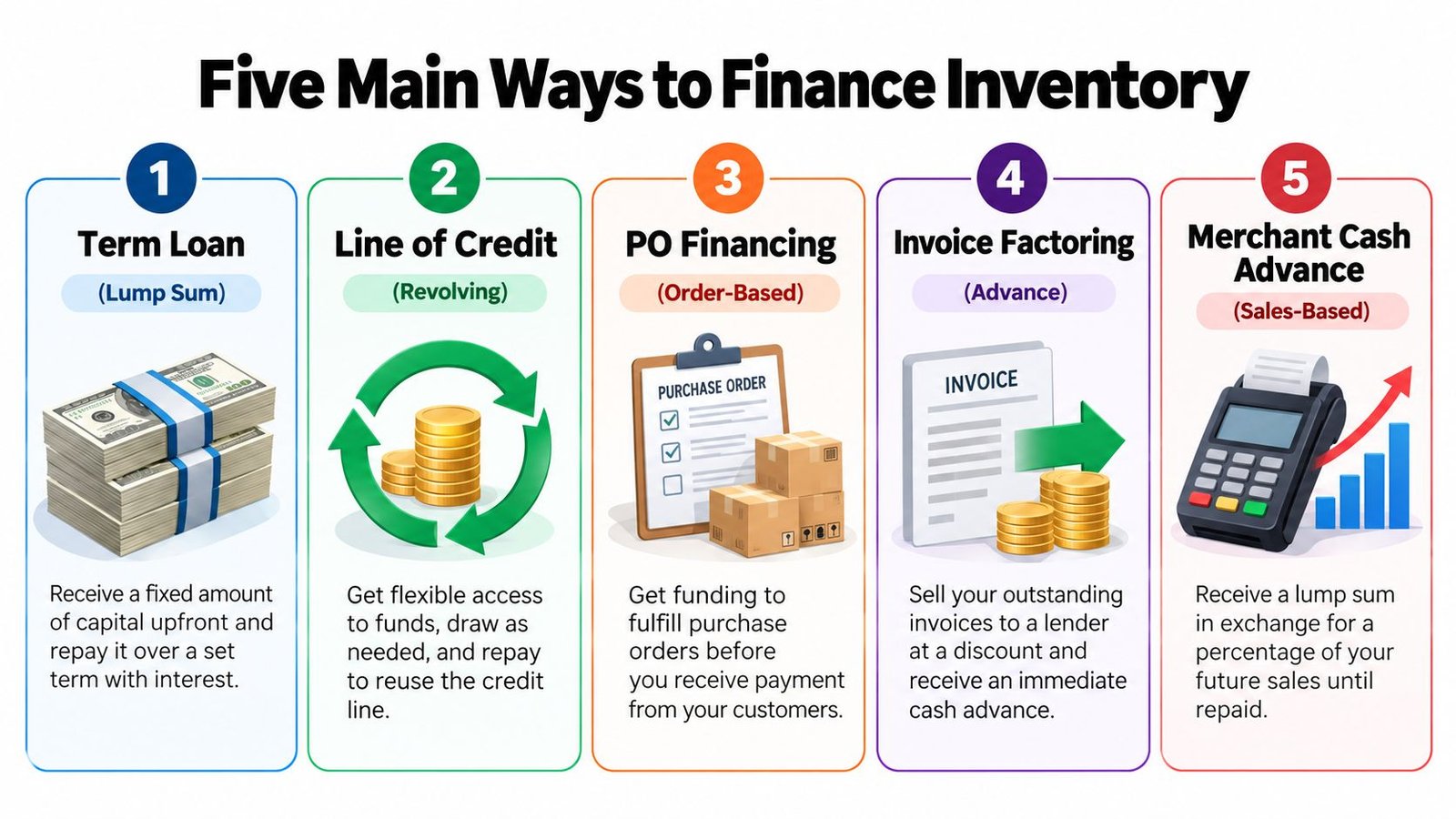
No single facility fits every purchase. The useful question is, where is your inventory in the cash cycle, and who is expected to repay the lender?
Inventory term loans
An inventory term loan provides a lump sum that you repay over a fixed period. It can suit a retailer making a large, planned stock purchase or a manufacturer buying a defined batch of raw materials.
The structure is predictable. You receive the funds once, purchase the inventory, and make scheduled principal and interest payments. That predictability helps with budgeting, but it can become restrictive if sales arrive more slowly than expected. You may also pay for unused capital after the purchase is complete.
Inventory lines of credit
A line of credit allows you to draw funds as needed and repay what you use. It fits businesses with recurring procurement, seasonal demand, or uneven ordering patterns.
A wholesaler, for example, might draw before a busy selling period and reduce the balance as customers pay. The advantage is flexibility. The risk is that a revolving balance can become permanent if the business keeps using debt to support stock that doesn't turn quickly.
Purchase-order financing
Purchase-order financing funds production or fulfillment against a confirmed customer order. It can work for a distributor or manufacturer that has demand in hand but lacks enough cash to buy materials or pay a supplier.
Because the order drives the transaction, this option may be more suitable than general inventory borrowing when the goods already have a committed buyer. The trade-off is that the lender may scrutinize the customer, supplier, margins, and fulfillment terms closely. Learn more about financing purchase orders before treating a purchase order as automatic approval.
Merchant cash advances
A merchant cash advance provides an upfront amount and collects repayment from future card or business sales. It can be fast and may be accessible to a business with limited conventional borrowing options.
Speed comes with caution. The repayment mechanism can reduce daily or periodic cash flow while you're still paying suppliers and carrying stock. This structure may fit a short, high-confidence sales opportunity, but it can strain a business whose inventory takes longer to sell than expected.
Inventory and receivables financing
This structure considers inventory together with accounts receivable. It can suit an established manufacturer or wholesaler that owns stock and also has invoices due from creditworthy customers.
The combined collateral can give the lender a broader view of the cash cycle. However, the lender will still review customer concentration, invoice quality, inventory aging, and borrowing-base rules. A strong receivables ledger doesn't automatically make weak inventory acceptable.
| Financing Option | Best For | Repayment Structure | Relative Cost | Collateral |
|---|---|---|---|---|
| Inventory term loan | A large, defined stock purchase | Scheduled payments | Moderate, depending on credit and terms | Inventory and possibly business assets |
| Inventory line of credit | Recurring or seasonal purchases | Draw, repay, and redraw | Moderate to higher if the balance remains outstanding | Eligible inventory and business assets |
| Purchase-order financing | Confirmed customer orders | Repaid from order proceeds | Often higher than conventional credit | Purchase order, transaction, and sometimes receivables |
| Merchant cash advance | Fast access tied to sales | Percentage or fixed withdrawal from sales | Often high relative to bank-style debt | Future sales rather than only inventory |
| Inventory and receivables financing | Businesses with stock and quality invoices | Borrowing-base or invoice-linked repayment | Varies by collateral quality | Inventory plus accounts receivable |
The table is a shortlist, not a recommendation. Your sales cycle, margin, customer payment behavior, and inventory quality determine whether a facility works in practice.
Eligibility Requirements and What Inventory Loans Really Cost
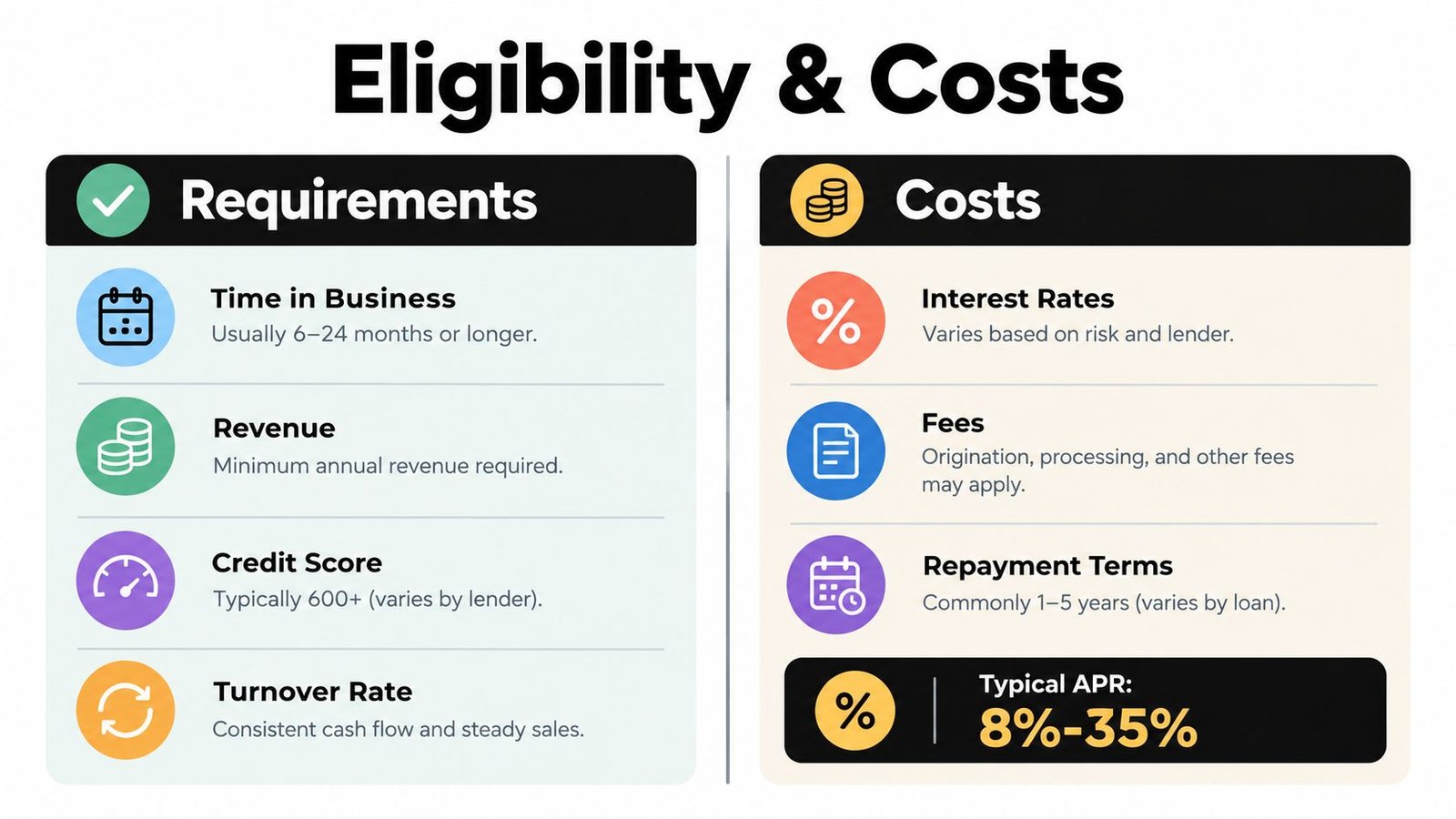
Lenders usually evaluate repayment capacity before collateral. They want to understand whether normal business cash flow can service the facility, even if sales slow.
Expect questions about how long you've operated, revenue consistency, existing debt, business and personal credit, bank activity, and inventory turnover. A lender may also request inventory aging reports, purchase orders, supplier invoices, sales records, accounts receivable details, and evidence of ownership.
The stock itself receives a separate review. A warehouse full of standardized finished goods may be easier to value than custom components or goods tied to a narrow market. Lenders may apply a borrowing-base limit, meaning they advance only a portion of eligible inventory value rather than treating every dollar of stock at cost as available collateral.
Calculate the all-in cost
The advertised interest rate is only one part of the decision. Add the origination fee, documentation charges, monitoring costs, and any factor-based repayment amount. Then include the operating costs that continue while the inventory sits:
- Storage: Warehousing and handling consume cash while stock waits for a buyer.
- Insurance: Some lenders require coverage for theft, damage, and other risks.
- Markdown exposure: Slow-moving goods may need discounts that reduce your expected margin.
- Capital drag: Money tied up in stock can't fund payroll, marketing, or supplier deposits elsewhere.
- Covenant pressure: A lender may require reporting or limits if inventory ages beyond agreed standards.
Use a simple worksheet for each proposed purchase. Record expected selling price, gross margin, expected sell-through period, financing charges, carrying costs, and the likely recovery value if the product must be cleared quickly.
The useful comparison is not rate versus rate. It's expected profit and timing versus the full cost of keeping the goods funded.
A purchase can look profitable on paper and still fail if repayment comes due before customers pay. Conversely, a facility with a higher stated cost may be workable when the inventory sells quickly and produces enough cash to retire the balance promptly.
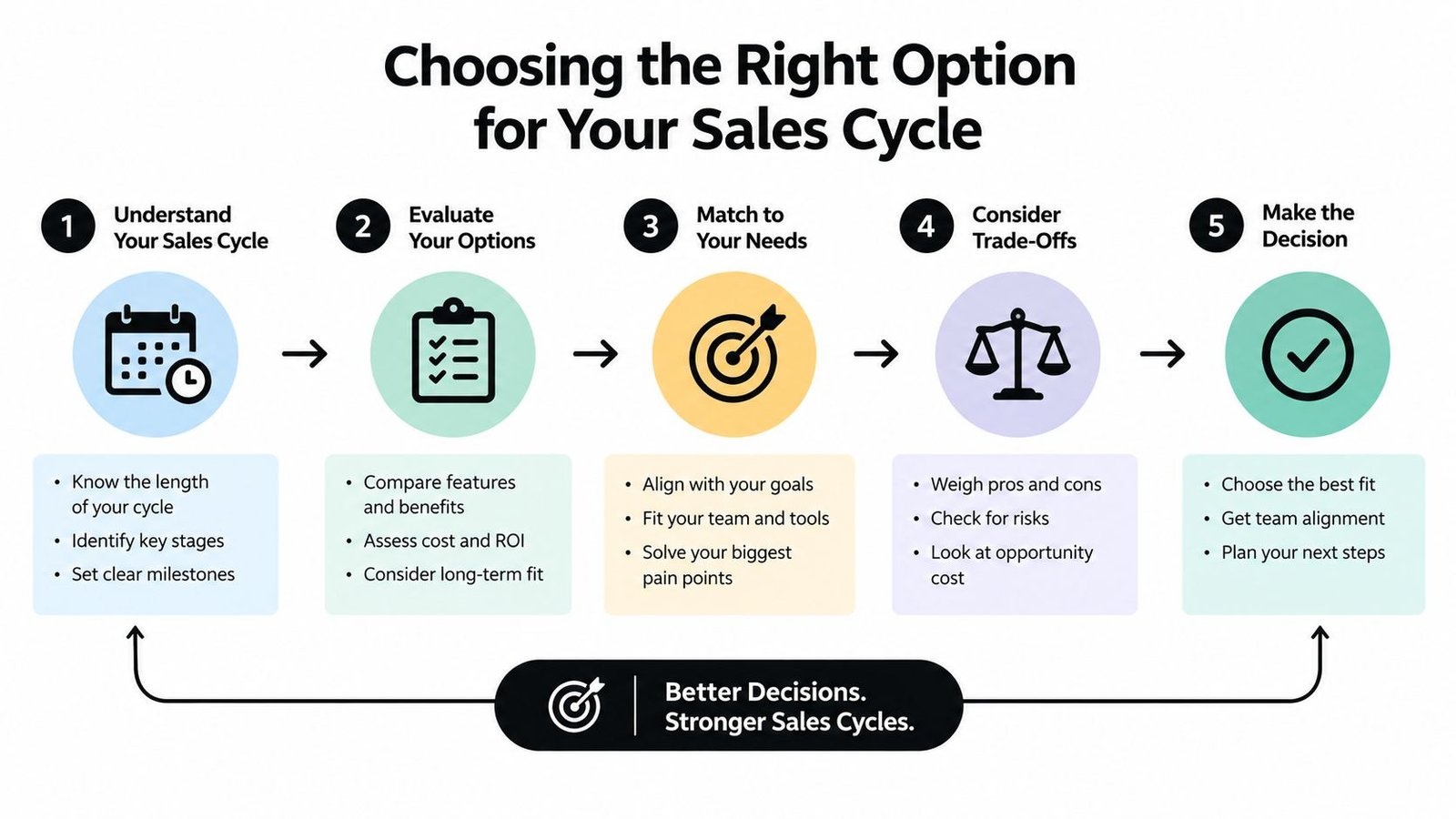
Choosing the Right Option for Your Sales Cycle
Match the funding source to the moment when cash is tied up. That approach prevents a common mistake, using long-lasting debt to finance a short-lived need or using expensive short-term funding for inventory that takes a long time to sell.
Before the purchase
Start with supplier terms when procurement is predictable and the supplier relationship supports delayed payment. Trade credit can bridge the gap without creating a separate loan balance. Negotiate carefully, though. A discount for early payment may be valuable, but preserving cash can matter more when stock must be purchased before revenue arrives.
For confirmed customer orders, purchase-order or supply-chain finance may be a better fit. The order provides a defined commercial purpose, and repayment can follow delivery and collection rather than an arbitrary calendar.
While inventory is owned
Use an inventory-backed loan or line of credit when you already own stock with reliable liquidation value and a clear sales history. A line can suit repeat purchases, while a term loan may suit one large, planned inventory buy.
The repayment schedule must reflect the actual conversion period. A low-cost facility isn't necessarily cheaper in practice if it keeps the business paying interest while goods remain unsold.
After delivery
Once you've delivered the goods and issued invoices, receivables finance may fit better than continuing to borrow against inventory. The asset has moved from stock to an amount due from a customer, so the lender can evaluate the invoice, debtor quality, and payment pattern.
Deloitte reports that 2025 working-capital performance was shaped by higher funding costs, inflation, and supply-and-demand volatility. Its analysis notes that improvements often came from lower days inventory outstanding and longer payment periods, while collection periods rose, as summarized in the Deloitte working-capital report. The same source summary notes that Atradius found bank credit remained the dominant trade-finance tool for 68% of surveyed B2B suppliers.
For a larger business, improving turnover can release cash without adding debt. The logic is simple: sell existing stock sooner, reduce the amount sitting in storage, and use the released cash for the next purchase cycle. That may be more valuable than negotiating a slightly cheaper facility.
When Borrowing for Inventory Is the Wrong Move
Borrowing more money doesn't fix inventory that customers don't want. It can make the problem harder to see because the business receives cash today while accumulating interest, storage costs, insurance expenses, and markdown risk.
A lender also won't necessarily treat your inventory as worth its retail or accounting value. Obsolete, seasonal, damaged, or highly specialized goods may have limited liquidation value. If the lender discounts those items heavily, the facility may provide less funding than your balance sheet suggests.
The first diagnostic question is whether the issue is temporary or structural:
- Temporary timing mismatch: Customers consistently buy the product, but supplier payment comes before customer collection.
- Structural weak demand: Sales have slowed, forecasts remain uncertain, and stock continues to accumulate.
- Purchasing problem: The business orders too much, orders too early, or carries too many product variations.
- Terms problem: Suppliers could provide more flexible payment conditions, but nobody has negotiated them.
- Pricing problem: The goods may sell only after discounts that erase the margin expected when the loan was approved.
Netstock's 2025 SMB benchmark reports that 55% of small and midsize businesses held at least 20% excess stock, up from 48% in 2024, while 27% had no defined financing strategy, according to its 2025 supply chain planning benchmark. Those findings reinforce a point lenders see repeatedly: excess stock can look like collateral while functioning as a cash drain.
Consider a retailer that planned to borrow for another shipment while older products remained unsold. After reviewing sales by product line, the owner cut repeat purchases, negotiated more time with a supplier, and cleared aging stock. The business gave up some potential sales, but it avoided financing goods without dependable sell-through.
Before borrowing, ask whether the cash gap comes from successful sales arriving late or unsuccessful purchases arriving early.
If demand is weak, reduce purchasing, liquidate stock, or redesign the assortment before adding debt. Financing should support a working business model, not postpone the decision to correct one.
How to Apply for Inventory Financing Step by Step
Begin with the purchase itself. Define how much inventory you need, why you need it now, what each product costs, and how quickly you expect to sell it. Separate committed orders from forecasts, and include a slower-sales scenario in your repayment plan.
Next, assemble the records that let a lender verify the story. Prepare financial statements, bank activity, current debt obligations, inventory aging, supplier invoices, purchase orders, sales records, and accounts receivable information where relevant. Clean records won't guarantee approval, but incomplete records make it harder to assess the facility accurately.
Then compare more than the headline rate. Review fees, repayment frequency, borrowing-base rules, personal guarantees, collateral requirements, reporting duties, prepayment terms, and what happens if inventory sells slowly. Ask the lender to explain the total repayment amount in plain language.
Pre-approval tools can help you compare potential offers before committing to a full application. Some modern platforms allow an owner to submit one application, connect business bank accounts, monitor approval and repayment activity through a dashboard, and communicate with underwriters. For a revolving facility, review the line of credit application process and gather the requested information before you apply.
After funding, track the inventory separately from general cash flow. Monitor units purchased, units sold, aging, gross margin, customer collections, and the outstanding balance. If sell-through weakens, stop drawing and contact the lender before the repayment schedule becomes difficult.
The right inventory loan matches your sales cycle, funds only stock with measurable sell-through, and remains serviceable during a slow season. Build your purchase forecast first, then compare facilities against that forecast. Business Loan Warrior offers a single application for businesses seeking funding for eligible uses such as inventory, with tools to review approvals, repayments, and lender communication in one dashboard. Visit Business Loan Warrior to review your inventory-funding options and start with a financing request based on your actual cash cycle.