
You sign a credit line because you want breathing room, not another surprise bill. Then a statement shows up with a charge you didn’t draw, didn’t spend, and probably didn’t expect. That’s usually where commitment fee confusion starts, especially for owners who use a revolver, a delayed-draw facility, or a seasonal line to keep payroll, inventory, and project costs moving.
The short answer is simple. A commitment fee is the lender’s charge for keeping capital available to you, and it’s usually tied to the unused part of the facility, not the money you’ve already borrowed. In plain English, you’re paying for access, like reserving a truck for moving day even if you don’t load every box into it. That’s why it shows up on statements even when the loan balance is lower than the credit limit.
Table of Contents
- A Commitment Fee Story Most Borrowers Never Hear
- How Lenders Calculate a Commitment Fee
- Typical Rate Ranges and Why Pricing Varies So Much
- Commitment Fees vs Origination and Standby Fees
- When a Commitment Fee Actually Makes Sense
- Tax Treatment and Accounting for Commitment Fees
- How to Negotiate, Reduce, or Avoid Commitment Fees
- Commitment Fee FAQ and Decision Checklist
A Commitment Fee Story Most Borrowers Never Hear
A restaurant owner opens a $250,000 line of credit to cover food costs, payroll gaps, and a slow winter stretch. Six months later, she’s used only half of it, then a lender statement arrives with a fee for the unused part. She didn’t “borrow more” that month, so the charge feels backward, but the lender was paid to keep the remaining capital ready.
That’s the part many borrowers miss. A commitment fee is the price of reserving capital or keeping a credit line available, and it’s typically charged on the unused or undrawn balance rather than the balance already outstanding. In commercial lending, that makes it a pricing tool for liquidity, not a penalty for using the loan.
For small business owners, this fee usually appears on revolving credit, delayed-draw terms, and other facilities where the lender has promised future access. It can feel invisible until the first statement lands, which is why borrowers sometimes mistake it for a maintenance fee or a weird interest charge. It isn’t either one.
Practical rule: if the lender had to set aside borrowing capacity for you, the fee is usually the cost of that promise.
If you’re comparing structures for property deals or investment-related borrowing, a plain explanation like the one in solutions for real estate investors can help you see how unused capital gets priced before you sign. The key is to read the statement and the loan agreement together, because the wording often hides the logic.
How Lenders Calculate a Commitment Fee
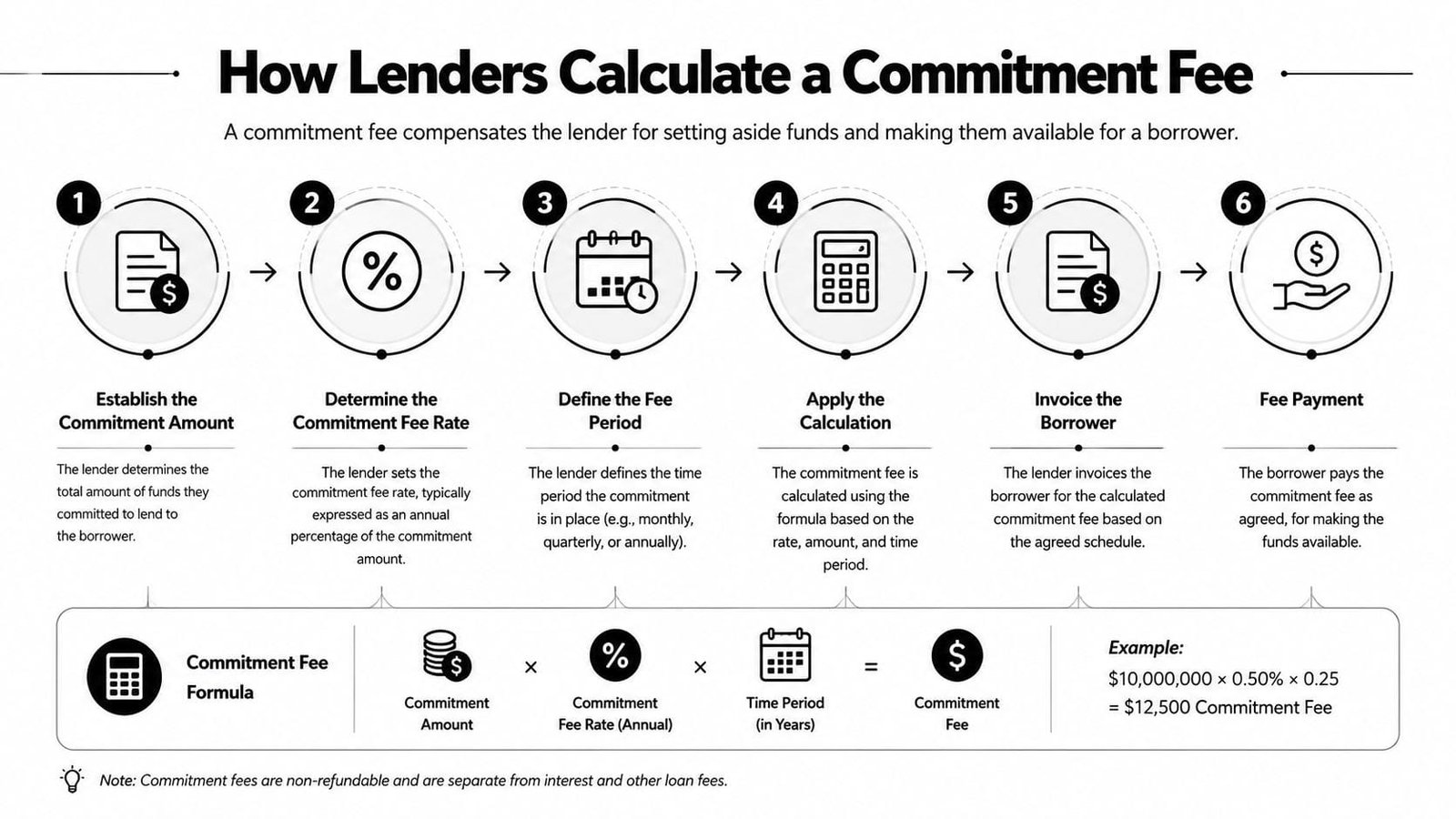
A commitment fee starts with one question. How much of the approved credit line is still sitting unused?
Lenders usually calculate it on the unused balance, then apply the annual fee rate and prorate the result for the billing period. Once you know those three pieces, the number on the statement becomes much easier to check.
A simple example you can verify
Say you have a $500,000 revolving credit facility, a 0.50% annual commitment fee, and a drawn balance of $200,000. The unused balance is $300,000. On a quarterly billing cycle, the calculation looks like this:
- Unused balance: $500,000 minus $200,000 equals $300,000
- Annual fee: $300,000 multiplied by 0.50% equals $1,500 per year
- Quarterly fee: $1,500 divided by 4 equals $375
That means the quarterly charge in this example is $375. If your statement shows a different amount, the first thing to check is whether the lender used a different draw balance during the billing period, a different rate, or a different proration method.
A lender may also charge the fee in full upfront at the start of the commitment, or bill it periodically during the term. The Chicago Fed’s 1978 discussion of fee-based commitments noted both approaches, which is one reason contract language still varies today. Chicago Fed historical analysis
A credit agreement does not always spell this out in plain language. A clear overview of credit facilities helps show where the fee sits inside the wider lending structure, especially when a borrower is comparing a revolver, a delayed-draw term loan, or another facility that keeps capital available for later use.
For investors and deal sponsors who want capital partners familiar with recurring credit structures, find lending-focused US investors can be useful.
If the fee is billed periodically, ask for the billing basis in writing. “Unused balance as of month-end” and “average unused balance during the quarter” can produce different numbers.
Typical Rate Ranges and Why Pricing Varies So Much
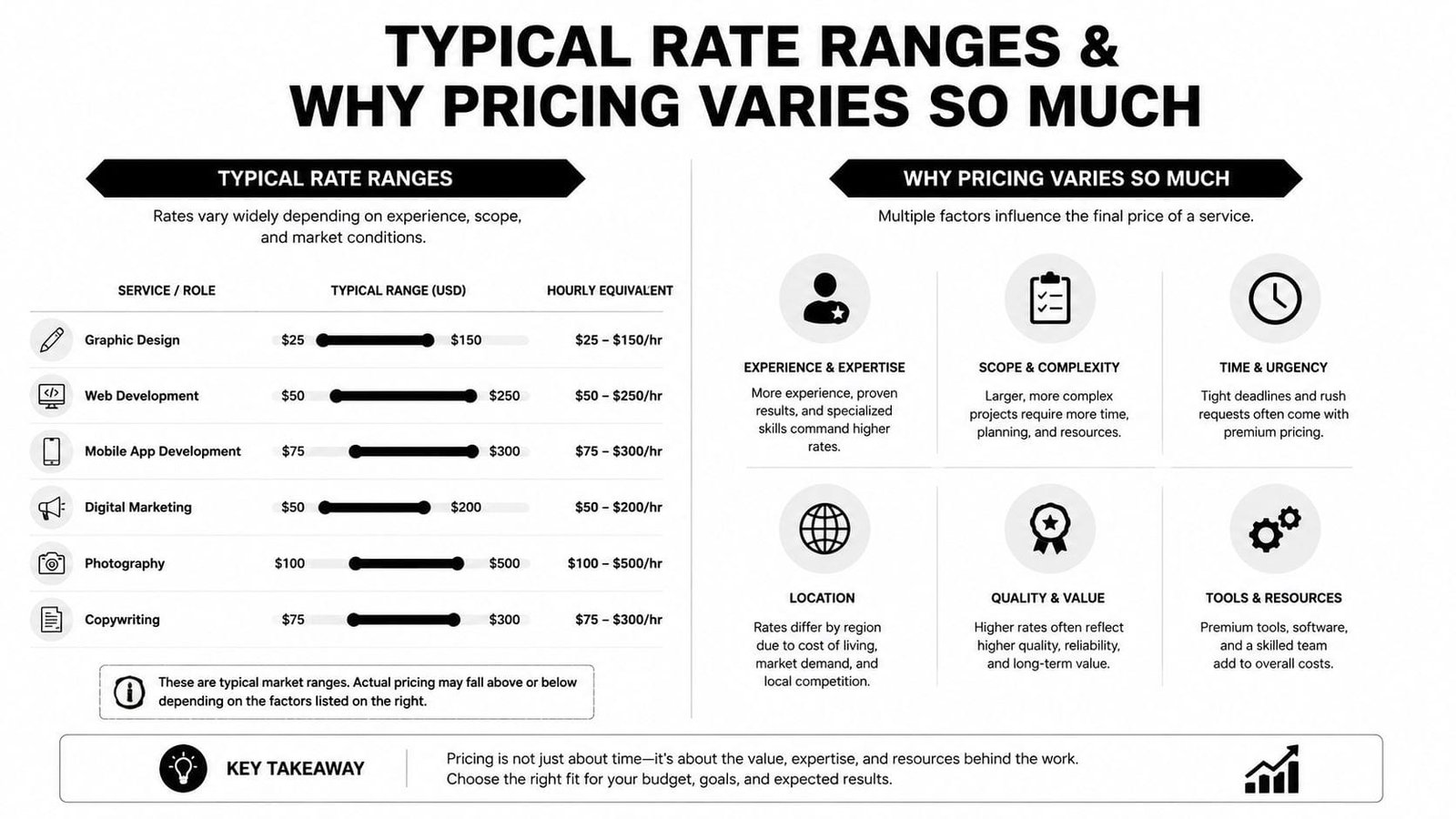
Most borrowers will see commitment fees quoted as an annual percentage of the unused balance. Industry references place the usual range at about 0.25% to 1.0% of the unused revolver balance, while some legal and banking sources cite lower or slightly narrower ranges such as 0.15% to 0.50% depending on credit quality, facility size, and market rates.
Why one borrower pays more than another
The rate is not random. Lenders look at a few practical issues before deciding where a borrower lands in that band.
- Credit quality: Stronger borrowers usually have more room to negotiate because the lender sees less risk in holding the line open.
- Facility size: Bigger facilities can price differently because the lender’s capital commitment is larger.
- Relationship pricing: A borrower with multiple accounts, deposits, or other products may get a better overall package.
- Market liquidity: In tighter markets, lenders are less willing to reserve capital cheaply, so the fee tends to rise.
That last point matters more than most owners realize. When banks have to hold capital for future borrowing, they want compensation for the money they can’t deploy elsewhere. That is why a commitment fee can feel higher when credit conditions tighten, even if the borrower’s business hasn’t changed.
The historical reason this fee stuck around
Fee-based commitments became visible in the 1970s as banks expanded these products, and firms treated them like insurance for credit access. That idea still drives modern pricing. A revolving line or delayed-draw loan is not just a loan balance, it’s also a promise that capital will be there when you need it, and lenders still charge for that promise.
Negotiation insight: the best pricing often goes to borrowers who can show the lender they’re stable, easy to underwrite, and likely to use the facility as agreed.
Commitment Fees vs Origination and Standby Fees
Borrowers often lump these charges together because they can all appear in the same loan package. They’re not the same thing.
The three fees in plain English
A commitment fee is charged over time for keeping credit available, usually on the unused balance. An origination fee is a one-time charge, usually based on the total facility, paid at closing for setting up the loan. A standby fee often overlaps with commitment fee language, especially in syndicated or delayed-draw deals, but the label depends on the document.
Here’s a quick comparison you can use while reviewing a quote:
| Fee Type | What It Is | When It Is Paid | What It Is Based On | Is It Often Negotiable |
|---|---|---|---|---|
| Commitment fee | Price for reserved borrowing capacity | Periodically or upfront | Usually the unused portion | Often yes |
| Origination fee | Setup charge for making the loan | At closing | Usually the total facility | Often yes |
| Standby fee | Charge for keeping funds available in certain structures | Periodically | Usually the undrawn access | Often yes |
The terminology can blur in documents. A lender might call something a standby fee, facility fee, or commitment fee, but the core question is simple. What balance is it charged on, and when does it hit?
A useful borrower habit is to ignore the label until after you check the math. If the fee is tied to access you haven’t used yet, it’s acting like a commitment fee even if the document uses a different name. In some packages, the lender cares more about the cash flow profile than the vocabulary.
When a Commitment Fee Actually Makes Sense
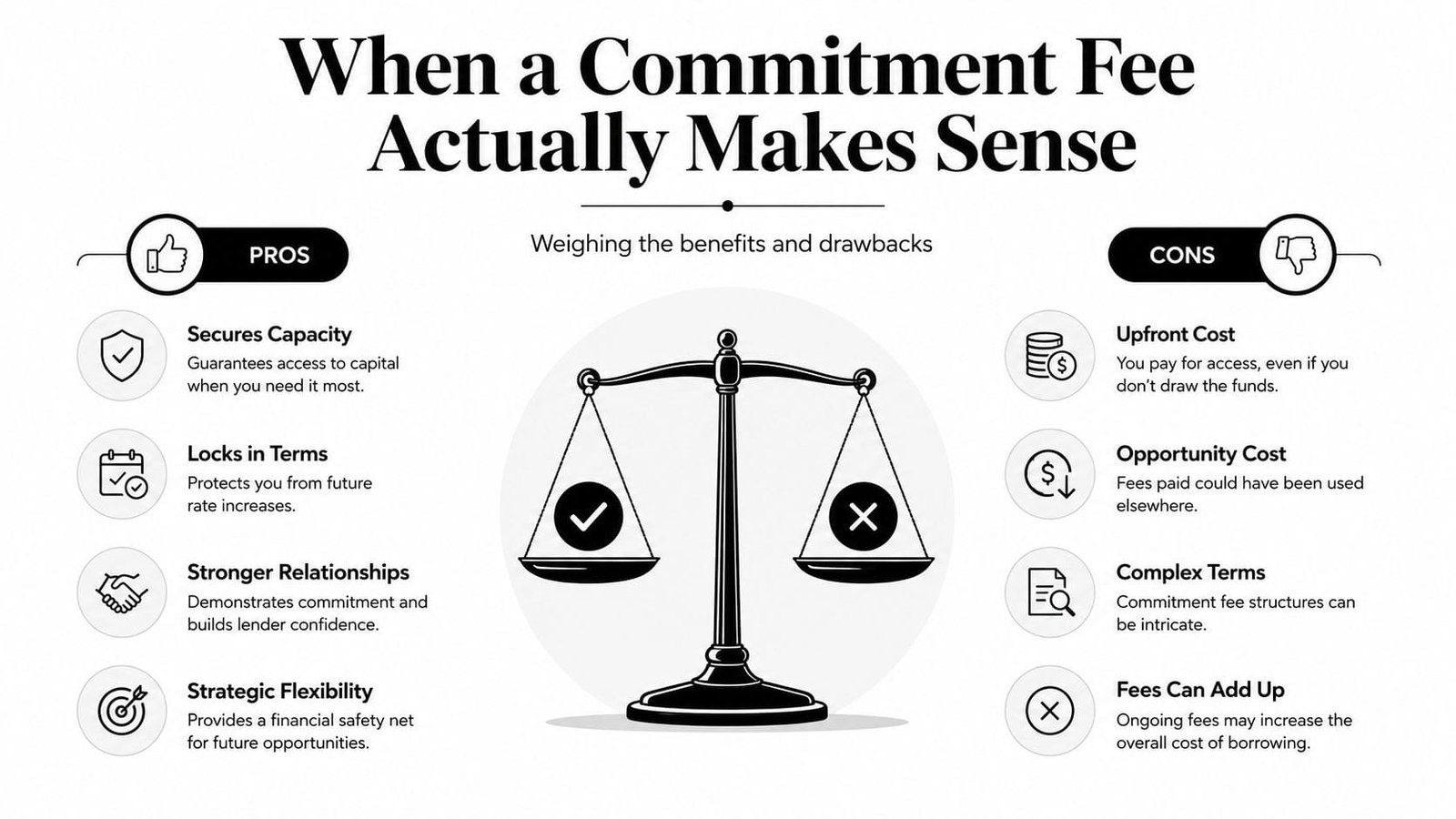
A commitment fee can make sense when it buys certainty that would cost more later. It is wasted money when you keep paying for credit you never draw.
A contractor arranging a $1 million delayed-draw facility for a project that funds in stages is a good example. The fee feels painful at closing, but the structure lets the borrower reserve capital before rates move, and the annual cost comes out to roughly $5,000. If market pricing rises after the deal closes, that fee can be cheaper than chasing new funding at a higher rate, or waiting and finding the money has become more expensive.
Now compare that with a retail shop owner who takes a $300,000 line of credit as backup and never touches it. Over two years, the business pays $1,800 in commitment fees for a safety net that never got used. The fee bought peace of mind, but not much else.
The decision is simpler than lenders make it sound. Pay the fee when you need guaranteed access, when the reservation protects you from a worse price later, or when emergency funding would cost more than holding the credit open. Skip it when the line is just a habit, a comfort blanket, or a product you expect to leave idle.
For borrowers planning staged funding, a delayed draw term loan is one of the clearest cases where this fee matters, because timing and access are part of what you are buying.
A short video can make the tradeoff more concrete. Watch for the point where the examples compare a paid fee against the cost of re-borrowing later. That is the moment that shows whether you are paying for real flexibility or just paying for unused capacity.
Tax Treatment and Accounting for Commitment Fees
The way a commitment fee is recorded matters almost as much as the way it’s priced. Periodic fees on an ongoing line of credit are often treated as financing costs and deducted as interest expense as they accrue, while upfront fees paid at closing are usually capitalized and amortized over the life of the facility. The exact treatment depends on how the loan agreement classifies the charge.
A short accounting example
If you pay a $6,000 upfront fee on a three-year facility, the simple accounting view is $2,000 per year of amortization. That doesn’t mean cash leaves your business each year, it means the cost is recognized over time instead of all at once.
The tax answer can vary if the fee is labeled as interest, a loan acquisition cost, or a service charge. That’s why the same payment can land differently on the books depending on the contract language. A lender may care about one label, but your accountant cares about the classification that determines deductibility timing.
If you’re posting these charges in your books, a clear journal entry workflow helps keep them from getting lost in operating expense noise. A practical guide to journal entries can save time for owners who handle their own bookkeeping.
Practical rule: if the fee was paid to secure multi-year borrowing access, don’t assume the full tax deduction lands immediately. The timing usually matters more than the fact of payment.
The safest move is to ask your accountant how your specific agreement should be treated before year-end. The contract controls the paperwork, but the tax treatment follows the substance.
How to Negotiate, Reduce, or Avoid Commitment Fees
A commitment fee is often a negotiable line item, but the best time to discuss it is before the lender sends the final draft. Borrowers who ask early usually have more room to shape the fee, the billing method, or the timing than borrowers who wait until closing week.
Effective tactics for negotiation
- Ask for a waiver window: request that the fee be waived for the first 30 to 90 days after closing if you expect to draw quickly.
- Push for a step-down: ask whether the fee can drop after the first year if the business performs as planned.
- Cap the unused balance: seasonal businesses can sometimes limit the fee calculation during slower months.
- Offer a minimum draw commitment: if the lender gets more usage certainty, it may lower the fee.
These requests work best when you can tie them to how the facility will be used. For example, if you know you will draw most of the line right after closing, a fee waiver window can save real money. On a $500,000 line, even a small fee on unused capacity can mean thousands of dollars paid for money you are not yet using.
You can also avoid the fee by choosing a different product. A smaller revolving facility may come with easier pricing. A true term loan may replace the fee with a one-time origination charge. Some owners compare it with a merchant cash advance structure, where the pricing is built into the factor rate instead of an unused-capacity fee.
The choice is not always about paying less on paper. Sometimes a fee on a larger, more flexible line costs less overall than taking a cheaper-looking loan that leaves you short when payroll, inventory, or a slow customer payment hits. In other cases, a smaller facility with no commitment fee is the better fit because you know you will use the money right away.
For a broader sponsor-side view of financing costs and how fees get structured in deals, the discussion at financing fee strategy for sponsors is a useful reference point because it shows how cost placement changes the economics of the whole package.
A lender conversation can be simple and direct. Ask where the fee starts, how it is measured, and whether the lender is willing to adjust it if your borrowing pattern is easy to predict.
- “Is the fee charged on month-end unused balance or an average balance?”
- “Can you waive it until I make the first draw?”
- “Will you step it down after year one?”
- “If I commit to a minimum balance, can the fee come down?”
Those questions force the lender to show where the pricing is flexible. If the fee stays high, compare the deal against the cost of borrowing the same money another way. For a small business owner, the right answer is not always the lowest fee, it is the structure that matches how quickly the money will be used and how much idle capacity the lender is being asked to hold.
Commitment Fee FAQ and Decision Checklist
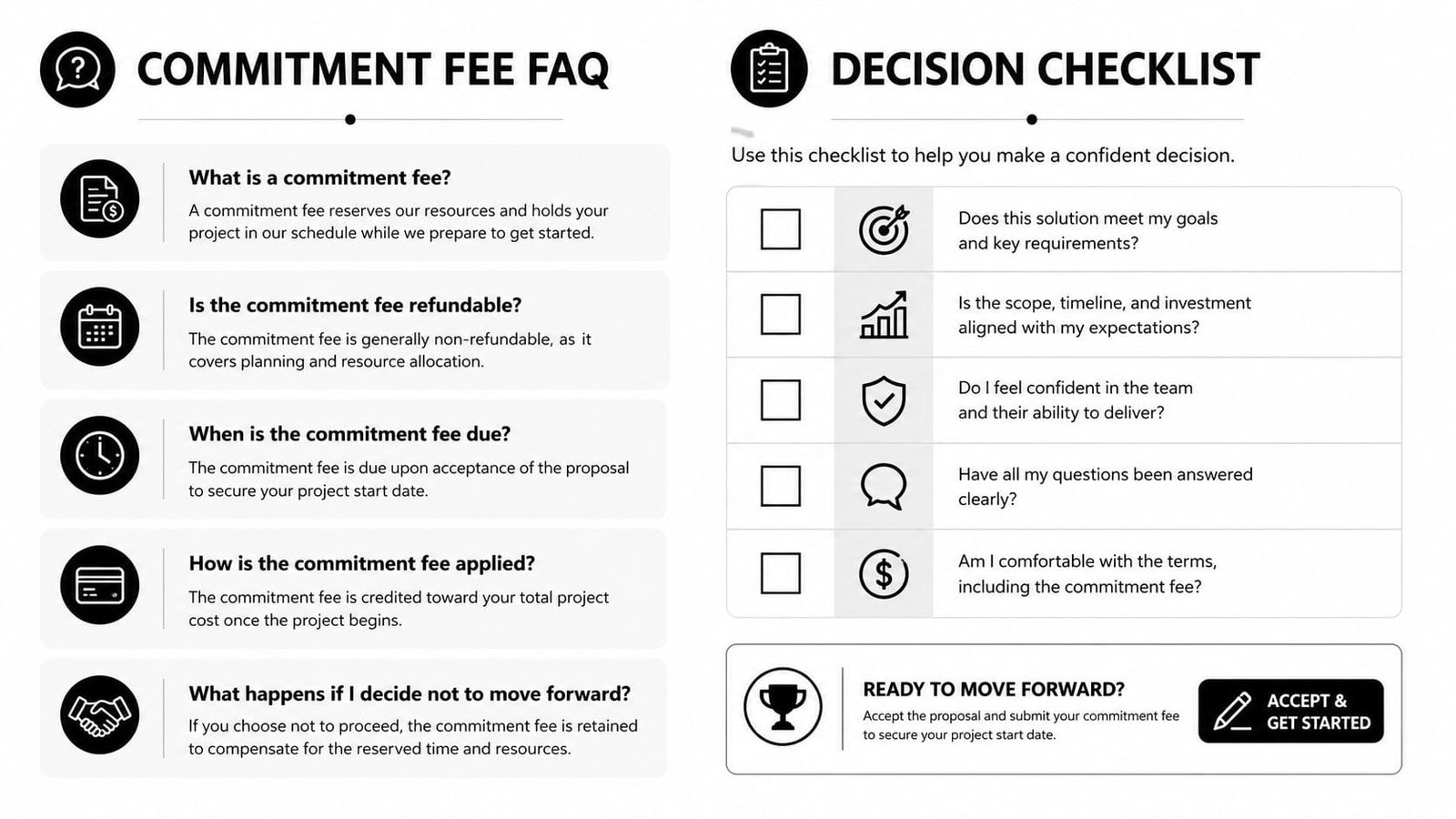
A commitment fee is usually nonrefundable, because you’re paying for access whether you use it or not. The exception shows up in some agreements when a lender fails to honor its obligations, or when the deal language creates a waiver in a delayed-closing or default scenario. It can also change during a modification if the lender and borrower rewrite the economics of the facility.
Prepayment penalties are a separate issue. You can sometimes pay a commitment fee and still face a prepayment charge later, because one fee compensates for unused access while the other compensates for early payoff. The labels differ, but both can affect total borrowing cost.
Commitment Fee Decision Checklist
| Action Item | Typical Value | When to Push Back |
|---|---|---|
| Verify the calculation | Unused balance times annual fee rate | If the bill doesn't match the loan balance |
| Confirm the billing period | Monthly, quarterly, or upfront | If the contract and statement don't match |
| Check accounting treatment | Periodic expense or amortized cost | If your accountant needs a different classification |
| Ask about a waiver or step-down | Often negotiable | If you expect early draws or strong performance |
| Compare against alternative funding | Depends on the product | If another structure is cheaper overall |
A good rule is simple. If you're paying for money you might need later, the fee can be worth it. If you're paying for a line that sits idle, ask harder questions.
If you want a clearer read on whether a quoted fee fits your facility structure, Business Loan Warrior can help you compare funding options, review the fine print, and line up a smarter capital mix for your business. Visit Business Loan Warrior to see what fits before you sign your next loan.